September 29, 2026 • Maren Solley • 10 min reading time • Prices verified June 12, 2026
Ultra-Low-Cost Airline Personal Item Bags: Spirit, Frontier, and Breeze Size Reality Check
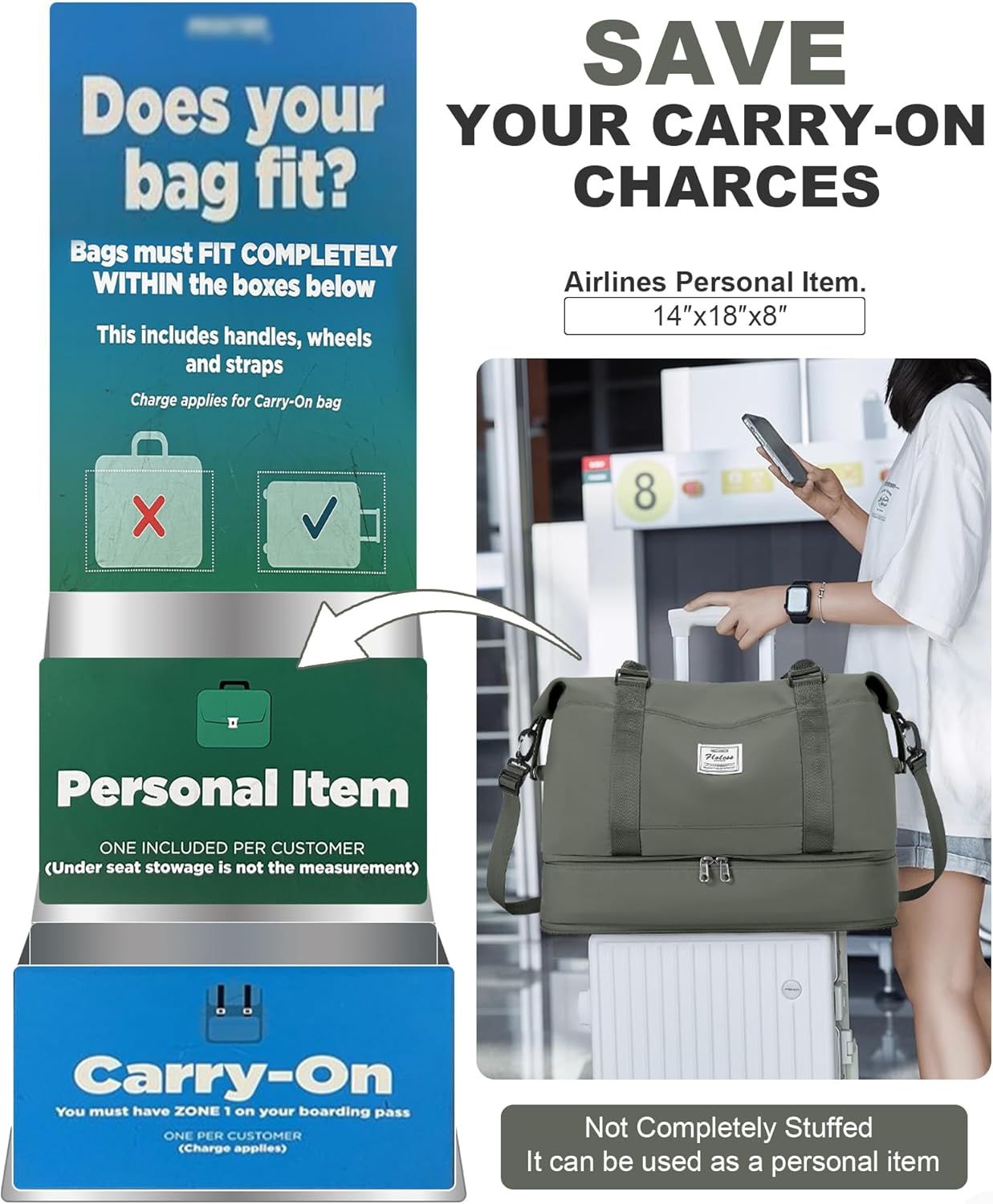
If you’ve ever booked a flight on Spirit, Frontier, or Breeze — the so-called ultra-low-cost carriers (ULCCs) in the U.S. — you already know the game: the base fare looks great, but the airline makes a significant portion of its revenue from ancillary fees, including charges for bags that don’t fit their definition of a “personal item.” A personal item, in airline terms, is the small bag every passenger is allowed to bring on board for free, no matter what ticket they bought. It’s distinct from a carry-on (the larger roller or backpack that goes in the overhead bin), which ULCCs charge for separately. The catch is that ULCCs enforce personal item size limits more aggressively than legacy carriers, and the dimensions differ by airline. Get it wrong and you could pay $99 or more at the gate — often more than the cost of the flight itself. This guide breaks down exactly what each airline allows, what bag formats actually work, and how to make the right call before you buy.
| EDITOR'S PICKLOVEVOOK 40L Travel Backpack fo… | Mid-tierFor Spirit Airlines Personal It… | Budget pickFor Spirit Airlines Personal It… | |
|---|---|---|---|
| Capacity | 40L | — | — |
| Packing cubes | 3 included | — | — |
| Wet pocket | — | ✓ | — |
| Shoe compartment | — | ✓ | — |
| USB port | — | ✓ | — |
| Foldable | — | — | ✓ |
| Price | $39.98 | $24.99 | $9.99 |
| See on Amazon → | See on Amazon → | See on Amazon → |
The Actual Numbers: Spirit, Frontier, and Breeze Side by Side
Before we get into bag strategy, here are the published personal item dimensions as of May 2026. These come directly from each airline’s official bag policy pages.
By the numbers:
| Airline | Max Personal Item Dimensions (L × W × H) | Fits Under Seat? |
|---|---|---|
| Spirit | 18 × 14 × 8 in (45 × 35 × 20 cm) | Required |
| Frontier | 18 × 14 × 8 in (45 × 35 × 20 cm) | Required |
| Breeze | 17 × 13 × 6 in (43 × 33 × 15 cm) | Required |
A few things jump out immediately. Spirit and Frontier share identical published limits, which makes intuitive sense since both compete directly in similar overlapping markets — per SmarterTravel’s editorial overview of how ultra-low-cost carriers structure their fee systems, size standardization helps gate agents enforce rules more consistently. Breeze is the most restrictive of the three, with a height limit of just 6 inches — meaningfully smaller than the other two. If you’re flying Breeze specifically, that 2-inch difference in height is not trivial. A bag that clears Spirit and Frontier may not clear Breeze.
The phrase “fits under the seat” is the operative constraint. Unlike legacy carriers, who often let personal items slide into the overhead bin when the seat-front space is taken, ULCCs generally require personal items to go under the seat in front of you. That changes how you evaluate bags: volume and rigid structure matter less than dimensional compliance and compressibility.
Duffels vs. Backpacks: The Real Tradeoff at the Gate
This is where buyer reports get genuinely interesting, and where the “right” answer depends on your specific concern.
The case for soft duffels
Owners consistently report that soft, unstructured duffels — the kind without internal frames or rigid side panels — have a practical advantage that no spec sheet captures: they’re squishy. A reviewer of the BAGSMART gym duffel specifically describes this characteristic as the reason it works even when fully packed. Under a tight airline seat, a squishy bag can be compressed, angled, and wedged into the available space in ways that a structured backpack simply cannot. The bag may technically exceed measured dimensions when filled, but soft materials conform to the seat cavity rather than fighting it.
This matters most when the under-seat space is reduced by the seat pitch of the aircraft (the gap between rows), which varies widely. According to SeatGuru’s seat-map database, seat pitch on Spirit aircraft typically runs 28–29 inches — among the tightest configurations flying in the U.S. At that pitch, under-seat depth is compressed, and a bag’s ability to yield to that space is a genuine functional asset.
The HOTOR duffel is a good example of another duffel-specific feature that unlocks real-world packing capacity: a dedicated shoe compartment at the base. One buyer reports fitting three pairs of shoes in that lower compartment, which effectively removes footwear volume from the main compartment and frees it for clothes and gear. The trade-off here — and this is a question buyers ask directly — is whether the shoe compartment adds to the bag’s measured height. Technically, it can. If the shoe compartment sits below the main body and is fully loaded, it may push the overall bag height past the airline’s limit. In practice, owners report it depends on the shoes and how compressed the compartment becomes when packed. Flat-soled shoes compress more than running shoes with thick midsoles. No bag feature eliminates the need to measure your packed bag before you leave for the airport.
The case for backpacks
The LOVEVOOK 40L backpack owner who reported reduced gate scrutiny when overhead bins were full is describing something real: backpacks read as “normal” passenger bags to gate agents in a way that oversized duffels sometimes don’t. A structured backpack worn on your back is visually unobtrusive. A bulging duffel carried at your side is harder to conceal from a gate agent who is actively looking for oversized bags.
That said, backpacks carry their own risks. A 40L backpack is almost certainly over the published personal item volume for all three airlines under review — even if its measured dimensions fall within spec when empty, stuffing it to 40 liters frequently pushes it beyond the limits. Buyers who report success with larger backpacks typically note that they were not challenged — which is a different thing than the bag being compliant. Per The Points Guy’s breakdown of Spirit’s ancillary fee structure, gate enforcement varies by agent, by airport, and by how full the flight is. No bag, regardless of format or marketing claims, guarantees a fee-free boarding experience. All gate experiences cited in this guide are owner-reported, not independently verified.
Gate Enforcement: What Buyer Reports Actually Tell Us
Across aggregated owner reviews, a consistent pattern emerges that’s worth naming plainly: enforcement is inconsistent, and the same bag can have completely different outcomes on different flights.
One buyer documents using the same personal item bag on Delta, Frontier, and Breeze with no issues across all three. Another buyer purchased a replacement bag specifically because their original was two inches over Frontier’s published requirement — they weren’t willing to risk a $99+ gate fee on a flight that cost less. Both reports are credible, and both are correct for that traveler’s risk tolerance.
The smarter framing isn’t “will I get caught?” — it’s “what is my downside exposure if I do?” Spirit’s gate-checked bag fee for an oversized personal item can exceed $100 when purchased at the gate, per Spirit’s published fee schedule. On a $59 base fare, that’s catastrophic math. If you’re flying a ULCC specifically to save money, buying a bag that genuinely fits the published spec is the only defensible strategy.
Conde Nast Traveler’s editorial on personal item bags notes that agents are more likely to measure or challenge bags that look overstuffed or that don’t compress naturally. This is why the “squishiness” characteristic reviewers praise in the BAGSMART duffel is not merely comfort — it’s a functional attribute with fee-avoidance implications.
Decision Framework: If X, Then Y
By now you have enough context to apply a clear decision rule. Here’s how to use it:
If your primary airline is Breeze: Buy to Breeze’s dimensions (17 × 13 × 6 in). Every other airline is more permissive. A Breeze-compliant bag works everywhere. Don’t buy a Spirit/Frontier-sized bag and assume it will pass on Breeze — the 6-inch height limit is unusually restrictive and agents have been reported to enforce it.
If your primary airlines are Spirit or Frontier: You have the same published spec (18 × 14 × 8 in). Prioritize soft, unstructured materials over rigid panels. A soft duffel that measures within spec when empty and compresses under load is lower-risk than a semi-rigid backpack that’s technically within spec but reads large to a gate agent. The BAGSMART duffel’s documented squishiness is genuinely useful here.
If footwear volume is your primary packing challenge: The HOTOR duffel’s shoe compartment addresses a real problem — reviewers report meaningful capacity gains by separating shoes from the main compartment. Measure your packed bag’s height before traveling, including the shoe compartment fully loaded. If it pushes past 8 inches, consider packing one fewer pair.
If you want reduced gate scrutiny regardless of bag size: Backpack format consistently receives fewer gate challenges than duffels, per owner reports. The LOVEVOOK 40L backpack’s owner experience reflects a real phenomenon — backpacks don’t signal “extra bag” visually the way a duffel does. The tradeoff is that 40L likely exceeds compliant volume, so you’re accepting more policy risk in exchange for less agent-attention risk.
If you fly a mix of ULCCs and legacy carriers: Buy to the most restrictive spec in your rotation (likely Breeze’s). A bag that’s genuinely undersized for the tightest airline is the only one that travels without friction across your whole network.
Frequently Asked Questions
What exactly counts as a personal item on Spirit Airlines? Spirit defines a personal item as any bag — backpack, duffel, tote, or purse — that fits within 18 × 14 × 8 inches and slides under the seat in front of you. It is included free in every Spirit fare. A carry-on (the overhead bin bag) is a separate paid add-on.
Does a personal item have to fit under the seat, or can it go overhead? On all three airlines covered here, personal items are required to go under the seat in front of you, not in the overhead bin. Overhead bin access is reserved for carry-ons, which are paid upgrades on ULCCs. Attempting to place a personal item overhead can result in being charged the carry-on fee at the gate.
Will a soft duffel get measured at the gate, or only structured bags? Gate agents can measure any bag at their discretion. In practice, owner reports suggest that overstuffed or obviously large bags attract measurement more than compact, soft bags. But there is no format — duffel or backpack — that is immune from gate scrutiny. Buying a bag that genuinely fits the spec is the only reliable protection.
Do shoe compartments on the bottom of duffels push the bag over the height limit? They can, depending on what’s in them and how much they expand under load. Owners who use the HOTOR duffel’s shoe compartment successfully typically pack flatter shoes or distribute load carefully. Measure your packed bag — shoes included — before your first flight.
Is a backpack or a duffel better as a personal item on Frontier? It depends on your priorities. Soft duffels conform to tight under-seat spaces more naturally; backpacks attract less gate scrutiny visually. If your bag genuinely fits within 18 × 14 × 8 in when packed, either format can work. Across owner reports, both formats have succeeded and both have been challenged — enforcement is not format-specific.
Can I bring both a personal item and a carry-on on Spirit without paying extra? No. Spirit’s base fare includes only the personal item. A carry-on — meaning any bag intended for the overhead bin — requires a paid upgrade. Per The Points Guy’s Spirit fee breakdown, carry-on fees purchased at the gate are substantially more expensive than fees purchased at booking. If you plan to bring both, pay for the carry-on when you book your ticket.