August 24, 2026 • Maren Solley • 10 min reading time • Prices verified June 12, 2026
Packing Cubes That Actually Teach You How to Pack Better
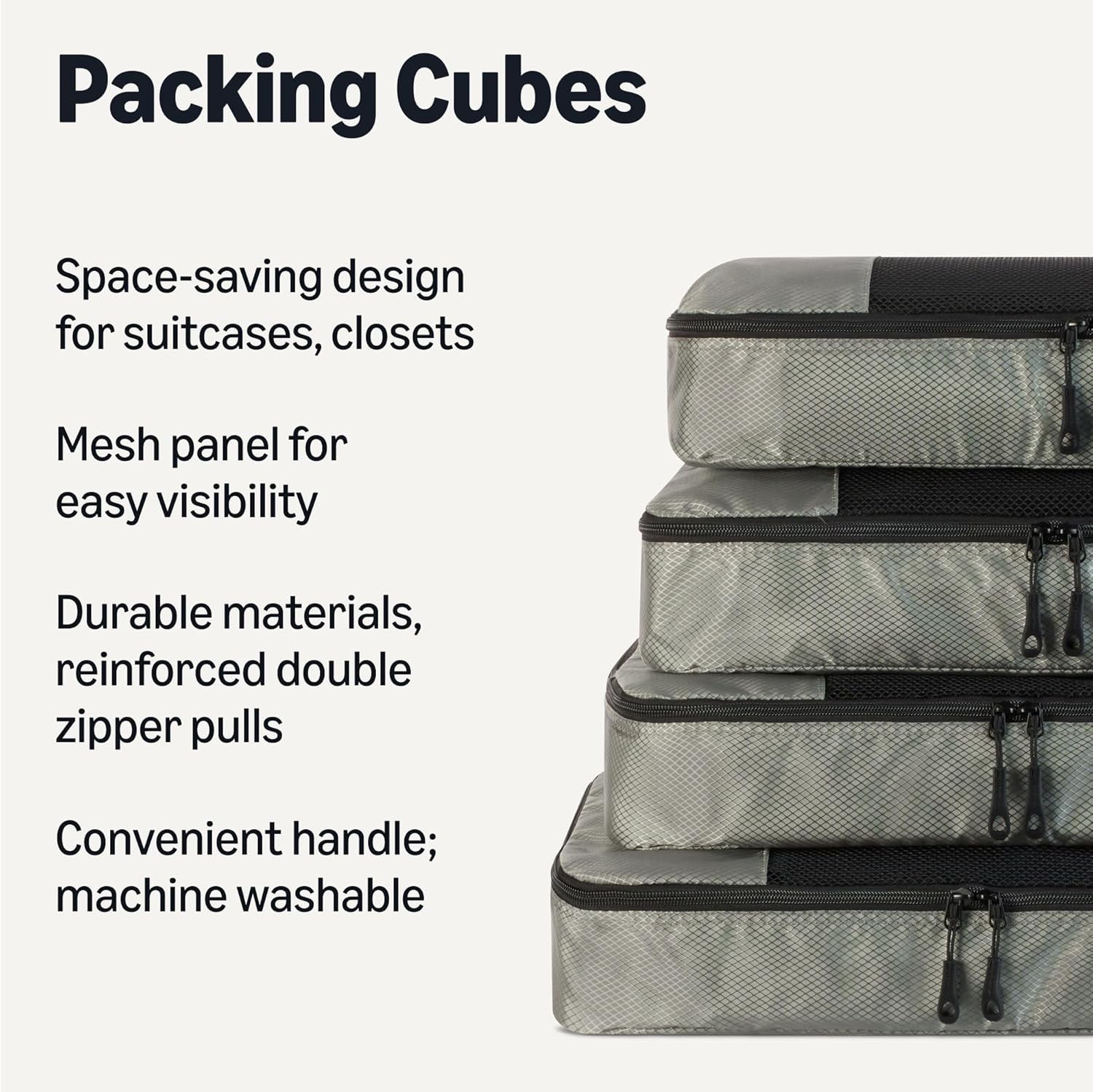
Packing cubes are fabric zip pouches — usually rectangular, sold in sets of varying sizes — that you fill with clothes and slip into your bag. That’s the whole product. They cost anywhere from $15 for a basic set to $80+ for a premium single cube from a brand like Eagle Creek or Peak Design. And yet a remarkable number of travelers buy their first set with exactly the wrong expectation, get mildly disappointed, and then figure out the actual point about halfway through the trip. The goal of this guide is to shortcut that learning curve — explaining what packing cubes genuinely do, which patterns of use get results, how to choose between the endless set configurations on the market, and which specific products are worth your money depending on how hard you travel.
The single most common misconception — documented repeatedly in aggregated buyer reviews across major retail platforms — is the belief that packing cubes are compression tools: that they will let you fit more stuff into the same bag. One Amazon Essentials reviewer put it plainly: they originally thought packing cubes were for compressing more clothes into tighter spaces, but quickly realized the real advantage is organization. That reframe is the foundation of this entire article. Understand it going in, and packing cubes become genuinely transformative. Misunderstand it, and they’ll feel like an expensive way to add extra zippered steps to your routine.
| EDITOR'S PICKShacke 5 Set Packing Cubes for… | Mid-tierAmazon Essentials 4-Piece Packi… | Budget pickBAGAIL 8 Set Packing Cubes Lugg… | |
|---|---|---|---|
| Pieces | 5 | 4 | 8 |
| Laundry bag | ✓ | — | — |
| Mesh top | — | ✓ | — |
| Double zipper | — | ✓ | — |
| Color | Pure Black | Gray | Cream |
| Size name | — | Large | — |
| Price | $26.99 | $18.89 | $16.99 |
| See on Amazon → | See on Amazon → | See on Amazon → |
What Packing Cubes Actually Do (and Don’t Do)
Let’s be precise about the mechanics. A standard packing cube — not a compression cube, just a regular double-zip pouch — holds roughly the same volume of clothing that would otherwise exist as a loose pile. The cube itself takes up a small amount of space with its fabric and zippers. So, on net, standard packing cubes are functionally volume-neutral. You are not gaining more space. What you are gaining is structure.
AFAR Media’s feature on packing cubes makes the same point: the transformation is behavioral, not spatial. When your bag contains four discrete labeled or color-coded cubes instead of one amorphous mass, you stop hunting for things. Your black-hole-of-a-suitcase problem — which several aggregated buyers describe almost word-for-word across different product lines — disappears because every category of clothing has a home. One buyer described their pre-cube suitcase as “a chaotic black hole of rolled-up clothes.” Another, who describes herself as “messy at heart,” credited the cubes with forcing a structure she couldn’t maintain on her own. This is the real ROI: your packing system doesn’t depend on your willpower anymore. The cubes create the system.
Compression cubes — a distinct sub-category featuring a second zip layer that reduces the cube’s thickness by squeezing air out — genuinely do allow you to pack more clothing. But the tradeoff is wrinkling and the fact that your clothes arrive denser and harder to access. Condé Nast Traveler’s 2025 packing cubes feature notes that compression cubes are most valuable for soft, wrinkle-tolerant items like underwear, socks, and synthetic performance pieces, rather than dress shirts or structured knitwear. Keep the two categories mentally separate when you shop.
By the numbers:
- Standard packing cubes: ~0–5% volume penalty (fabric + zippers) vs. loose packing
- Compression cubes: 30–60% volume reduction on soft garments, per manufacturer specs
- Typical set retail price ranges: budget ($10–$20), mid-tier ($25–$50), premium ($55–$120+)
- Average reviewer durability reference: 2–3 years of regular use at mid-tier; one TravelWise reviewer documents five continuous years of daily van travel on the same set
How to Build a System That Actually Works
The failure mode documented most clearly in buyer reviews isn’t a product failure — it’s a method failure. One Shacke packing cube buyer, a frequent flyer doing approximately 100,000 miles per year, noted that they initially packed incorrectly and only started getting results after watching tutorial videos. That admission is useful because it tells you that packing cubes have a learning curve that isn’t obvious from the product page.
Here’s the mental model that makes it click:
Categorize before you pack, not during. The organizational benefit comes from deciding, before anything goes into the bag, that one cube contains tops, one contains bottoms, one contains underlayers, and one contains gym or swim gear. The category decisions made before packing are what make retrieval fast and repacking easy mid-trip. If you just grab clothes and fill cubes until they’re full, you’re using them as pouches, not as a system.
Match cube size to clothing category. REI Co-op’s packing guide recommends this explicitly: larger cubes for bulkier, higher-volume items (pants, sweaters, outerwear layers), smaller cubes for underwear, socks, and accessories. A common beginner mistake is buying a uniform set and trying to make all items fit the same cube size. Most multi-piece sets are deliberately varied in size for this reason — the 4-piece, 6-piece, and 8-piece configurations all include a range of dimensions, not just more cubes of the same size.
Use color to offload cognitive work. Multiple buyers across BAGAIL and Veken product lines independently developed the same system: assign one color to each clothing category, or for family travel, assign one color to each person. Smarter Travel’s packing cubes guide describes this as one of the highest-leverage organizational moves a traveler can make, because it eliminates the need to read labels or unzip cubes to find what you need. You see the yellow cube, you know it’s your workout gear. Done.
Don’t overfill. The single most common execution error — and the one most likely to produce a broken zipper — is trying to close a cube that’s been packed past its designed capacity. The correct fill level is “snug with light pressure from your palm,” not “will close if you sit on it.” Smarter Travel’s packing guide puts it plainly: the zipper should close with one steady smooth pull, no forcing. If you’re fighting the zipper, something comes out.
Choosing the Right Set: 4-Piece vs. 6-Piece vs. 8-Piece
The size of the set you need is almost entirely determined by the size of your bag and how you travel — not by some abstract notion of “more cubes = more organized.”
For a carry-on only traveler (typically a 40–45L bag like a Away Carry-On or Osprey Farpoint 40), a 4-piece set is often the right choice. You want two medium cubes and two small cubes — enough to separate tops, bottoms, underlayers, and accessories without filling the bag so full of cube structure that you lose flexibility for shoes, documents, and tech.
For a checked bag traveler or 50L+ backpacker, a 6-piece set begins to make sense. The additional cubes allow you to separate by laundry status (clean vs. worn — one of the highest-utility use cases that casual buyers often miss) or to add a dedicated cube for formal items.
For family travel or long-haul expeditions of three weeks or more, 8-piece sets let you implement a proper per-person color system without the cubes bleeding into each other. BAGAIL’s 8-piece set is consistently reviewed by families for exactly this reason — multiple reviewers describe assigning a full color set to each child.
One practical note: several experienced buyers in aggregated reviews note that they end up mixing brands over time, buying a single large cube from one brand to fill a gap in their existing set. There’s no penalty for doing this. Packing cubes don’t need to match aesthetically; they need to fit your bag and your system.
Durability, Backpack Use, and Care
Packing cubes work in backpacks just as well as suitcases — arguably better in some configurations, because the cubes create rigid-ish blocks that help a top-loading bag keep its shape and make it easier to extract one category of clothing without unpacking the entire bag. REI Co-op’s backpack packing guide specifically recommends cubes for multi-day hiking and trekking packs for this reason: you can pull out tomorrow’s clothes without disturbing your shelter layer or rain gear.
The strongest long-term durability signal in publicly available reviews comes from a single TravelWise set buyer who documents using the same cubes daily across five years of van travel — a real-world stress test that no weekend tripper would approach. The pattern across aggregated reviews at mid-tier price points is consistent two-to-three year lifespan before zippers start to wear; premium sets from Eagle Creek or Peak Design regularly show five-plus year lifespans in buyer reports.
On care: the zipper is the failure point, not the fabric. To extend zipper life, avoid overfilling (as above), periodically run a zipper lubricant like Gear Aid Zipper Lubricant along the teeth, and when washing, zip all cubes fully closed before putting them in a mesh laundry bag on a gentle cycle. The mesh bag prevents zipper pulls from catching on the machine drum. Air-dry only — dryer heat degrades the zipper tape adhesive on most mid-tier sets.
Frequently Asked Questions
Do packing cubes actually help you fit more clothes in your bag, or just organize what you already have? Standard packing cubes organize; they don’t compress. You’re fitting roughly the same volume of clothes into a more accessible structure. Compression cubes — a separate product with a second zip layer — do reduce volume by 30–60% on soft items, but cause more wrinkling. If your primary goal is fitting more, look specifically for compression cubes; if your goal is faster packing and easier retrieval, standard cubes are the right tool.
How do I choose between a 4-piece, 6-piece, and 8-piece set? Match the count to your bag and trip length: 4-piece for carry-on-only travelers, 6-piece for checked-bag or longer trips, 8-piece for families or multi-week expeditions. More cubes don’t automatically mean more organization — they mean more decisions. Start with fewer and add targeted cubes if you identify a gap.
Can I use packing cubes in a backpack as well as a suitcase? Yes, and they work especially well in top-loading travel backpacks, where they create firm, stackable blocks and let you access a single category without unpacking everything. REI’s backpack packing guide recommends them specifically for this reason.
What’s the correct way to fill a packing cube so it zips without forcing? Fill to the point where light palm pressure closes the gap before you zip. The zipper should close in one smooth motion. If you’re straining, remove one item. Overfilling is the primary cause of zipper failure and the most common first-time user error.
How do I wash packing cubes without damaging the zippers? Zip all cubes closed, place them in a mesh laundry bag, and wash on a gentle cycle in cold water. Air-dry only — dryer heat can degrade zipper tape. Periodically applying a zipper lubricant to the teeth will extend the zipper’s life significantly.
Should different family members use different colored sets? Multiple experienced family travelers recommend it strongly. Assigning a color per person — or per category — eliminates the need to open or label cubes to know whose clothes are whose. BAGAIL and Veken both offer sets in enough color variety to support this system, and several buyers across both brands describe implementing it independently.