October 20, 2026 • Maren Solley • 10 min reading time • Prices verified June 12, 2026
Osprey vs. Budget Packing Cubes: Is the Premium Actually Worth It?
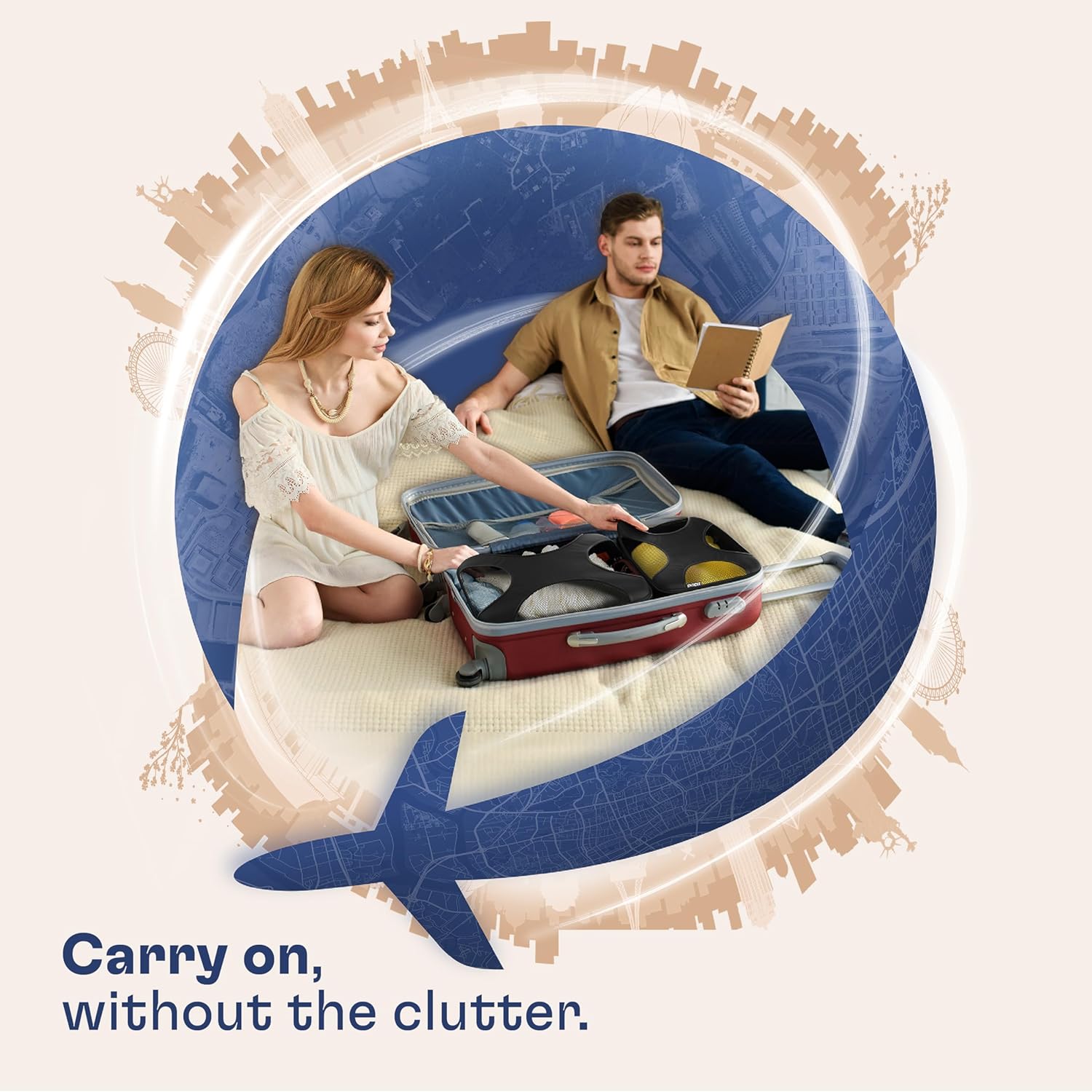
Packing cubes are exactly what they sound like: fabric compartments — usually rectangular, often zippered — that divide the inside of a bag into organized zones instead of one chaotic pile. You roll or fold clothes into them, zip them closed, and slide them into your bag like drawers in a dresser. If you’ve never used them, the concept sounds marginal. If you’ve used them even once on a longer trip, you almost certainly kept using them.
The question isn’t really whether packing cubes are worth owning — they are, almost universally. The question this article is here to answer is whether the premium end of the market, anchored by brands like Osprey, delivers meaningfully better performance than the $20–$30 budget sets from BAGAIL, Veken, Shacke Pak, and Amazon Essentials — and for which travelers the gap matters enough to justify the price difference.
If you’re currently outfitting a new kit, building toward a longer trip, or upgrading from a system that isn’t working, this breakdown is structured around the decisions you’re actually making.
| EDITOR'S PICKOsprey Ultralight Travel Packin… | Mid-tierShacke 5 Set Packing Cubes for… | Budget pickAmazon Essentials 4-Piece Packi… | |
|---|---|---|---|
| Pieces included | — | 5 | 4 |
| Laundry bag | — | ✓ | — |
| Mesh top | — | — | ✓ |
| Double zipper | — | — | ✓ |
| Size options | Multiple sizes | — | Large |
| Price | $45.00 | $26.99 | $18.89 |
| See on Amazon → | See on Amazon → | See on Amazon → |
What Budget Cubes Actually Get Right (More Than You’d Expect)
The honest starting point: budget packing cubes are dramatically better than their price suggests. Reviewers across the BAGAIL and Veken set categories consistently report being surprised — not in a backhanded way, but genuinely — that the cubes changed their travel workflow more than they anticipated. AFAR, in their article “Do Packing Cubes Actually Help You Pack Better?”, notes this pattern repeatedly: the organizational benefit of any cube system tends to outweigh the quality differential between tiers, especially for travelers who are newer to the format.
One illuminating detail from buyer feedback on budget sets: a notable portion of first-time cube owners admit they initially believed the cubes would compress clothing — that they’d squeeze more into the same bag. When they discovered the real value is organization and transfer ease — moving a cube from bag to hotel drawer and back without repacking — most said they’d underestimated what they were buying. That reframe is useful for anyone still on the fence.
For a one-week trip in a roller carry-on, a budget set handles the job reliably. Frequent travelers logging 100,000+ miles annually have rated Shacke Pak cubes positively after sustained real-world use — a meaningful signal. When a road warrior at that volume is still satisfied with a budget cube after a year, it is harder to dismiss the tier.
Where budget cubes predictably underperform:
- Zipper durability under load. Budget cube zippers are functional at launch but show more wear by month six of frequent use, particularly when cubes are packed firmly and zipped under tension.
- Mesh panel quality. Budget mesh is often thin enough to snag on zipper pulls or adjacent gear inside a tight bag. Premium mesh is more tightly woven and resists abrasion.
- Dimensional precision. Budget cubes from multi-pack sets tend to have slightly loose construction tolerances — a small amount of slop in seam work that shows up as wasted volume when you’re packing a 26L carry-on where every centimeter counts.
Comparing the Tiers: Budget, Mid-Market, and Premium
This is where purchase decisions actually get made. Rather than treating price tiers as a vague spectrum, it helps to look at what each tier genuinely delivers — and for whom.
Budget Tier: BAGAIL, Veken, Amazon Essentials, Shacke Pak
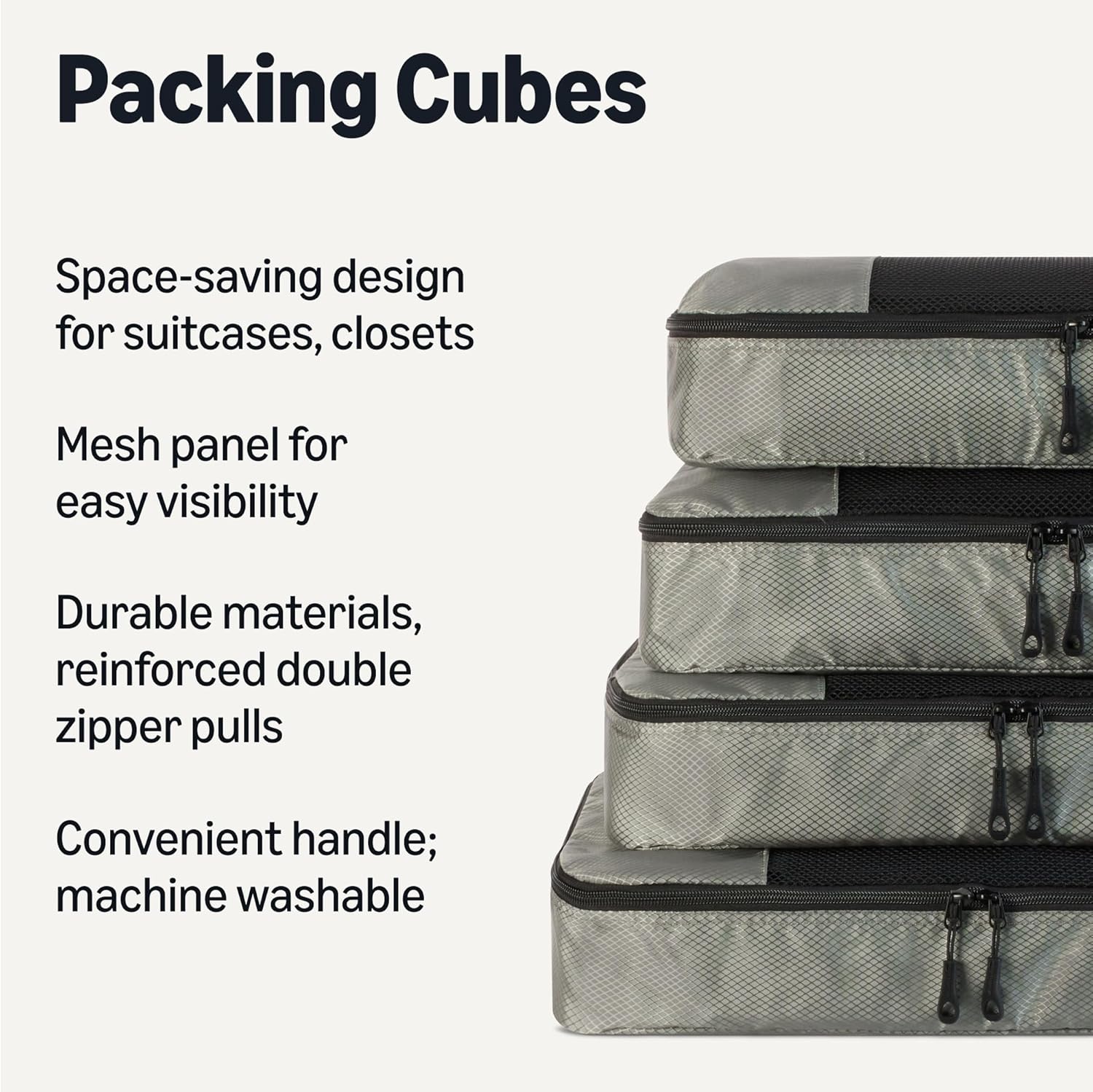
Budget sets in the $20–$28 range typically include four to eight cubes in mixed sizes. Construction is lightweight polyester with mesh panels and a single main zipper. Wirecutter, in their guide “The Best Packing Cubes,” consistently notes that budget options in this category provide the core organizational benefit — grouping by category, enabling fast hotel-room unpacking — at a fraction of premium pricing. Zipper quality and material durability are the documented weak points, with meaningful wear appearing after nine to twelve months of weekly travel.
For moderate travelers (one to two trips per month) packing rollers for city trips or business travel, this tier handles the job without compromise on the metrics that matter most: access, organization, and transfer ease. The value case is strong.
Amazon
$18.89
In stock on Amazon
Check price on AmazonMid-Market Tier: Eagle Creek, Shacke Pak (Larger Sets), Compression Cube Options
Mid-market sets in the $35–$50 range tighten construction tolerances, upgrade zipper hardware, and often add thoughtful details like top-facing zipper orientation (so the zipper opens toward you rather than the bottom of the bag) or interior loops for organization. Eagle Creek’s Pack-It series is one of the better-documented options in this tier, with reviewers noting multi-year durability under regular travel loads.
This is also the tier where compression cubes become relevant. A compression cube adds a second zipper panel — usually across the flat face — that physically compresses the contents by removing dead air. Outside Online, in their roundup “The Best Packing Cubes for Every Kind of Trip,” notes that compression cubes perform best on soft, compressible fabrics — fleece midlayers, packable down jackets, thicker merino base layers — and add little value for jeans, hard shells, or electronics. They solve a specific volume problem, not a general organization problem, and mid-market is the entry point where quality compression mechanics become reliable enough to recommend.
Shacke
$26.99
In stock on Amazon
Check price on AmazonPremium Tier: Osprey Ultralight, Thule, Tom Bihn
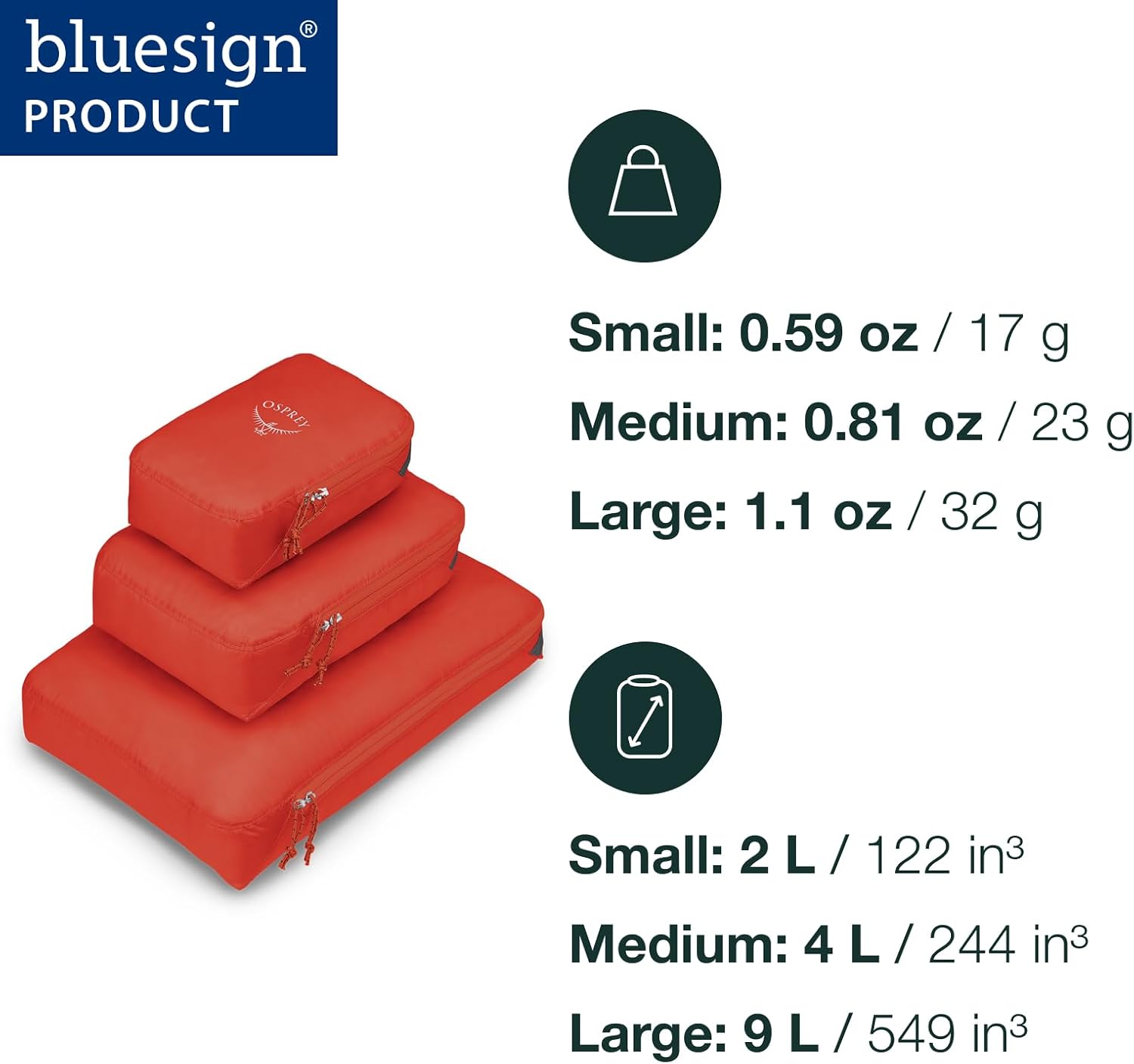
Premium sets in the $50–$80 range are built for a more specific user than the marketing copy often suggests: technical backpack travelers and trekkers, not primarily suitcase travelers. Osprey’s Ultralight Cube set is dimensioned with adventure packs in mind — the Farpoint, Fairview, and similar 40–65L technical bags. That framing matters when evaluating whether the premium is justified.
The case for Osprey Ultralight cubes breaks into three honest advantages:
Weight. Published specs put the Osprey Ultralight set meaningfully below budget multi-packs in total system weight. For a trekker already running a tight base-weight target, that margin is real. For a business traveler rolling a hard-shell suitcase through airports, it is largely irrelevant.
Material performance under stress. Owners report that the ripstop nylon exterior holds up to being packed tightly against frame stays, HDPE sheets, and metal water bottle cages inside technical packs without pilling or abrasion. Budget cubes in the same environment show more surface wear over six months of hard use.
Construction longevity. At 52 trips per year — the pace a genuine road warrior runs — premium cubes amortize their cost advantage quickly. Wirecutter’s packing cube analysis notes that the cost-per-use gap between tiers collapses faster than buyers expect at high travel frequency, which shifts the argument from price toward non-price factors: weight, fit, and material performance under load.
One honest caveat: REI Co-op Expert Advice, in their guide “How to Use Packing Cubes,” recommends measuring your specific bag’s main compartment before committing to any premium cube set, regardless of brand. In rectangular rollers, Osprey cubes seat as cleanly as any competing product. In tapered adventure backpacks from other manufacturers, proportions may leave minor dead space at the corners. Fit is bag-specific, not brand-universal.
Osprey
$45.00
In stock on Amazon
Check price on AmazonThe Sizing Problem Nobody Warns You About
Across every price tier, one complaint surfaces with unusual consistency: buyers wish they had chosen a different size distribution within the same set. This is the most underrated friction point in the packing cube category, and it costs travelers money they don’t need to spend.
A set that arrives with two small cubes, one medium, and one large often turns out to be wrong for that specific traveler’s wardrobe distribution. T-shirt-heavy packers want more medium volume. Travelers who carry bulky layers need a large cube that actually holds a full fleece without being forced shut.
Condé Nast Traveler, in their editor-tested packing cube coverage, consistently recommends buying a mixed-size set first, traveling with it twice, and then replacing only the sizes that didn’t suit your wardrobe — rather than buying a second full set. That is practical advice worth following.
For a standard 21–22” carry-on roller, a practical starting configuration is:
- One large cube for bottoms and thicker layers
- Two medium cubes for tops and base layers
- One slim or flat cube for underwear and socks
For a 40L travel backpack — think Osprey Farpoint 40 or a comparable adventure pack — the same logic applies, but swap the single large cube for two mediums. Most 40L backpack compartments have a narrower horizontal profile than a roller’s, and a large cube can be difficult to seat cleanly without leaving dead space at the sides.
Frequently Asked Questions
Do budget packing cubes actually hold up after a year of regular travel? For moderate travelers — one to two trips per month — the honest answer is mostly yes, with caveats. Zippers on budget cubes from BAGAIL, Veken, and similar brands show wear by month nine to twelve of consistent use. Mesh panels are more vulnerable to snagging. If you’re flying 100,000 miles a year and packing weekly, budget cubes become a recurring replacement cost rather than a one-time purchase. At that pace, mid-market or premium construction may be cheaper over a two-year window.
What is the real difference between compression cubes and regular organizing cubes? Regular cubes organize — they do not reduce volume. Compression cubes add a secondary zip panel that physically flattens the contents, removing dead air. They work on soft, compressible fabrics (fleece, merino, packable down) and add little value for structured items. They solve a specific volume problem, not a universal packing problem.
Which cube sizes work best for a carry-on suitcase versus a 40L backpack? For a carry-on roller: one large, two medium, one flat or slim. For a 40L backpack: replace the large cube with two mediums — the narrower profile of most backpack compartments makes a large cube awkward to seat cleanly.
Do Osprey cubes fit inside non-Osprey bags without wasted space? In rectangular rollers, yes — standard dimensions make fit a non-issue. In tapered adventure backpacks from other brands, minor dead space at the corners is possible. REI Co-op Expert Advice, in “How to Use Packing Cubes,” recommends measuring your bag’s main compartment before committing to any cube set at any price point.
How many cubes do you actually need for a one-week trip? Most travelers are well-served by three to four cubes. The instinct to fill every available slot leads to over-buying. AFAR’s packing cube coverage notes that four cubes — one per major category (tops, bottoms, underwear and socks, layers) — covers the overwhelming majority of packing scenarios without excess.
Is the mesh top panel useful, or does it let clothes get dusty? Mesh panels are useful for visual identification — you can see what’s in a cube without opening it. In overhead bins and hotel rooms, dust is not a meaningful issue. For dusty overland environments, a solid-panel cube keeps contents cleaner. Most travelers don’t need to optimize for this.
The Decision Rule
If you’re packing a roller carry-on for business travel or city trips: a quality budget set — BAGAIL, Amazon Essentials, or Shacke Pak — delivers 90% of the organizational benefit at a fraction of the price. Buy a set, travel with it twice, then replace the sizes that didn’t suit your wardrobe.
If you’re packing a 40L or larger technical backpack for adventure travel, extended overland trips, or any scenario where total system weight is a real constraint: the Osprey Ultralight set or a comparable premium option earns its price in lighter materials, better abrasion resistance, and construction that holds up inside a tightly packed technical bag. The gap is real for this use case.
If your primary problem is volume rather than organization: look at compression cubes — mid-market options from Thule and Eagle Creek are well-documented for this purpose — before upgrading to premium standard cubes. You may be solving the wrong problem with the wrong product.
The packing cube market rewards matching the product to the use case, not defaulting to premium because premium is available. Know which traveler you are, and spend accordingly.