August 20, 2026 • Maren Solley • 8 min reading time • Prices verified June 12, 2026
Luggage Sets: When Buying the Whole Family Makes Sense (And When It Doesn't)
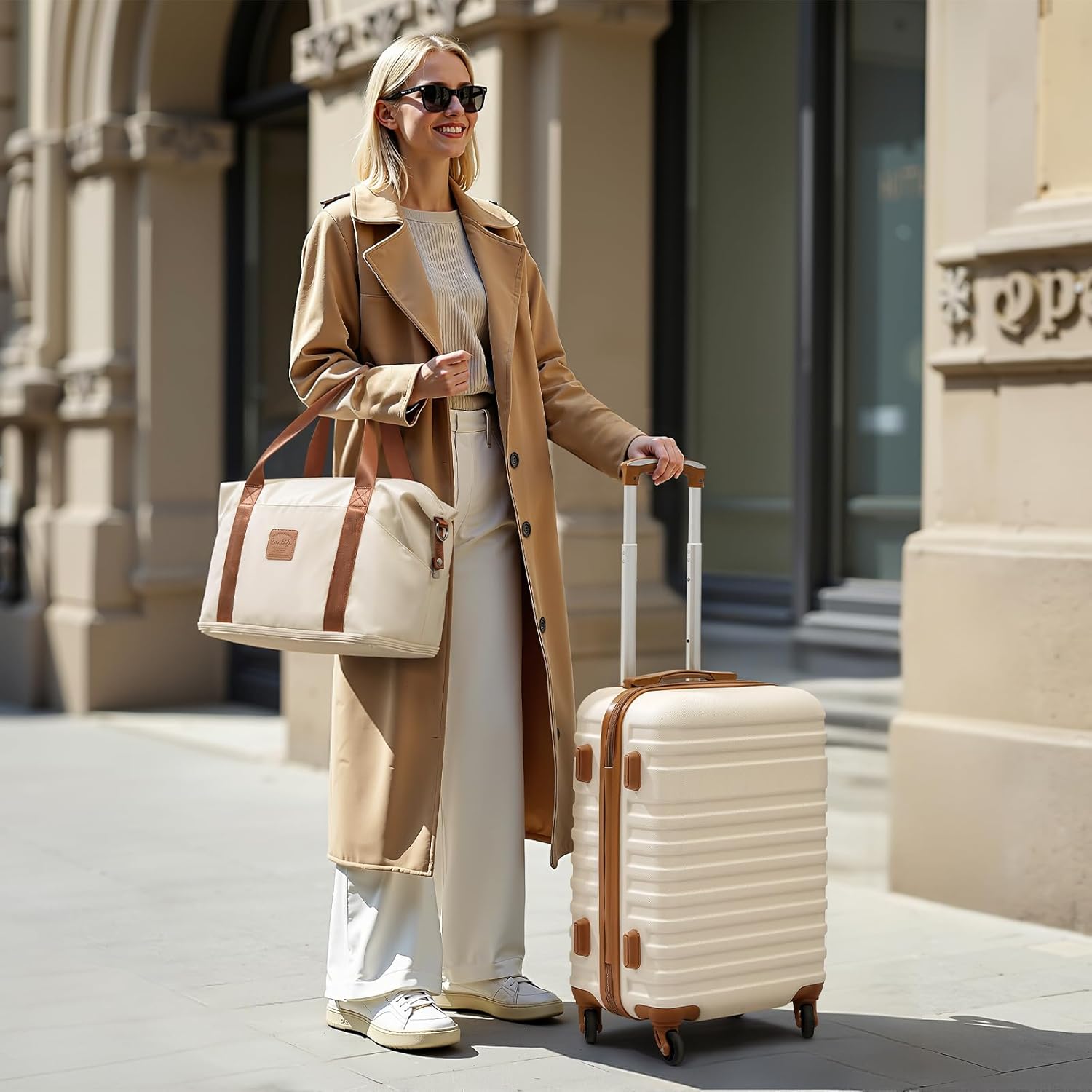
A luggage set is exactly what it sounds like: two, three, or sometimes four suitcases sold together as a matched collection, typically in a carry-on size plus one or two checked bags. The appeal is obvious — coordinated look, single purchase, and a sticker price that seems lower per bag than buying each piece alone. But “seems” is doing a lot of work in that sentence. For travelers who are still building out their kit, or who are mid-decision on whether to replace what they own, the set question comes up constantly — and the right answer depends almost entirely on how you actually travel, not on the discount math in the product listing.
This guide will help you think through that decision cleanly. We’ll look at when sets deliver genuine value, when they don’t, what the tradeoff looks like at the value and premium tiers, and how to run a quick decision check before you buy.
| EDITOR'S PICKSamsonite Saire LTE Softside Ex… | Mid-tierSHOWKOO Luggage Sets 3 Piece So… | Budget pickCoolife 3 Piece Luggage Set Car… | |
|---|---|---|---|
| Shell | Softside | Softside | Hardside |
| Expandable | ✓ | ✓ | — |
| TSA lock | — | ✓ | ✓ |
| Price | $394.34 | $142.49 | $59.99 |
| See on Amazon → | See on Amazon → | See on Amazon → |
The Core Tradeoff: Convenience vs. Optimization
Here’s the fundamental tension: a luggage set is optimized for the household, not the traveler. If you and a partner travel together consistently, share a car, check bags regularly, and want the closet to look tidy, a set is a genuinely sensible system. If you’re a solo traveler who flies carry-on only 80 percent of the time but occasionally checks a bag for a long trip, a set asks you to store and maintain pieces you rarely use.
The math that luggage retailers lean on — “buy the three-piece set and save $120 versus individual prices” — is real, but only if you’d actually have purchased all three pieces at retail. Smarter Travel’s analysis of luggage sets versus individual purchases notes that the per-piece savings on bundled sets typically range from 15 to 30 percent off the brand’s own list prices, but that comparison is almost always made against the same brand’s individual MSRP, not against competing alternatives at each size. A 20-inch carry-on from a mid-tier brand in a three-piece set might be “discounted” to $90 — but a better-reviewed standalone carry-on from a different brand might retail for $95. The savings evaporate when you shop across brands rather than within a single catalog.
The piece you should optimize first is your carry-on — it’s the bag you use on every trip. That’s not a good candidate for compromise.
When a Set Actually Makes Sense
You’re outfitting a family or household that checks bags together. This is the clearest use case. If two adults are traveling with kids and everyone checks a bag, coordinated sets simplify baggage claim, match car storage dimensions, and often stack neatly. The aesthetic coherence is a minor practical benefit — you can spot your bags faster on a carousel.
You’re starting from zero on a tight budget. If you have no usable luggage at all, a value-tier three-piece set from brands like Rockland, Coolife, or American Tourister gets you from zero to covered for $150–$250. Wirecutter’s luggage set coverage consistently highlights American Tourister’s Moonlight series as a starting point for budget-conscious buyers who need multiple sizes immediately rather than building incrementally. The quality ceiling is lower, but so is the floor you’re starting from.
You travel primarily domestically with checked bags. International carry-on rules are stricter and less forgiving than domestic ones (many domestic carriers allow carry-ons up to 24 inches in overhead bins informally, while most international airlines cap overhead at 21–22 inches and weigh them). If your travel pattern is domestic leisure with checked bags, the extra checked sizes in a set are actually used, and durability requirements are lower.
You want a matching gift set. It’s unglamorous but true — luggage sets are frequently gifted for graduations, weddings, and relocations. For gift-giving contexts where the recipient’s travel style is unknown, a set at a mid-tier price is a defensible choice.
When a Set Is the Wrong Move
You’re a carry-on-only traveler. If you’ve committed to traveling light — one personal item and one carry-on — the checked bags in a three-piece set are dead weight. You’ll pay for them, store them, and may never use them. This is the most common over-buy in luggage. AFAR’s guidance on choosing long-lasting luggage makes the point directly: buy what you’ll actually use, because a “deal” on a bag you don’t need is just a more expensive version of nothing.
You’re a frequent long-haul flyer optimizing a specific kit. If you’re flying 50+ segments a year and have clear opinions about shell material (polycarbonate vs. aluminum), wheel type (spinner vs. two-wheel), and handle ergonomics, you’ve graduated past the set format. You’ll want a purpose-selected carry-on (Away, Rimowa, Briggs & Riley) alongside a purpose-selected checked bag — potentially from different brands — because no single brand’s set is best-in-class at every size simultaneously.
You travel in a mixed configuration. A lot of real-world travel looks like: carry-on only for short trips, checked bag for ski trips, daypack for day hikes in the middle. A set of three rigid-shell suitcases doesn’t serve the daypack leg. The better system for this traveler is a premium carry-on, a single medium checked bag, and a quality daypack — purchased individually, probably across three different brands.
You’re buying at the premium tier. At $500 and above for a luggage set, you’re typically buying into one brand’s full lineup. Condé Nast Traveler’s luggage set roundups note that premium bundled sets from Tumi and Samsonite’s Black Label range offer meaningful quality, but the value proposition narrows considerably — at that price point, the individual pieces are equally accessible and reviewers generally recommend buying only what your travel cadence demands rather than bundling.
Value vs. Premium: A Tier Breakdown
By the numbers:
| Tier | Typical 3-piece set price | Per-piece effective cost | Individual alternative per piece |
|---|---|---|---|
| Value (American Tourister, Coolife) | $150–$250 | $50–$83 | $80–$120 |
| Mid-range (Samsonite, Delsey, Ricardo) | $300–$500 | $100–$167 | $150–$250 |
| Premium (Tumi, Briggs & Riley) | $800–$1,400 | $267–$467 | $400–$700 |
At the value tier, the set discount is most meaningful — the per-piece cost is genuinely lower than comparable standalone alternatives, and the quality gap between set and individual at this price is narrow. At the premium tier, the math flips: individual pieces often carry better warranties, more direct manufacturer support, and can be replaced or repaired without involving the rest of the set. Briggs & Riley, for instance, is well-regarded by frequent travelers for its unconditional lifetime warranty on individual pieces — a warranty that applies whether you bought that piece alone or as part of a multi-bag purchase.
The Warranty and Repairability Factor
This is where sets quietly underperform in long-run value. When one bag in a three-piece set breaks — a wheel cracks, a zipper fails, a handle warps — you’re now the owner of a set with one compromised member. Matching replacements are hard to find outside the original purchase window. Brand colorways and collections cycle out every 12–18 months at most mid-tier brands, meaning a replacement piece from the same set often isn’t available 24 months after purchase.
Individual premium bags, by contrast, are designed to be bought, repaired, and replaced as standalone units indefinitely. Owners of Rimowa’s Essential line consistently report that replacement wheels and handle sets are available directly from Rimowa’s service centers years after purchase. That’s a different ownership model — one that rewards investment in individual pieces rather than cohesive sets.
Smarter Travel flags this repairability gap directly: when evaluating a set, it’s worth asking whether the brand offers per-piece warranty service or requires the full set to be involved in any claim.
The Decision Framework
Here’s how to resolve the set question in practice:
If you travel with a partner or family and check bags on most trips: A mid-tier set (Samsonite’s Omni PC series, Delsey’s Chatelet Air line) is a reasonable system. Look for sets with individual warranty coverage per piece, not blanket set coverage. Budget $300–$500.
If you’re a solo traveler or a couple that travels carry-on most of the time: Skip the set. Buy the best carry-on your budget allows — reviewers and frequent flyers consistently rate the Away Carry-On ($295), the Monos Carry-On Pro ($295), or the Briggs & Riley Baseline Carry-On (~$550) as best-in-class at their respective price points — and add a checked bag only when your actual travel volume justifies it.
If you’re starting from zero on a genuine budget: An American Tourister or Rockland value set at $150–$220 gets you functional coverage while you figure out your real travel patterns. Treat it as a starter kit, not a permanent system.
If you’re replacing gear at the premium tier: Buy individually. At $400+ per piece, you have enough options to pick the best bag at each size rather than the best family of bags from a single brand.
The set is a format, not a value guarantee. Like any bundled purchase, it rewards buyers whose use case maps cleanly to the bundle — and punishes buyers who are optimizing for a travel style the bundle wasn’t designed around.
One final check before you commit: count how many times in the last 12 months you would have used each piece in the set you’re considering. If any piece sits at zero, that piece is not a savings — it’s a cost.