September 2, 2026 • Maren Solley • 10 min reading time • Prices verified June 12, 2026
Polycarbonate vs. Polypropylene vs. ABS Hardside Carry-Ons: What the Shell Material Actually Means
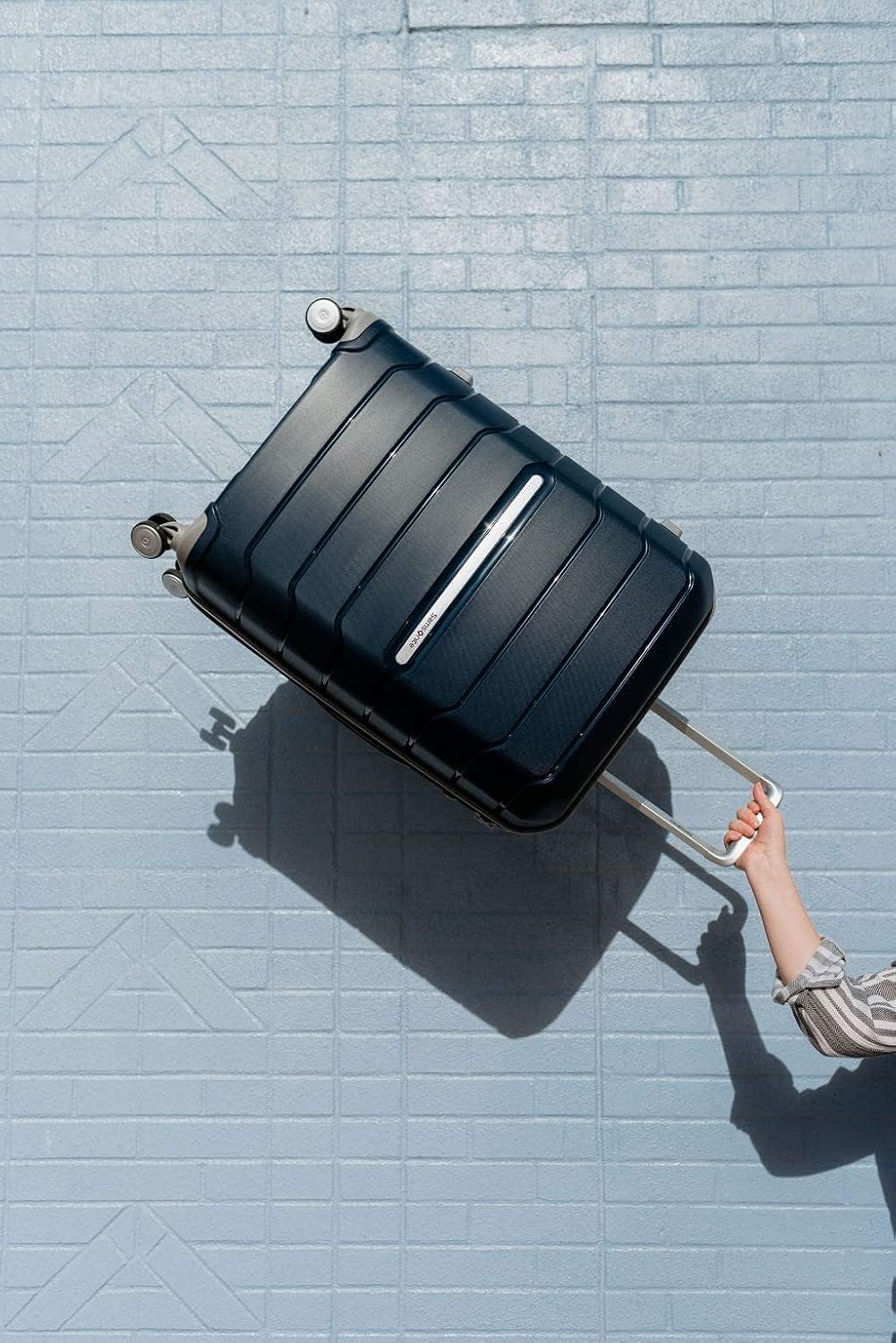
If you have ever stood in front of a luggage wall and wondered why one carry-on is $89 and the one next to it is $450 — when both look roughly identical — you have already bumped into the shell-material question. A hardside carry-on is simply a suitcase with a rigid outer shell instead of a soft fabric one. That shell is made from plastic, but “plastic” covers a wide range of engineering materials that behave very differently when a baggage handler throws your bag onto a belt, when you drop it off a curb at midnight, or after two years of weekly flights. The three materials you will see on spec sheets and in review comments are polycarbonate (PC), polypropylene (PP), and ABS — a blend called acrylonitrile butadiene styrene. Understanding what each one actually does in the real world is the fastest way to stop second-guessing a purchase decision and start making one.
This guide is built around aggregated owner experience — long-term review patterns, known failure modes, and a few unusually detailed owner accounts — rather than lab data. The goal is a clear decision framework by the end.
| EDITOR'S PICKSamsonite Freeform Hardside Car… | Mid-tierSamsonite Freeform Hardside Car… | Budget pickAmazon Basics 21" Hardside Carr… | |
|---|---|---|---|
| Size | Carry-on | Carry-on | 21" |
| TSA approved | ✓ | ✓ | — |
| Handle type | — | — | Telescoping |
| Price | $139.99 | $138.99 | $60.75 |
| See on Amazon → | See on Amazon → | See on Amazon → |
The Three Materials, Side by Side
Polycarbonate is the premium benchmark. It is a tough, slightly flexible thermoplastic that absorbs impact energy by flexing rather than fracturing. Wirecutter’s luggage buying guide and Condé Nast Traveler’s carry-on roundups both consistently point to polycarbonate as the shell choice among premium-tier bags, and the pattern in long-run owner reviews supports that: owners of polycarbonate carry-ons — Rimowa, high-spec Samsonite lines, Tumi — rarely report cracking even after years of checked and carry-on use. The tradeoff is weight and cost: polycarbonate shells are heavier than polypropylene at equivalent thickness, and the raw material is more expensive to manufacture with.
Polypropylene is the most interesting material in the current market because it sits between ABS and polycarbonate in ways that are not always obvious. It is lighter than polycarbonate, has a naturally higher fatigue resistance than ABS (meaning it handles repeated flex cycles better before cracking), and — critically — it is the material that one unusually informed Samsonite Freeform owner put into plain language in their review, describing it as “more flexible and crack-resistant than cheap plastics.” That framing is accurate. Polypropylene bends before it breaks, which matters most in the scenario that actually destroys carry-ons: a sharp edge impact at an angle, the kind that happens when bags are stacked and shifted under the plane. It is worth flagging that this is one owner’s characterization of their experience, not a controlled test result — but it aligns with what polymer material references say about the material’s properties, and it is the kind of informed first-person detail that is rare enough to anchor a comparison around.
ABS is the entry-to-mid market workhorse. It is rigid, easy to mold into complex shapes, takes color well, and is cheaper to produce than either PC or PP. The limitation owners consistently name is brittleness at cold temperatures and in high-impact scenarios. ABS does not flex the way polycarbonate does — it tends to crack rather than dent. For occasional travelers who are careful with their bags and never check them, ABS is genuinely fine. For anyone putting a suitcase in cargo hold regularly, the crack risk is real over time.
By the Numbers
| Material | Flex Before Fracture | Typical Weight Impact | Common Price Tier |
|---|---|---|---|
| Polycarbonate | High | Heavier (+5–10% vs PP) | Premium ($300–$700+) |
| Polypropylene | Medium-High | Lightest of the three | Mid ($150–$350) |
| ABS | Low-Medium | Mid-range | Budget–Mid ($60–$200) |
| PC/ABS Blend | Medium | Mid-range | Mid ($150–$300) |
Weight figures are directional, based on published spec comparisons across category-comparable models. A pure polypropylene shell at the same dimensions will typically come in lighter than polycarbonate, which is one reason PP has become the preferred material for brands competing on weight at the mid tier.
What Long-Term Owner Data Actually Shows
The richest real-world data point in this category comes from LEVEL8 owners who documented living out of a single suitcase for 15 months continuously — the kind of extended, high-frequency use that exposes failure modes invisible in a two-week vacation test. Across aggregated reviews at this use intensity, the consistent finding is that the shell’s durability holds, but the stress concentrates at the corner bumpers and zipper track rather than in the shell panel itself. This is the right frame for evaluating any hardside: the shell material matters, but a well-engineered frame and corner protection matters equally. LEVEL8’s polycarbonate-dominant shell construction is what reviewers credit for the lack of panel cracking at that mileage. For anyone planning to live out of a carry-on for more than a few months — remote workers, long-haul business travelers, digital nomads on continuous circuits — the 15-month benchmark is the right bar to hold a purchase decision against.
On the opposite end of the owner experience spectrum, Rockland suitcase owners across multiple review aggregations have consistently flagged a chemical odor out of the box — described variously as mothball-like or new-car-adjacent but more pungent. AFAR’s materials coverage and Smarter Travel’s buyer guidance both note that this is a known characteristic of certain ABS manufacturing processes, specifically related to residual off-gassing from stabilizers and processing aids used during molding. It is not a defect in the sense of a structural fault, but it is a real-world ownership experience worth knowing about before the bag arrives. The smell typically dissipates with ventilation over days to a few weeks.
Coolife reviewers who also own Samsonite carry-ons have drawn direct quality comparisons with notable frequency, describing the Coolife shell quality as “just as good” as the Samsonite equivalent they own. Smarter Travel’s coverage of value-tier luggage picks up on the same signal: the manufacturing gap between budget-branded and premium-branded ABS and PC shells has narrowed in the last five years, and at the mid-tier specifically ($120–$180), the quality convergence is real enough that it warrants treating these comparisons as credible. The caveat: owner perception of “just as good” is about surface quality and initial experience, not necessarily long-run durability at high use frequencies. The 15-month continuous-use benchmark is still the property of the premium tier.
The Shell-Thickness Problem Nobody Warns You About
One pattern in Omni 2 carry-on reviews deserves its own section because it catches buyers off guard. A consistent group of Omni 2 owners report the suitcase felt “smaller than expected” despite having read the external dimensions before purchasing. The explanation is shell thickness. External dimensions are what airlines measure for carry-on compliance. Internal volume — what you can actually pack — depends on how thick the shell walls are. A thicker shell material eats into interior depth and width even when the outside footprint stays the same.
This is not a problem unique to Omni, but it surfaces there in reviews with enough frequency to make it a useful illustration. Polycarbonate and polypropylene shells can be engineered thinner than ABS at equivalent structural strength, which is one reason premium carry-ons often have better pack-volume-to-external-dimension ratios even when their published specs look similar on paper. If interior volume matters to your packing system — and for carry-on-only travelers it almost always does — the published interior volume in liters is the number to compare, not the external dimensions. Wirecutter’s luggage reviews have flagged this discrepancy consistently across their carry-on testing pool, and Condé Nast Traveler’s packing guides reinforce the same point.
The Value Question: Mid-Tier vs. Budget for Occasional Travelers
The question of whether a mid-tier hardside is worth twice the price of a budget one maps almost perfectly onto the material question. For a traveler taking four to six trips per year, mostly carry-on only, and not checking bags: the honest answer is that a well-chosen ABS carry-on in the $80–$120 range will likely survive that use pattern for several years without failure. The material risk — cracking, brittleness — is real but low at that frequency.
The calculus shifts when you add checking bags, cold-weather travel (ABS becomes more brittle below freezing), or travel frequency above one trip per month. At those conditions, polypropylene’s fatigue resistance and polycarbonate’s flex-before-fracture behavior justify the price premium on a cost-per-trip basis. A $300 polycarbonate carry-on that lasts eight years of monthly travel costs roughly $3.13 per trip. An $89 ABS bag that cracks and needs replacement at year two under the same conditions costs more in the end.
Frequently Asked Questions
Does a polypropylene shell actually crack less than ABS in baggage handling?
Based on the material properties of each plastic and consistent patterns across long-run owner reviews, polypropylene handles repeated flex cycles and impact stress better than standard ABS. ABS tends to fracture at the point of impact; PP tends to deform and recover. This matters most for checked luggage in cargo holds, where bags experience impacts that carry-on-only bags never see. The advantage is real but not absolute — a thin PP shell still cracks under severe enough impact, and a thick ABS shell will outlast a thin PP one.
How do I get rid of the chemical smell from a new hardside suitcase?
This is most commonly reported in ABS luggage and is caused by residual off-gassing from manufacturing additives. Open the suitcase fully and leave it in a well-ventilated space — outdoors or near an open window — for two to five days. Placing an open box of baking soda inside the open bag accelerates odor absorption. Owners across multiple review accounts report the smell is largely gone within a week of airing. If it persists beyond two weeks, it is worth contacting the manufacturer.
Is a mid-tier hardside shell worth twice the price of a budget one for occasional travelers?
For fewer than six trips per year with carry-on only: probably not — a quality ABS bag handles that use case without issue. The mid-tier step-up earns its price for travelers checking bags regularly, traveling in winter conditions, or taking more than one trip per month. At those frequencies, polypropylene or polycarbonate’s durability advantage translates into lower total cost of ownership over the life of the bag.
What causes the scuff marks on hardside luggage and can they be removed?
Surface scuffs on hardside bags come from contact with conveyor belt surfaces, other bags, and overhead bin edges — all abrasive in different ways. Polycarbonate shells scratch more visibly than matte PP but are less prone to cracking. Light scuffs on polycarbonate can often be buffed out with a small amount of plastic polish or even a dab of petroleum jelly worked into the surface with a soft cloth; reviewers and luggage forum communities document this fix with consistent success. Deep gouges are permanent regardless of material. Matte finishes — now standard on most mid-to-premium carry-ons — hide scuffs dramatically better than gloss finishes.
Does shell material affect how much the suitcase weighs?
Yes, meaningfully. At equivalent shell thickness and the same external dimensions, polypropylene is the lightest of the three materials, polycarbonate is mid-to-heavy, and ABS sits in between depending on the specific blend used. In practice, manufacturers also vary shell thickness between price tiers, which complicates direct comparisons. The most reliable approach is to compare published weights between specific models — two 22-inch carry-ons can differ by over a pound based on shell material and frame construction, which matters if you are managing tight airline weight limits.
The decision rule, plainly stated: If you fly fewer than six times a year and carry on only, a quality ABS bag is a rational choice — spend the savings elsewhere in your kit. If you check bags regularly, travel monthly or more, or plan to live out of a single carry-on for weeks at a stretch, polypropylene is the best value at the mid tier and polycarbonate is the benchmark for long-run durability. The 15-month continuous-use pattern documented by LEVEL8 owners is the right mental model for high-frequency travelers: what survives that looks like a good polycarbonate construction; what fails looks like ABS corners and cheap zipper tracks regardless of what the shell is made from.