August 24, 2026 • Maren Solley • 9 min reading time • Prices verified June 12, 2026
Hardside Carry-On Suitcases: A Spec-by-Spec Comparison From $30 to $275
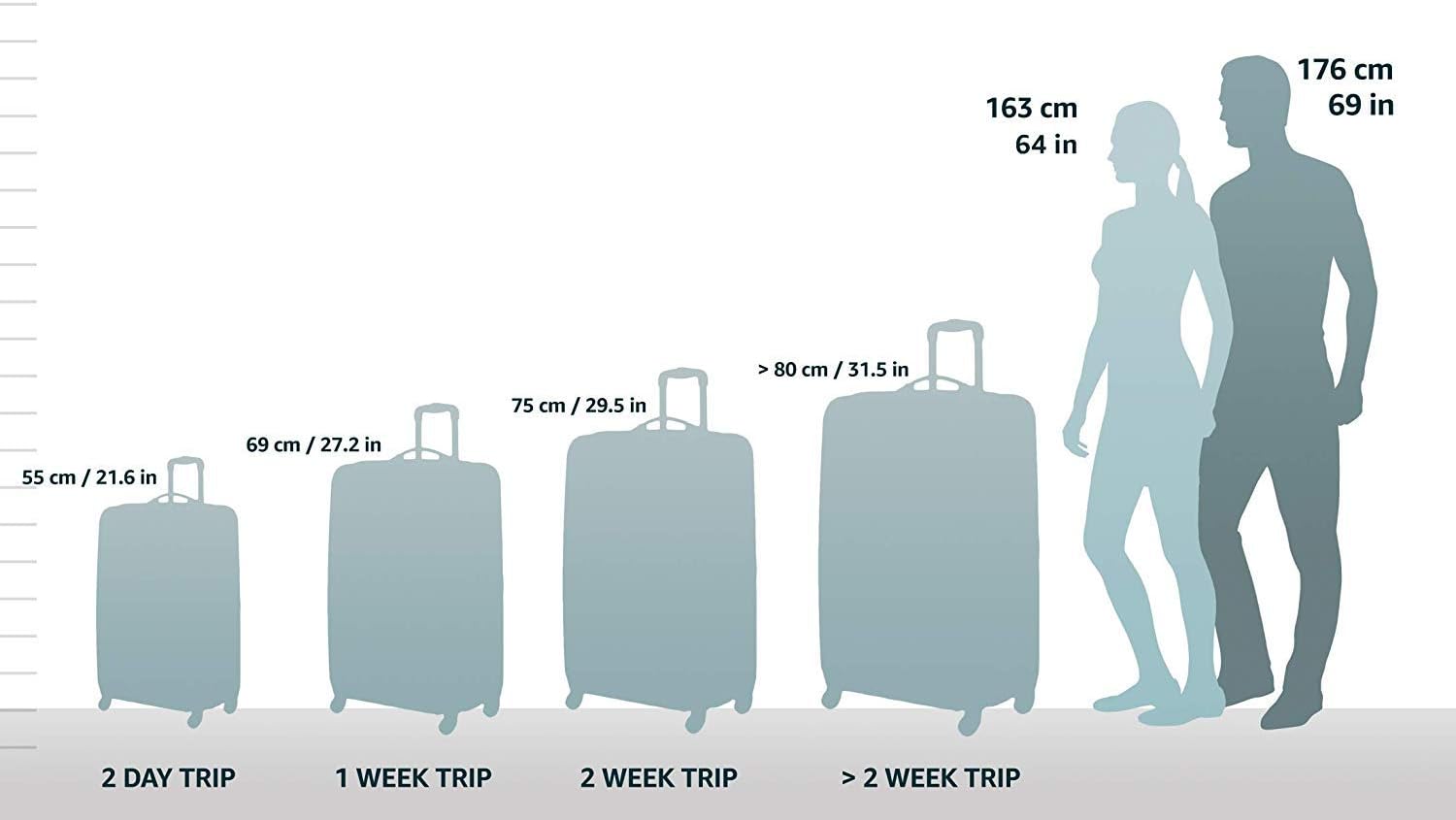
A hardside carry-on is exactly what it sounds like: a rolling suitcase with a rigid outer shell — usually made from polycarbonate, ABS plastic, or a blend of both — sized to fit in an overhead bin rather than checked into the hold. Unlike a soft-sided bag, it doesn’t flex or compress, which means it either fits the bin or it doesn’t. That tradeoff is central to every buying decision in this category. Get the dimensions right, and a hardside carry-on offers better scratch and crush resistance, a cleaner organizational layout, and — at the upper end — a satisfying build quality that holds up across hundreds of trips. Get it wrong, and you’re gate-checking a $300 bag while everyone else boards. This guide walks through the full price spectrum, from budget ABS options in the $30–$60 range to polycarbonate mid-tier bags around $150, up to the premium high-spec poly options near $275. By the end, you’ll have a clear framework for where the real value breaks are — and a direct decision rule for your situation.
The Three Specs That Actually Separate Good Hardside Bags From Bad Ones
Before getting into price tiers, it helps to agree on which specs matter. Reviewers and frequent travelers consistently surface the same three variables when separating durable hardside carry-ons from frustrating ones.
Shell material. ABS (acrylonitrile butadiene styrene) is the plastic used in budget and entry-level bags. It’s lightweight and inexpensive to manufacture, but across aggregated owner reviews on major retail sites, the pattern is consistent: ABS shells crack under sustained pressure — tight overhead bins, baggage handlers at gate-check situations — more readily than polycarbonate. Polycarbonate (PC) flexes slightly under impact and returns to shape, which is why it dominates the mid-to-premium tier. Some bags use a PC/ABS blend, which sits between the two on both durability and cost. Condé Nast Traveler, in their Best Hard-Side Luggage guide, notes that polycarbonate’s flex-and-return property is the single biggest durability differentiator between price tiers.
Wheel system. Spinner wheels (four double wheels that rotate 360°) are standard now, but the quality gap between a $35 bag’s spinner and a $200 bag’s spinner is dramatic. Budget bags typically use a hard nylon wheel mounted on a thin axle; owners consistently report wheel wobble and breakage within a year of regular use. Mid-tier and premium bags use wheels with a larger diameter, a recessed or semi-recessed housing that protects the wheel from side impacts, and a smoother bearing. Wirecutter, in their Best Carry-On Luggage review, notes that wheel quality is the most commonly cited failure point in budget hardside luggage.
Zipper vs. frame closure. Nearly every hardside carry-on below $400 uses a zipper closure. Above that threshold — think Rimowa aluminum or Zero Halliburton — you get a frame-and-latch system. Within the zipper segment, the meaningful difference is whether the zipper runs along a flexible gasket or directly into the molded shell. Bags with a zipper track embedded in a thin ABS lip tend to develop stress cracks at the corners over time. Polycarbonate bags with a properly engineered zipper channel handle repeated opening far better.
By the Numbers: What You’re Actually Getting at Each Price Point
| Price Range | Shell | Wheels | Warranty | Typical Weight |
|---|---|---|---|---|
| $30–$60 | ABS | Hard nylon spinner | 1 year / no warranty | 6.5–8 lbs |
| $75–$120 | ABS or PC/ABS blend | Improved spinner | 1–3 years limited | 5.5–7 lbs |
| $130–$175 | PC or PC/ABS | Dual-spinner, recessed | 5–10 years limited | 5–6.5 lbs |
| $200–$275 | High-grade PC | Premium spinner, wide axle | Lifetime or 10-year | 4.8–6 lbs |
Weights are based on manufacturer-published specs across current-generation bags in each tier, as of May 2026.
Price Tier Breakdown: Where the Value Actually Is
The $30–$60 Tier: Functional, Fragile, and Fine for One Trip
Bags in this range — typically sold under house brands and generic labels on major retail platforms — are built to a price, and the compromises are visible in the spec sheet. ABS shells, thin zipper pulls, hard nylon wheels, and a one-year warranty (if any) are the norm. For a single trip or a once-a-year traveler, they work. For anyone flying more than four or five times a year, owners consistently report that wheel failure and shell cracking make these a false economy.
The one legitimate use case: a specific trip where you want a bag you can abandon. Traveling somewhere you’ll buy things, plan to check the bag home, and would rather not risk a nicer piece. Otherwise, this tier is a trap for regular travelers.
Rockland
$46.99
In stock on Amazon
Check price on AmazonThe $75–$120 Tier: The Most Crowded, Most Confusing Segment
This is where marketing copy diverges most dramatically from build reality. Bags in this range often advertise “polycarbonate construction” in the headline and bury “PC/ABS blend” in the fine print. That blend is not inherently bad — it’s used in mid-tier bags that hold up well for moderate travelers — but it’s not the same as a full polycarbonate shell, and the distinction matters if you’re flying weekly.
The Points Guy, in their carry-on luggage guide, consistently flags that the $80–$120 range is where consumers most often buy twice: once now, and once again eighteen months later after a wheel fails or a shell cracks. That said, there are genuine value picks here. Brands like Rockland and Coolife sell PC/ABS bags with recessed spinners and two- to three-year warranties at the top of this range. They’re honest about what they are, and for a traveler taking eight to twelve trips a year on a tighter budget, they’re defensible.
Weight also improves here: most bags in this tier clock in at 5.5–7 lbs, compared to the 7–8 lb range common at the budget end.
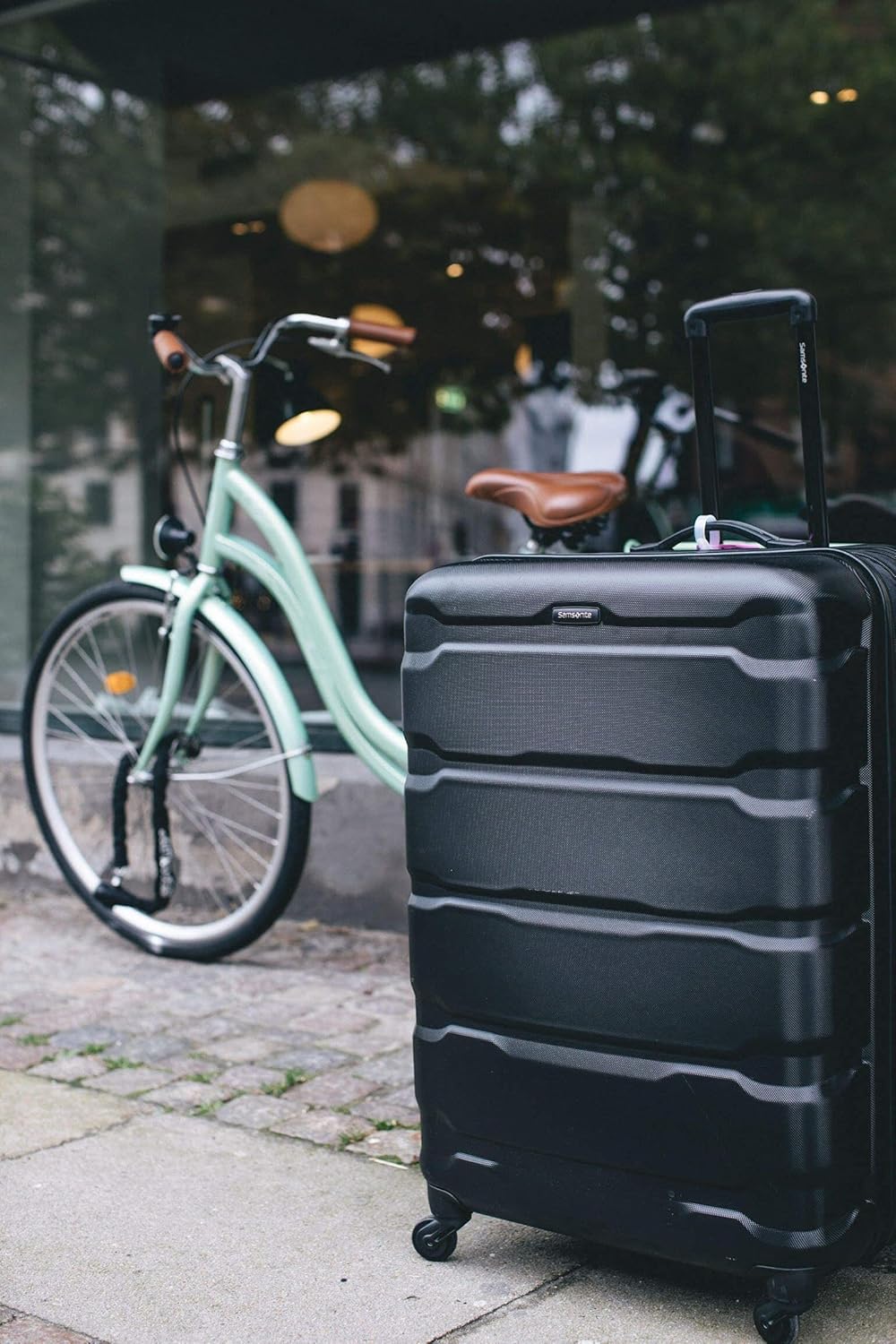
Samsonite
$99.00
In stock on Amazon
Check price on AmazonThe $130–$175 Tier: The Sweet Spot for Most Travelers
This is the range where build quality jumps meaningfully. You’re getting full polycarbonate (or a high-ratio PC/ABS blend from reputable manufacturers), a recessed dual-spinner wheel system with a larger bearing diameter, a proper zipper channel, and warranty terms that signal the manufacturer expects the product to last — typically five to ten years limited.
Brands well-represented here include Samsonite’s Omni and Winfield lines, Delsey’s Chatelet Air 2.0, and American Tourister’s Moonlight. AFAR, in their Best Hardside Luggage roundup, has repeatedly placed Samsonite’s mid-tier polycarbonate options in this range as their “best value” picks, citing the combination of shell flex-resilience and wheel durability across owner review aggregates.
Interior organization also improves: most bags in this tier use a split-case design with a mesh divider on one side and a clamshell with compression straps on the other, rather than the single-cavity layout common at lower price points. That matters if you’re packing for a week-long trip and want to keep clean clothes separated from worn ones without stuffing everything into packing cubes.
Samsonite
$99.00
In stock on Amazon
Check price on AmazonThe $200–$275 Tier: For the Traveler Who Buys Once
At $200–$275, you’re buying a bag that serious frequent travelers and reviewers describe as a “buy it once” decision. The shell is high-grade polycarbonate — not a blend — engineered with consistent wall thickness to flex without cracking. Wheel systems at this price point use a wider axle, a rubberized tread on the wheel itself (which rolls more quietly on hard floors), and a recessed housing that survives being tossed by gate handlers.
A practical standout in this range is the Away Carry-On, which typically retails around $295 but is frequently available closer to $250 during sale periods. It uses a premium Hinomoto wheel system and a polycarbonate shell backed by a five-year warranty. SmarterTravel, in their airline carry-on and luggage coverage, notes that Away’s combination of warranty terms and accessible price point has made it one of the most-recommended bags in the frequent traveler community, with owners consistently reporting that wheels still roll smoothly after two or more years of weekly business travel.
Also worth naming at this tier: the Monos Carry-On, which retails around $245 and uses a similar high-spec polycarbonate shell. It has built a strong reputation among digital nomads for clean interior organization and a well-engineered compression pad. Condé Nast Traveler has featured Monos in multiple hardside luggage roundups, in their Best Hard-Side Luggage coverage, citing owner-reported durability and the brand’s 100-day trial policy as meaningful differentiators.
One honest caveat for this tier: you’re still on a zipper closure, not a frame-and-latch system. If zipper failure is a genuine concern for your travel pattern — you’re an extremely heavy packer, or you regularly fly routes with chaotic overhead bin situations — the next real upgrade is Rimowa or a similar frame-closure system at $500+. The $200–$275 tier doesn’t close that gap; it just represents the best zipper-closure polycarbonate bag available before that price wall.
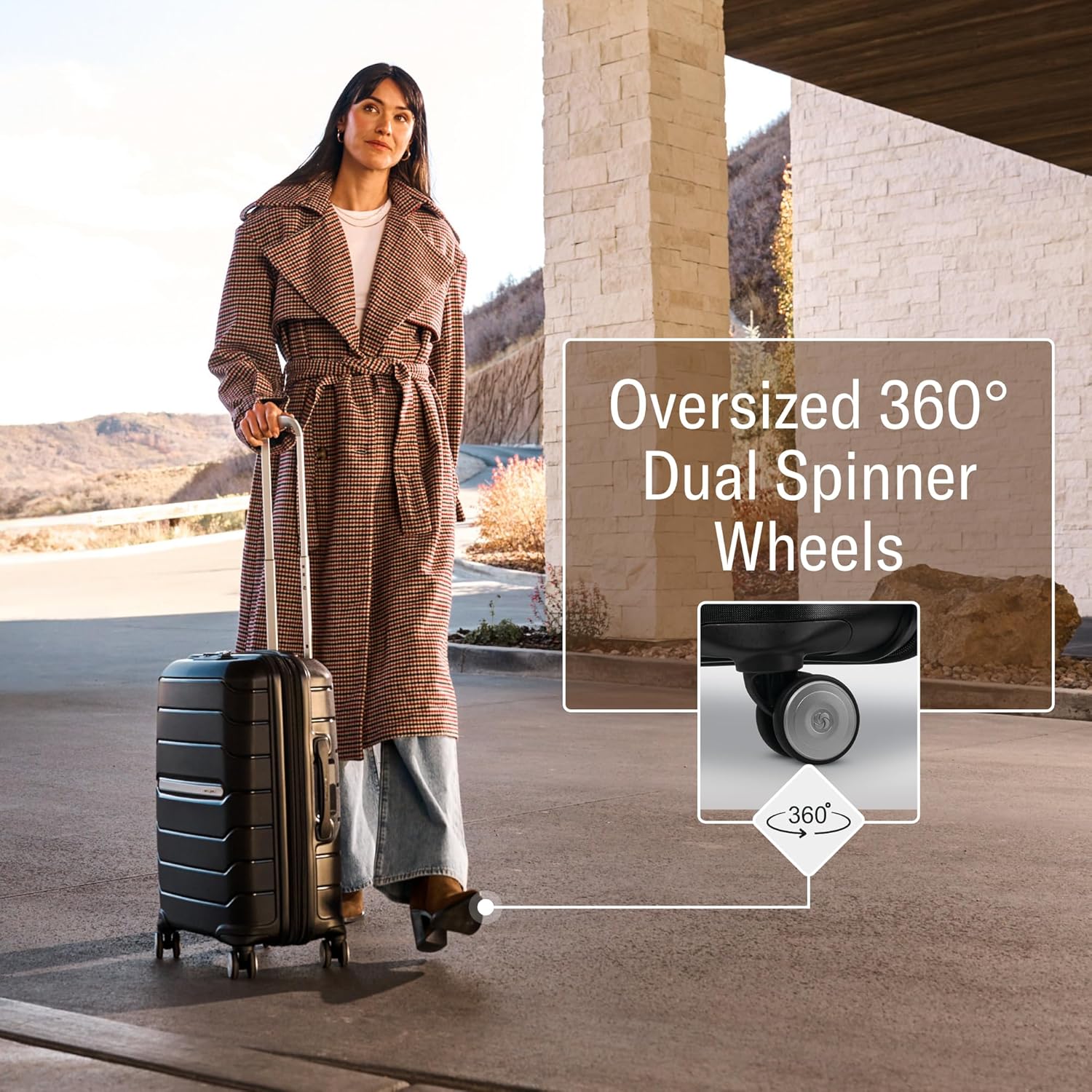
Samsonite
$138.99
In stock on Amazon
Check price on AmazonAirline Sizing: The Constraint That Overrides Every Other Decision
None of the above matters if the bag doesn’t fit. The industry-wide “standard” carry-on size is 22 × 14 × 9 inches, but that standard is aspirational, not enforced consistently. SmarterTravel, in their ongoing coverage of airline carry-on size rules, notes that Spirit, Frontier, and several European low-cost carriers enforce a stricter personal-item and carry-on size policy that can make even a properly-sized hardside carry-on a fee liability on certain fares.
The key spec to check: outer dimensions, not inner. Most hardside carry-on listings advertise interior dimensions or “expandable” dimensions. When a bag lists 22 × 14 × 9 as its size, verify whether that measurement includes the wheels and handle housing. On most hardside bags, wheels and housing add 1–1.5 inches to the depth dimension. A bag marketed as 22 × 14 × 9 may actually measure 22 × 14 × 10.5 with the wheel housing included. That extra inch gets bags gate-checked on stricter carriers.
The Points Guy’s carry-on luggage guide recommends measuring your current bag with a tape measure before purchasing a new one, using the gate sizer at your home airport as a real-world test, and checking the specific airline’s published carry-on dimensions — not just the general “industry standard” — before every purchase decision.
The Decision Rule
If you fly fewer than ten times a year and want to spend under $100: buy a mid-range PC/ABS bag from a reputable manufacturer with at least a two-year warranty. Expect to replace it in three to four years.
If you fly ten to twenty-five times a year or travel for more than thirty consecutive days: the $200–$275 tier is the correct buy. The wheel and shell quality difference is real and documented across owner reviews. The cost-per-trip math favors it strongly over buying two budget bags in the same period.
If you’re a weekly flyer or location-independent professional who treats a carry-on as daily infrastructure: start at Away or Monos, and if zipper failure becomes your primary concern after two or three years of use, that’s the moment to move to a Rimowa or similar frame-closure system — not before.
The $130–$175 tier is genuinely good for moderate travelers and represents the most honest value in the category. The $30–$60 tier is almost always a mistake for anyone who travels regularly. And the $200–$275 tier earns its price for the traveler who’d rather buy once and stop thinking about it.