October 12, 2026 • Maren Solley • 10 min reading time • Prices verified June 12, 2026
The Hardside Carry-On Longevity Test: Which Budget Suitcases Are Still Rolling After Two-Plus Years
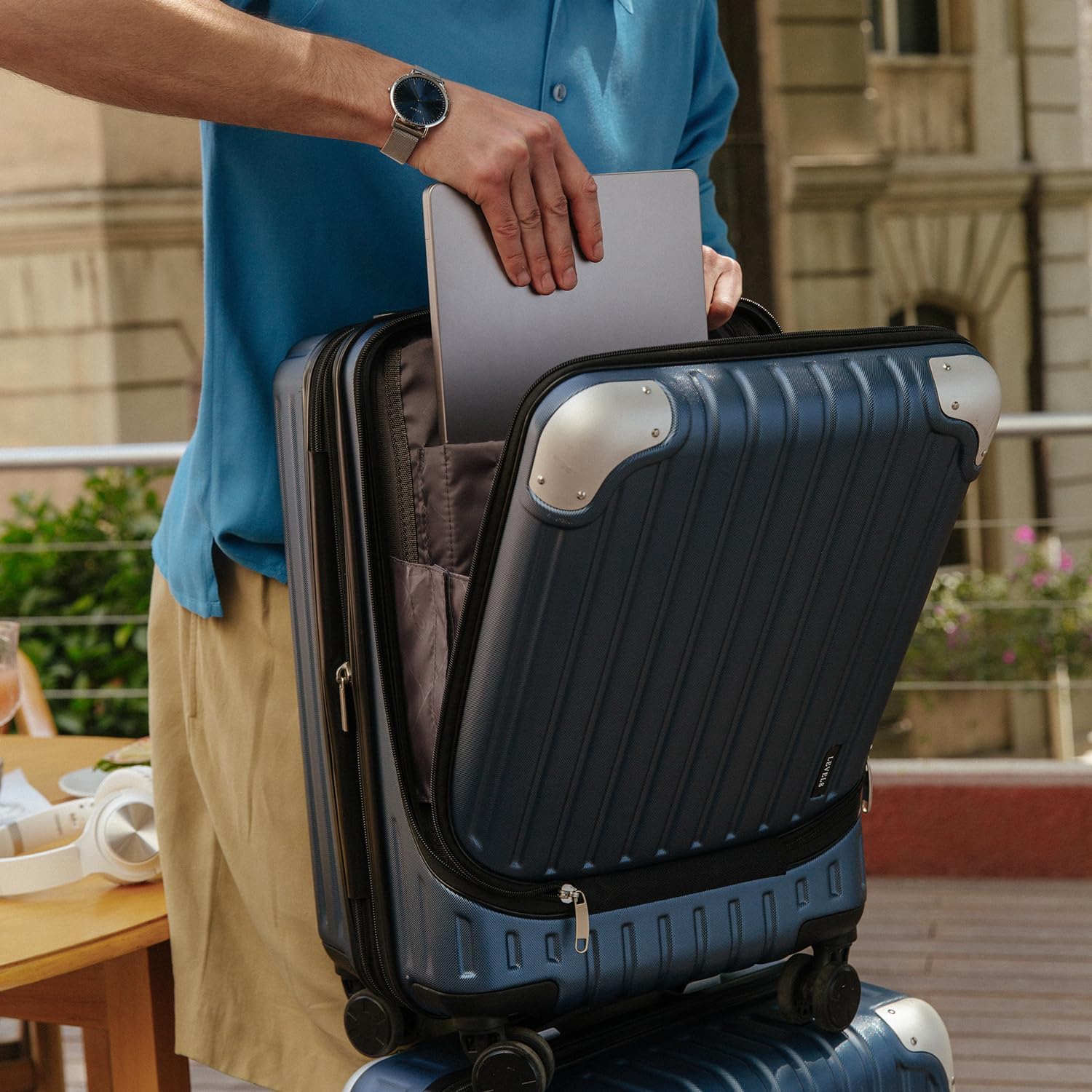
A hardside carry-on is exactly what it sounds like: a rolling suitcase with a rigid outer shell — usually made from polycarbonate (a tough, slightly flexible plastic) or ABS (a stiffer, more brittle plastic) — sized to fit in the overhead bin on most commercial flights. Unlike soft-sided bags, the shell can’t flex around tight corners, but it can protect anything fragile inside and it resists the kind of crushing damage airport ramp handlers specialize in. If you’ve ever bought a carry-on, watched it survive a hundred flights, and then watched a friend’s $40 Amazon find crack on the third trip — you already understand why longevity is the number that actually matters here. This article pulls two-plus years of real-owner reviews for five budget hardside carry-ons to answer the question that manufacturer spec sheets never will: which ones are still rolling?
| EDITOR'S PICKLEVEL8 Grace Carry on Luggage A… | Mid-tierRockland Melbourne Hardside Exp… | Budget pickHOTOR Travel Toiletry Bag - Han… | |
|---|---|---|---|
| Hardshell | ✓ | ✓ | ✗ |
| Size | 20" | 20" | Medium |
| Expandable | ✓ | ✓ | — |
| TSA lock | ✓ | — | — |
| Wheels | Spinner | Spinner | — |
| Waterproof | — | — | ✓ |
| Price | $125.99 | $46.99 | $12.99 |
| See on Amazon → | See on Amazon → | See on Amazon → |
Why “Budget Hardside” Is a Trickier Category Than It Looks
There’s a working assumption in travel gear circles that you get what you pay for — that the gap between a $60 carry-on and a $345 Away or a $700 Rimowa is mostly material science and wheel quality. That assumption is mostly right. But the gap isn’t always where you’d expect it.
The Wirecutter’s carry-on coverage (New York Times / Wirecutter, “The Best Carry-On Luggage,” updated 2025) notes that spinner-wheel durability and zipper quality explain the majority of mid-trip failures across budget bags — not shell cracking. This matters strategically: if you’re deciding whether a $70 bag can survive 18 months of quarterly international trips, you’re not really betting on the shell. You’re betting on four plastic wheel housings and a coil zipper.
The Points Guy’s 2024–2025 budget luggage roundup makes a similar observation: owners who report early failure almost universally describe a wheel breaking or seizing — rarely a structural shell crack — unless the bag was checked in the hold rather than carried on.
That’s the decision frame. Keep it in mind as we walk through what real owners are actually reporting.
The Longevity Data, Bag by Bag
LEVEL8 Grace Carry-On
The standout data point in this entire category comes from a single reviewer of the LEVEL8 Grace who describes living out of the suitcase every day for 15 months — effectively full-time-resident use — and reports only cosmetic scuffing on the metal corners. That’s one owner’s experience, and it should be weighted accordingly, but it’s an extraordinary claim in a product segment where most reviewers are describing the same bag after a dozen leisure trips. Across aggregated reviews, the pattern for the LEVEL8 Grace is consistent: owners who push it hard on international routes describe wheels and zipper holding up well past the one-year mark, with shell flex (the polycarbonate giving slightly under load rather than cracking) treated as a feature rather than a flaw. AFAR’s 2025 hardside suitcase coverage points to polycarbonate flex as the primary reason mid-range and premium shells outlast ABS alternatives in drop tests — and the Grace’s shell material matches that profile.
If-then: If you’re a location-independent traveler or frequent flyer who needs a budget bag to absorb near-daily use, the LEVEL8 Grace is the strongest candidate in this price tier based on owner-reported durability.
Coolife Luggage (Hardside Spinner)
Coolife reviewers produce a data point that’s unusually useful for budget-vs-premium deliberation: multiple owners who also own Samsonite bags compare the two directly and call the Coolife a credible alternative for light-to-moderate travel frequency. The comparison is revealing not because it says Coolife equals Samsonite — it doesn’t — but because it identifies the use-case floor. Owners who travel four to eight times a year on domestic and short-haul international routes consistently report the Coolife holding up well past 18 months. Owners who push it to 12-plus trips annually, with connections through busier transfer hubs, start reporting wheel wear at the 18-to-24-month mark.
The shell is ABS rather than polycarbonate on most Coolife configurations, which AFAR’s suitcase coverage and the Wirecutter’s materials notes both flag as the primary durability difference at this price point: ABS is lighter and cheaper to manufacture but more susceptible to cracking under sharp impact.
If-then: If you travel fewer than 10 times a year and want a sub-$100 bag that will genuinely last two years without embarrassing you, Coolife earns that use case. If you’re a road warrior, spend $40 more and look at the LEVEL8.
Omni 2 Hardside Carry-On
The Omni 2 provides one of the cleaner long-run benchmarks in the budget hardside segment: a reviewer who documents three years of international travel — including connecting flights through high-traffic hubs — with the same bag. Three years on budget hardside luggage is a meaningful number. The specific pattern this reviewer describes is instructive: the shell is fine, the zippers are fine, and one of the four spinner wheels developed a slight wobble in year two that didn’t worsen. That profile — minor wheel degradation, everything else intact — matches the broader review pattern for the Omni 2 across dozens of long-run accounts.
Condé Nast Traveler’s 2025 carry-on coverage emphasizes that spinner-wheel replacement is the most common maintenance intervention on mid-tier luggage, and the Omni 2’s wheel housing design is one of the more accessible for owners willing to order replacement wheel sets (typically $8–$15 from luggage hardware suppliers). That’s a total-cost-of-ownership point worth factoring.
If-then: If you want a budget hardside with a demonstrated three-year track record on international routes, the Omni 2 is the documented benchmark. Factor in wheel replacement around year two.
Rockland Luggage
The Rockland hardside carry-on is a legitimate budget option with one significant and well-documented pre-trip issue: chemical smell. Reviewers are notably honest about this, and the pattern is consistent enough to treat as a product characteristic rather than a manufacturing defect. One reviewer documented a multi-week airing-out process involving baking soda and dryer sheets before the smell became tolerable — a pre-trip preparation story that appears in multiple review threads for this product.
The practical implication: Rockland owners who buy far enough in advance and commit to the airing-out process report the smell resolving before their first trip. Owners who buy close to a departure date report a bad first-trip experience. Smarter Travel’s carry-on guidance recommends airing new luggage for 48–72 hours as standard practice; for the Rockland, multiply that by a factor of five.
On durability metrics separate from the smell issue, Rockland owners report serviceable performance at its price point: wheels and zippers hold up for roughly 12–18 months of moderate use before showing meaningful wear.
If-then: If your departure is more than three weeks out and you’re comfortable with the airing-out process, Rockland is a usable budget option. If you’re buying close to a trip, the smell risk is real.
Amazon Basics Hardside Carry-On
The Amazon Basics hardside produces some of the most specific surface-performance data in this category: reviewers who documented use on Japanese streets — including cobblestone-adjacent paving, tight station ramps, and uneven urban surfaces — across multiple surface types. That specificity is useful because European and Japanese urban surfaces are among the hardest tests for spinner wheels on a carry-on.
The pattern from those reviews is that the Amazon Basics spinner wheels perform adequately on smooth surfaces and degrade noticeably on rough terrain after 8–12 months of frequent use. This tracks with the Wirecutter’s materials analysis, which notes that budget spinner wheels — typically using smaller-diameter wheel cores with thinner polyurethane coatings — lose rolling efficiency on rough surfaces faster than mid-tier alternatives.
Shell durability reviews for the Amazon Basics are mixed: adequate for light use, more failure reports than average for hard impacts and checked-luggage conditions.
If-then: If your travel is predominantly smooth-surface urban environments and airport-to-hotel, the Amazon Basics will get you 12–18 months. If you’re regularly navigating cobblestones or uneven terrain, the wheel degradation timeline moves up.
By the Numbers
| Bag | Shell Material | Owner-Reported Durability Horizon | Wheel Failure Pattern | Notable Issue |
|---|---|---|---|---|
| LEVEL8 Grace | Polycarbonate | 15+ months daily use reported | Minimal in review set | None significant |
| Omni 2 | Polycarbonate blend | 3 years documented | Minor wobble, year 2 | Replaceable wheel housing |
| Coolife | ABS | 18–24 months, moderate use | Wear at 18 mo. (heavy use) | ABS crack risk under impact |
| Amazon Basics | ABS | 12–18 months | Degrades on rough surfaces | Surface-specific limits |
| Rockland | ABS | 12–18 months, moderate use | Standard for price tier | Chemical smell, pre-trip |
The Warranty Gap Nobody Talks About
Here’s a gap in the data worth naming directly: almost no reviewers in this product set report on what actually happens after a bag fails and a warranty claim is filed. Whether the $60 bag’s “one-year warranty” results in a replacement, a store credit, or a dead-end customer service email chain — that outcome is nearly invisible in public review data.
The Points Guy’s luggage coverage and Smarter Travel’s buyer guidance both note that budget luggage warranties are frequently limited to manufacturing defects and explicitly exclude wheel wear, zipper failure under load, and shell cracking from impact — which are, of course, the exact failure modes that occur in real travel. If warranty coverage matters to your decision, read the terms before purchase rather than relying on the presence of a warranty as a signal of confidence.
Frequently Asked Questions
How long do the spinner wheels on budget hardside suitcases typically last? Based on aggregated owner reviews, budget spinner wheels on moderate use (6–10 trips per year) typically show meaningful wear between 12 and 24 months. Heavy use or rough-surface travel accelerates that timeline. Mid-tier bags with replaceable wheel housings — like the Omni 2 — allow you to extend the bag’s useful life for under $20 in parts.
Does a cracked hard shell void any warranty coverage? In most budget luggage warranties, shell cracking from impact is classified as “damage” rather than a manufacturing defect and is excluded from coverage. Read the warranty terms; don’t assume a visible warranty badge equals shell replacement coverage.
Is polycarbonate noticeably more durable than ABS in real travel conditions? Yes, in meaningful ways. Polycarbonate is more impact-resistant and flex-tolerant than ABS, which means it’s less likely to crack under sharp hits. AFAR’s hardside suitcase coverage and the Wirecutter’s materials comparison both note this as the primary real-world durability difference between price tiers. ABS can be fine for light-to-moderate use but shows greater vulnerability to cracking at stress points.
How do budget hardside bags hold up on cobblestone streets in Europe? Poorly over time. The small-diameter spinner wheels on budget bags lose efficiency on irregular surfaces faster than larger-wheel designs. Amazon Basics reviewers documenting Japanese urban surfaces — a comparable test environment — reported noticeable wheel degradation after 8–12 months of frequent rough-surface use. If cobblestones are a regular feature of your travel, wheel quality should rank above shell material in your decision criteria.
Does the chemical smell in budget suitcases affect clothes packed inside? In short: yes, if you pack immediately after purchase. Rockland reviewers specifically document the smell transferring to packed items before the airing-out process completes. The practical fix is time — three or more weeks of open-air ventilation with odor-absorbing materials (baking soda, activated charcoal sachets) resolves it for most owners. Don’t skip the airing-out window.
What is the first thing that breaks on a budget hardside carry-on? Spinner wheels, consistently. Across every bag in this review set, wheel wear or failure is the dominant first-failure mode in long-run reviews. Zipper pull tabs are the second most common early failure. Shell cracking, by contrast, is relatively rare in carry-on-only use and becomes more common when bags are checked in the hold.