September 16, 2026 • Maren Solley • 11 min reading time • Prices verified June 12, 2026
The Expandable Personal Item Backpack: When That Extra 10 Liters Changes Everything
A “personal item” is the smaller bag airlines let you bring on board in addition to — or instead of — a carry-on. Think: the thing that goes under the seat in front of you. Most airlines size it loosely around 18 × 14 × 8 inches, though enforcement varies wildly from carrier to carrier and even gate agent to gate agent. An “expandable” personal item backpack is exactly what it sounds like: a bag that zips into a compact, compliant footprint when you board, then unzips an extra panel to gain 8–12 liters of volume once you’re through the gate. That one zipper can be the difference between fitting a week’s worth of clothes and paying a $75 checked-bag fee. Whether the trick is worth it — and which bags pull it off best — is what this guide is here to settle.
You’ve probably already figured out the basic pitch. What you’re actually deciding now is whether the expansion mechanism holds up under real use, whether the bag will survive gate scrutiny on a Spirit or Frontier flight, and whether the budget-tier options represent genuine value or a false economy compared to spending more for a dedicated travel pack. Let’s work through it systematically.
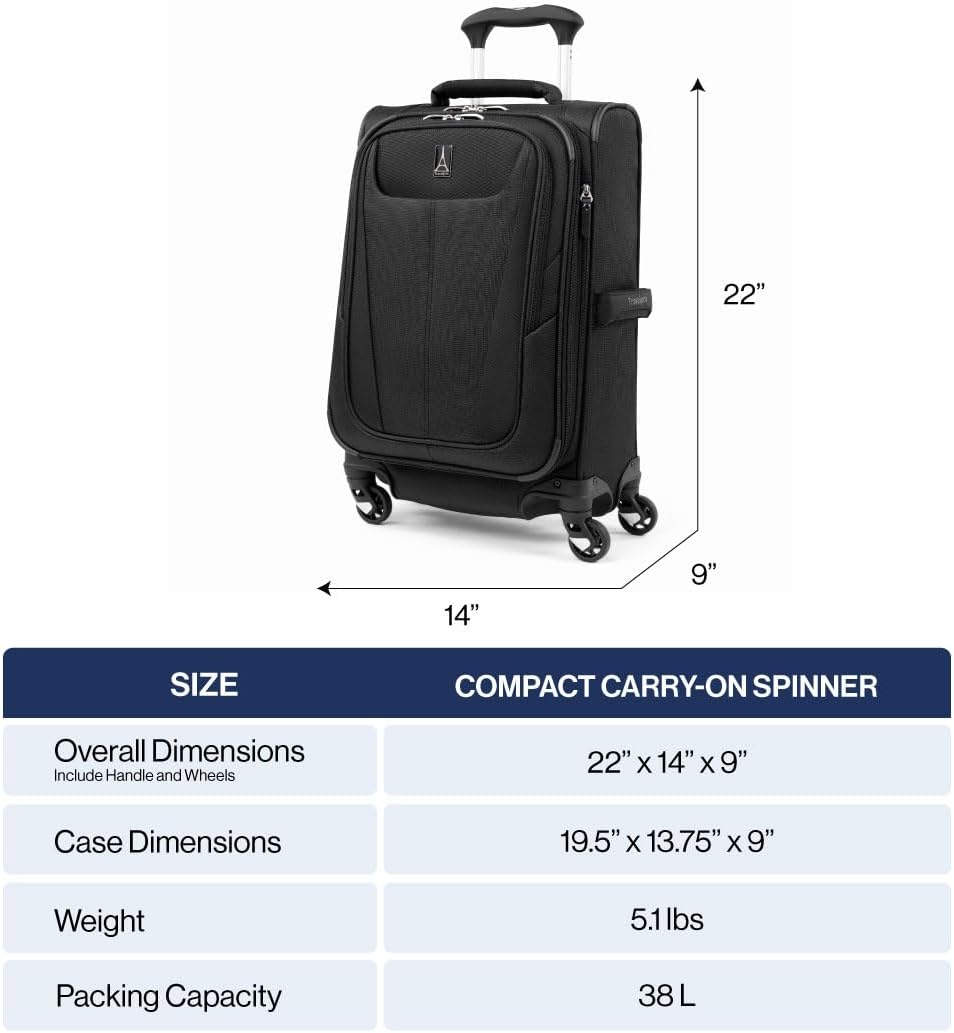
| EDITOR'S PICKTravelpro Maxlite 5 Softside Ex… | Mid-tierECOHUB Travel Backpack 18x14x8… | Budget pickSHRRADOO Extra Large 50L Travel… | |
|---|---|---|---|
| Style | Wheeled suitcase | Backpack | Backpack |
| Capacity | 20" carry-on | 18x14x8 in | 50L |
| Expandable | ✓ | — | — |
| Wheels | 4 spinner wheels | — | — |
| Laptop fit | — | — | 17 in |
| Lock | — | — | ✓ |
| Price | $160.00 | $32.99 | $29.99 |
| See on Amazon → | See on Amazon → | See on Amazon → |
What “Expandable” Actually Gets You — and What It Costs You
The core value proposition is simple: you board with a bag that looks and measures like a standard personal item, then gain the breathing room of a small carry-on once you’re seated. Lonely Planet’s packing guide, “Packing Light: Everything You Need to Know,” consistently notes that a genuine 40L is sufficient for 7–10 days of travel if you pack efficiently — so closing the gap between personal-item and carry-on capacity is a meaningful quality-of-life gain, not a gimmick.
But there’s a real tradeoff baked into the design. Every expansion panel is additional material, additional zipper runs, and additional structural complexity. Reviewers across multiple bags in this category — including the SHRRADOO, the LOVEVOOK 40L, and the Vancropak — consistently describe packing loads that feel implausibly large for the bag’s footprint: gaming laptops, textbooks, tablets, layered clothing, lunch containers. The astonishment is real and genuine — but it comes with a footnote. Those same reviewers describe shoulder straps that perform well at moderate loads and begin to dig in or feel unstructured when the bag is maxed out. The expansion gives you volume; it does not give you a suspension system.
That is the central tradeoff: these bags buy you capacity, not comfort under load. If your week-long trip involves a laptop plus camera plus full clothing, the volume math works. The ergonomics math gets harder.
By the Numbers
| Bag | Compressed Capacity | Expanded Capacity | Expansion Gain | Nominal Price Range (2026) |
|---|---|---|---|---|
| SHRRADOO | ~35L | ~45L | ~10L | Budget |
| LOVEVOOK 40L | ~40L | ~50L | ~10L | Budget-mid |
| Vancropak | ~38L | ~48L | ~10L | Budget-mid |
Capacities based on published manufacturer specs and owner-reported measurements. SmarterTravel’s coverage of personal item bag rules notes that most budget expandable packs gain 8–12L when fully unzipped.
The Three Main Bags: How They Stack Up
Understanding how the leading options in this category differ matters more than any single spec comparison. Each bag makes slightly different bets on where to put its design budget.
SHRRADOO Expandable Pack
The SHRRADOO is the entry point for this category and the most widely reviewed option at its price tier. Owners report that it accommodates larger laptops — some 17-inch machines fit, depending on the laptop’s overall chassis dimensions rather than screen diagonal alone — and that the main compartment is genuinely cavernous when expanded. The clamshell opening performs as advertised. The tradeoff is that the shoulder straps are the first thing reviewers flag at heavier loads: they work, but they don’t transfer weight the way a structured harness would. Durability notes cluster around the expansion zipper after the first year of regular use.
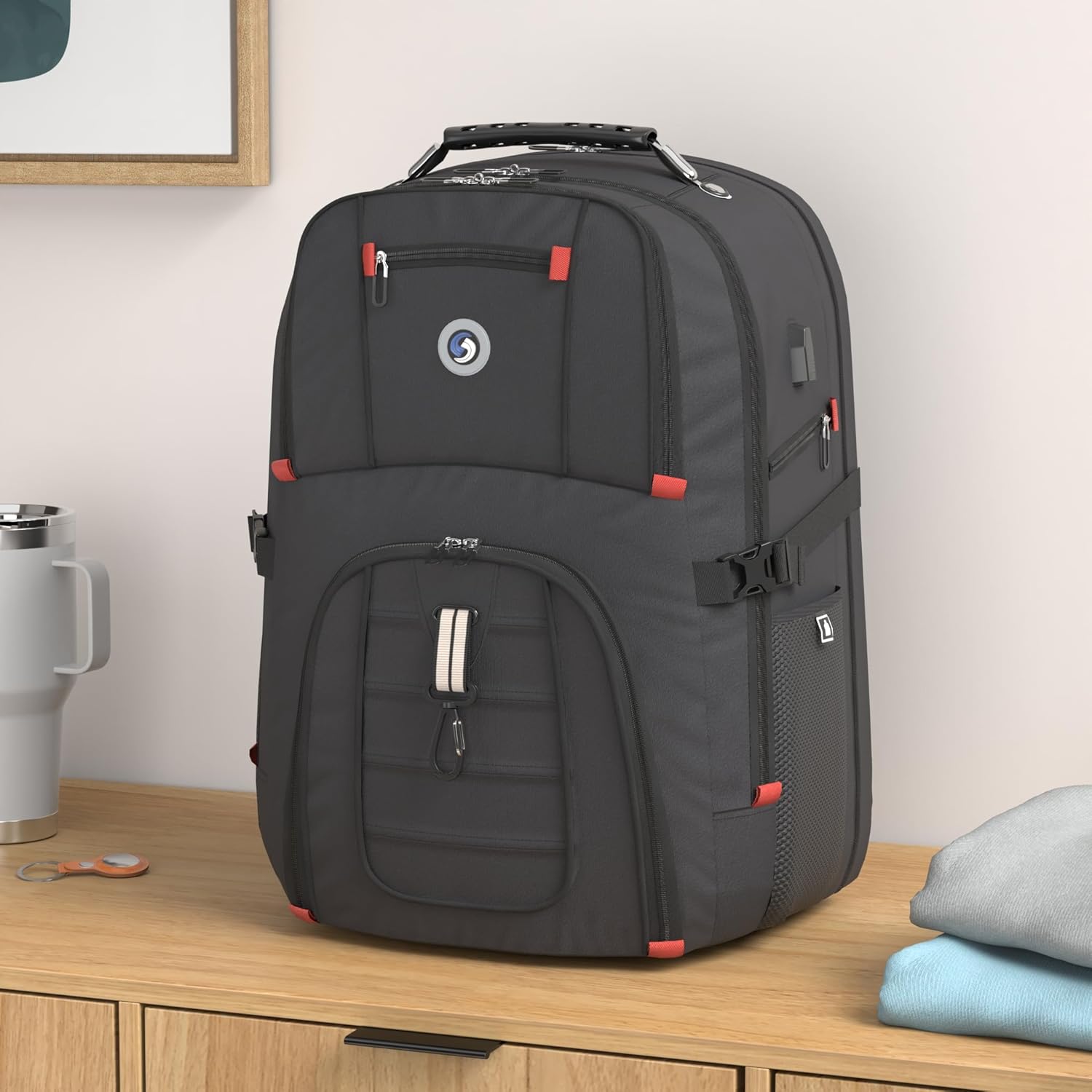
SHRRADOO
$29.99
In stock on Amazon
Check price on AmazonLOVEVOOK 40L Expandable Pack
The LOVEVOOK 40L sits a step up in price and finishes slightly better on external material quality. Owners report using it as a personal item on flights where overhead bins were full, with multiple reviewers noting that airline staff did not request to inspect it — a behavioral pattern among gate agents that SmarterTravel’s coverage of airline bag enforcement trends has documented: soft-sided backpacks tend to receive less scrutiny than rigid-frame rolling bags, even at equivalent volume. This is a risk observation, not a guarantee. The LOVEVOOK’s laptop sleeve is reliably rated to 15.6 inches; 17-inch compatibility depends on the specific machine’s width.
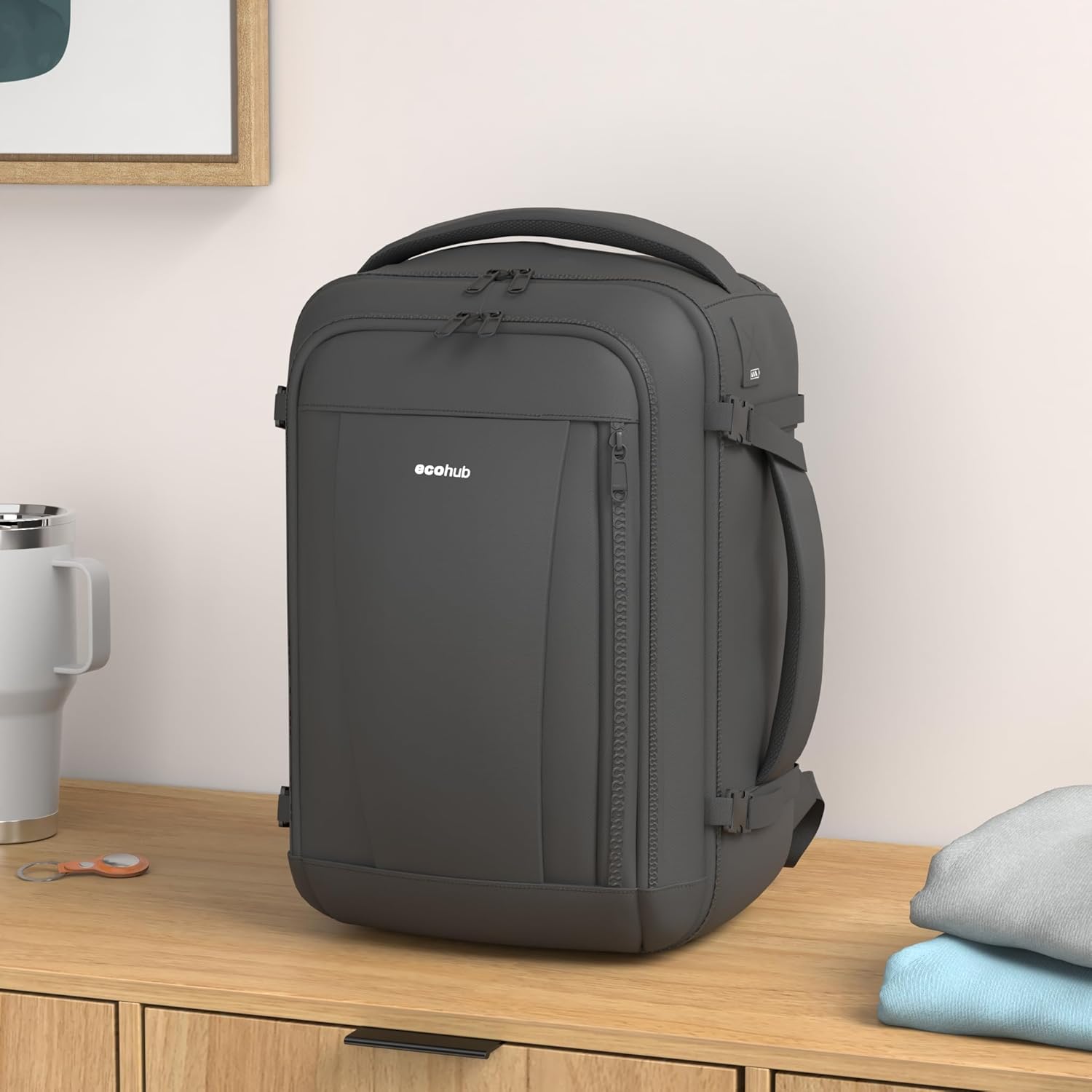
ECOHUB
$32.99
In stock on Amazon
Check price on AmazonVancropak Expandable Pack with Packing Cubes
The Vancropak earns specific attention in user reviews for one detail that the other bags in this tier do not match: its included packing cubes are dimensioned to fit the main compartment correctly. Reviewers note that the cubes slot in without requiring compression or creative stacking — a detail that sounds minor but changes the packing workflow meaningfully. The Vancropak’s zipper pulls and overall finish are described as slightly less premium than higher-priced alternatives, but the included cube set makes it the most immediately usable out-of-the-box option in this tier. Condé Nast Traveler’s roundup of personal item backpacks, “The Best Personal Item Backpacks,” notes that clamshell designs have become mid-market standard features over the past two years — the Vancropak is a representative example of that shift reaching the budget-mid segment.
ECOHUB
$32.99
In stock on Amazon
Check price on AmazonThe Clamshell Opening: The Feature That Actually Changes Your Packing Life
Reviewers across this product category who mention the clamshell “opens like a suitcase” design consistently call it the single feature that most improved their packing experience — and the strength of that response is disproportionate compared to any other feature mentioned. It’s worth dwelling on why.
A traditional top-loading backpack forces you to excavate: to get to the bottom third, you empty the top third. A clamshell that unzips along three sides and lies flat means you can pack like a suitcase — folded layers, packing cubes laid side by side — and see everything at a glance. For a traveler running through airport security, grabbing a hotel room for one night, or reorganizing mid-trip, this is a genuine workflow improvement, not a marketing note.
All three bags reviewed here use clamshell-style access as a core design feature. The question isn’t whether the design is good (it is); it’s whether the implementation holds up across 50 trips. Outside Online’s travel backpack coverage in “The Best Travel Backpacks” makes a relevant point: the risk of a gate check isn’t just the fee — it’s the time lost at baggage claim and the real risk of damage to a bag that wasn’t designed for checked-bag handling. A clamshell bag that survives gate scrutiny by staying compressed is doing its job; one that gets gate-checked and has its expansion zipper stressed by luggage handlers is a different story.
Gate Risk: Will This Bag Actually Work on Your Airline?
This is the question that determines whether the whole category is useful to you, and it deserves a straight answer.
SmarterTravel’s analysis of airline bag enforcement trends documents a clear pattern: budget carriers — Spirit, Frontier, Allegiant, and Ryanair in Europe — have tightened enforcement significantly, introducing physical bag sizers at gates and charging fees on the spot for non-compliant bags. Legacy carriers (Delta, United, American) enforce inconsistently; enforcement often depends on how full the flight is and whether the gate agent is actively checking. International long-haul carriers vary enormously by route.
The practical decision framework:
- If you fly Spirit, Frontier, or Ryanair regularly: Do not rely on the expanded configuration. These carriers use physical sizers, and a 48–50L bag will not pass. Board compressed, expand after the gate.
- If you fly legacy carriers on paid economy tickets: Moderate risk. The bag will likely pass visual inspection when boarded compressed. Soft bags still receive less scrutiny than rigid ones, but enforcement has increased and is not predictable.
- If you’re a premium economy or business class traveler: Enforcement is lighter and overhead space is more generous. The expansion question is largely moot.
The Points Guy’s guide “Best Personal Item Bags for Every Type of Traveler” distinguishes between two buyer profiles: travelers who need maximum capacity in a personal-item-sized shell, and travelers who need a bag that will hold up to 200-plus uses annually. These are different products even when they look identical on the shelf.
Who Should Buy in This Category — and Who Shouldn’t
Buy in this category if:
- You take 4–15 trips per year, mostly domestic or short-haul international
- Your primary goal is avoiding checked-bag fees on budget carriers (with the understanding that you board compressed)
- You pack a laptop, a moderate clothing kit, and a few tech accessories — not a full camera system plus clothes plus shoes
- The clamshell packing workflow is genuinely useful to how you travel
Don’t buy in this category if:
- You fly budget carriers weekly and need guaranteed compliance — a dedicated 30L personal item with no expansion panel is lower-risk
- You’re carrying meaningful weight (full camera kit, heavy shoes, thick jackets) and need real lumbar and shoulder support — the suspension on budget expandable bags is not built for that
- You need a bag that will last 5-plus years of hard use — the zipper runs on expansion panels are the first failure point, and reviewers across this category flag zippers as a durability concern after the first year of regular travel
The honest version: the SHRRADOO, LOVEVOOK 40L, and Vancropak are legitimate, well-reviewed products at their price point. They are not competing with Osprey or Tom Bihn. If your use case fits the category, they deliver the value proposition. If you are shopping against premium options, the decision factor is not the expansion feature — it is durability, suspension, and total cost of ownership across your travel cycle.
Frequently Asked Questions
Will an expanded 48–50L backpack get gate-checked on domestic flights? Potentially, yes — particularly on budget carriers that use physical bag sizers. On legacy carriers, risk is lower but not zero. The standard workflow for this category is to board with the expansion zipped closed, then unzip after you are seated. LOVEVOOK owners specifically report this approach as effective on flights where overhead space was unavailable.
Do the included packing cubes actually fit the main compartment properly? For the Vancropak specifically, reviewers consistently report that the included cubes are dimensioned to slot into the main compartment correctly. For other bags in this category, included cubes (if any) should be treated as a starter kit rather than an optimal fit.
Can a 17-inch laptop fit in these bags, or just 15.6-inch? Most bags in this category list laptop sleeves rated to 15.6 inches. The SHRRADOO’s sleeve is reported by owners to accommodate some 17-inch machines depending on the laptop’s overall chassis dimensions — the sleeve width is the limiting factor, not just the screen diagonal. Verify your laptop’s full dimensions against the sleeve spec before committing.
How does the bag feel on your back when fully loaded for a week? Manageable but not exceptional. Reviewers across all three bags describe shoulder straps that work well at moderate loads and begin to feel unstructured or dig in when the bag is maxed out. None of these bags have load-transfer hip belts in any meaningful sense. For a week-long trip with a full load, plan to use compression packing cubes and distribute weight toward the back panel.
Does expansion noticeably change the external dimensions? Yes, measurably, though the change is mostly in depth rather than height or width. A compressed bag in this category typically sits at roughly 7–8 inches deep; fully expanded, that can push to 10–12 inches. The height and width change minimally. Fully expanded, these bags will not fit under the seat on most regional jets. Compressed, they usually do.
Is the wet pocket large enough for a full-size toiletry bag? Generally, no. The wet or waterproof pockets on bags in this price tier are typically sized for a swimsuit or a small toiletry pouch — not a standard dopp kit or a full quart-bag. Pack toiletries in the main compartment in a dedicated cube.
The expansion zipper is a legitimate tool. Like any tool, it works when you understand its limits. If the tradeoffs above fit your travel pattern, the bags in this category represent real value at their price points. If they do not, spending more upfront on a purpose-built travel pack with proper suspension and guaranteed compliance is the cleaner long-term math.