August 3, 2026 • Maren Solley • 9 min reading time • Prices verified June 12, 2026
Expandable Carry-On Luggage: When the Extra Inches Are Worth It and When They're a Trap
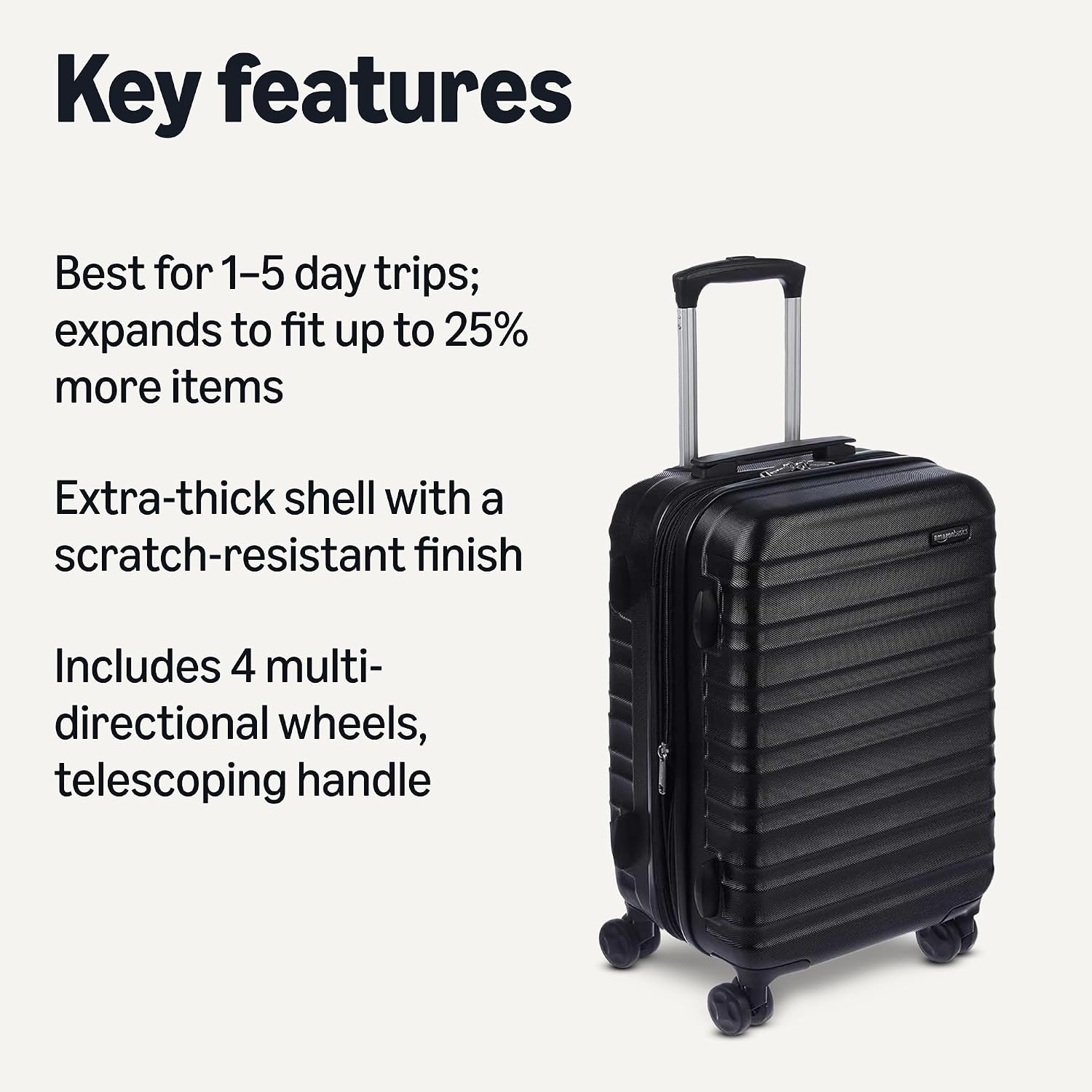
Expandable carry-on luggage is exactly what it sounds like: a rolling suitcase or hardside bag that meets standard overhead-bin size limits when closed, but has a zipper panel — usually running around the bag’s perimeter — that, when unzipped, adds anywhere from one to three inches of depth and meaningfully more interior volume. The pitch is intuitive. You board the plane with a compliant bag, and on the return trip, when you’ve bought things or your packing has loosened, you’ve got extra room. It sounds like the best of both worlds. But the feature generates some of the most polarizing owner feedback in all of carry-on luggage — and for good reason. This guide breaks down the real mechanics, the airline compliance picture in 2026, what long-term owners actually report, and the honest decision rule for whether an expandable bag belongs in your kit.
The Compliance Problem Nobody Puts in the Marketing Copy
Here is the thing that luggage marketing routinely buries: gate compliance is judged on your bag’s unexpanded dimensions, but enforcement happens when you’re standing at the gate with an expanded bag. These are not the same moment.
Most major expandable carry-ons are engineered to meet the near-universal 22×14×9-inch limit when compressed. A buyer who weighed in on the Samsonite Omni 2 on a travel gear forum specifically chose the bag because it sits at 22×14×9 unexpanded — the anxiety was real and the reasoning was sound. At that dimension, the bag clears size sizers at every U.S. major carrier and most international ones. But the moment you fly with it expanded, you’re traveling with a bag that is physically two to three inches deeper than the limit allows.
This matters because enforcement has tightened. Per Smarter Travel’s 2024 analysis of airline carry-on enforcement trends, budget carriers in Europe and a growing number of U.S. carriers have deployed physical sizer frames at gates more frequently since 2023, particularly on full flights. The Points Guy’s 2025 carrier comparison confirms that Spirit, Frontier, and Ryanair are the strictest, but legacy carriers including American and United have increased gate checks on routes where overhead space is genuinely scarce — transcon flights, holiday travel windows, and regional jets.
If you board with your bag expanded, you are flying outside spec. The bag may fit anyway — overhead bins on wide-body aircraft often absorb oversized bags without complaint — but on a regional ERJ-175 or a full A320, you’re gambling. Gate agents on full flights have both the authority and the incentive to check any bag that won’t close the bin. The bag you declared compliant at purchase is no longer compliant in practice.
The practical rule: if you use the expansion feature at all, use it for ground travel and packing at home, then compress and latch it before you enter the airport.
What the Expansion Feature Actually Buys You (and What It Doesn’t)
When it works as intended, expansion adds roughly two to four liters of interior volume — enough for a few days of extra clothing, a souvenir haul, or the natural loosening of a packed bag over a two-week trip. That’s genuinely useful. The question is whether a bag with a well-executed compression system gets you the same result without the compliance risk.
Owners of the Away Carry-On consistently praise the bag’s interior compression system — a set of internal straps that compress and stabilize contents — specifically as a functional alternative to expansion. The key distinction: the Away’s compression doesn’t change external dimensions. You’re managing volume inside the same shell. For the traveler who overpacks slightly, that’s often enough. For the traveler who significantly overpacks, it isn’t.
The honest trade-off matrix looks like this:
| Scenario | Expandable bag | Compression-only bag |
|---|---|---|
| Return trip with souvenir load | ✓ Useful if compressed before gate | Requires tighter discipline |
| Frequent regional jet routes | ✗ Expansion increases gate-check risk | ✓ Consistent compliance |
| Long-haul wide-body only travel | ✓ Bins often accommodate minor oversize | ✓ Same |
| Daily or weekly business travel | Depends on expansion discipline | ✓ Lower cognitive overhead |
Hardside vs. Softside: Which Survives the Expansion Stress Better?
This is where material science starts to matter. Expansion puts stress on both the perimeter zipper and the shell material around it — and those stresses are meaningfully different between polycarbonate or polypropylene hardsides and nylon softsides.
Wirecutter’s 2025 carry-on luggage review notes that polycarbonate shells — the material used in many mid-range hardsides — are more susceptible to cracking under point stress than polypropylene alternatives. One buyer reviewing the Samsonite Freeform specifically called out its polypropylene shell as noticeably more crack-resistant than cheaper plastics when the bag is under packing pressure, which directly relates to the repeated flex stress that expansion puts on a hardside’s gusset area.
Softsides tell a different story. A long-term owner of the LEVEL8 Grace who used the bag daily for 15 months specifically praised the expansion zipper’s durability — a rare extended-use data point in a category where most reviews reflect a few months of ownership at most. That longevity isn’t universal: across aggregated reviews, the pattern is that cheap-coil expansion zippers on entry-level bags start to feel loose or mistrack within 12–18 months of regular use, while YKK-zipped softsides hold up considerably better.
The general picture from owner reports and published specs:
- Polypropylene hardside (Samsonite Freeform, Delsey Chatelet Air): more crack-resistant than polycarbonate under expansion stress; the rigid perimeter means the zipper bears less lateral tension when the bag is packed hard
- Polycarbonate hardside: lighter but more crack-prone near gusset seams under repeated flex — not ideal if you’re expanding and compressing frequently
- Ballistic or high-denier nylon softside with YKK zippers (LEVEL8 Grace, Osprey Transporter): expansion zippers hold up well over 12+ months of documented use; the material flexes naturally rather than stress-concentrating at a point
AFAR’s 2025 guide to expandable luggage reinforces the recommendation to look specifically at zipper gauge and coil quality before buying — it’s the most failure-prone component of the expansion feature and the one manufacturers least often discuss openly.
The Decision Frame: When It’s Worth It and When It’s a Trap
You’ve absorbed the tradeoffs. Here’s how to turn them into a decision.
The expansion feature is worth it if:
- Your primary routes are long-haul wide-body flights (transatlantic, transpacific, major hubs) where overhead bins are large and enforcement is lighter
- You travel for 10+ days at a time and the bag genuinely needs to come home larger than it left
- You are disciplined about compressing the bag before every airport entry — not occasionally, every time
- You prioritize packing flexibility over compliance simplicity and you’ll never use budget carriers
The expansion feature is a trap if:
- You frequently fly regional jets (ERJ, CRJ, Q400) where overhead space is tight and gate checks are common
- You use budget European or U.S. carriers with active sizer enforcement
- You travel on a weekly or near-weekly cadence and want one less decision to manage
- You’re a light packer who would never actually fill the expanded volume — you’re carrying dead weight in the zipper mechanism for no benefit
A clean if/then rule: If your travel is mostly long-haul on legacy carriers and you’re doing trips longer than 10 days, an expandable bag is a reasonable bet — pick a polypropylene hardside or a YKK-zipped nylon softside and commit to flying it compressed. If you’re doing anything involving budget carriers, regional jets, or weekly frequency, skip the expansion feature entirely and put that mental bandwidth toward an excellent compression system instead. The Away and similar compression-first designs handle the overpacking problem without adding compliance risk to the equation.
Frequently Asked Questions
Does expanding a carry-on make it too big for the overhead bin?
Yes, in most cases, an expanded carry-on exceeds airline size limits. Most expandable bags are engineered to meet the 22×14×9 standard when compressed. Expanded, they typically run 24–25 inches tall or 11–12 inches deep. Whether that fits in a specific bin depends on aircraft type — wide-body bins are more forgiving, regional jet bins are not.
Can airlines make you gate-check an expanded carry-on even if it was compliant when you boarded?
Yes. Gate compliance is based on what the agent sees when you’re boarding, not what the bag’s spec sheet says. If your expanded bag doesn’t fit in the overhead bin or the gate agent determines it’s oversized, they have full authority to check it regardless of your bag’s nominal dimensions. Smarter Travel’s 2024 enforcement piece documents this as an increasing pattern on full flights.
Does the expansion zipper wear out faster than the main zipper?
Across owner reports, cheaper coil zippers on the expansion panel tend to degrade faster than the main compartment zipper — particularly on bags that are expanded and compressed frequently. The LEVEL8 Grace’s 15-month durability report is an outlier positive; budget-tier expansion zippers are more likely to misbehave inside 18 months of regular use. YKK zippers on the expansion panel are a meaningful quality indicator to look for.
Is an expandable hardside or softside carry-on more durable under repeated expansion?
Polypropylene hardside shells handle expansion stress better than polycarbonate because polypropylene flexes rather than cracks. High-denier nylon softsides with YKK expansion zippers also perform well long-term. The weakest configuration is a polycarbonate hardside with a lightweight coil expansion zipper — the shell is prone to gusset cracking and the zipper is the most likely point of failure.
Should you fly with your carry-on expanded or pack it unexpanded and expand on the return?
Pack it unexpanded, fly it unexpanded, and expand only on the ground. The return-trip expand-for-souvenirs use case is legitimate — just compress and latch the bag before you enter the airport on the way home. Never board with an expanded bag if you’re on a full flight, a regional jet, or any budget carrier with active enforcement.
What happens if your expanded carry-on doesn’t fit in the overhead bin sizer at the gate?
You’ll be required to gate-check it, which typically means checking it to baggage claim at your destination. On international routes, this may also trigger a fee depending on your fare class and whether your ticket includes checked baggage. Per Lonely Planet’s carry-on packing guide, the safest protocol is to compress the bag before reaching the gate — not at the gate — so you’re never in that position.