August 14, 2026 • Maren Solley • 11 min reading time • Prices verified June 12, 2026
Compression Packing Cubes vs. Regular Cubes: An Honest Side-by-Side
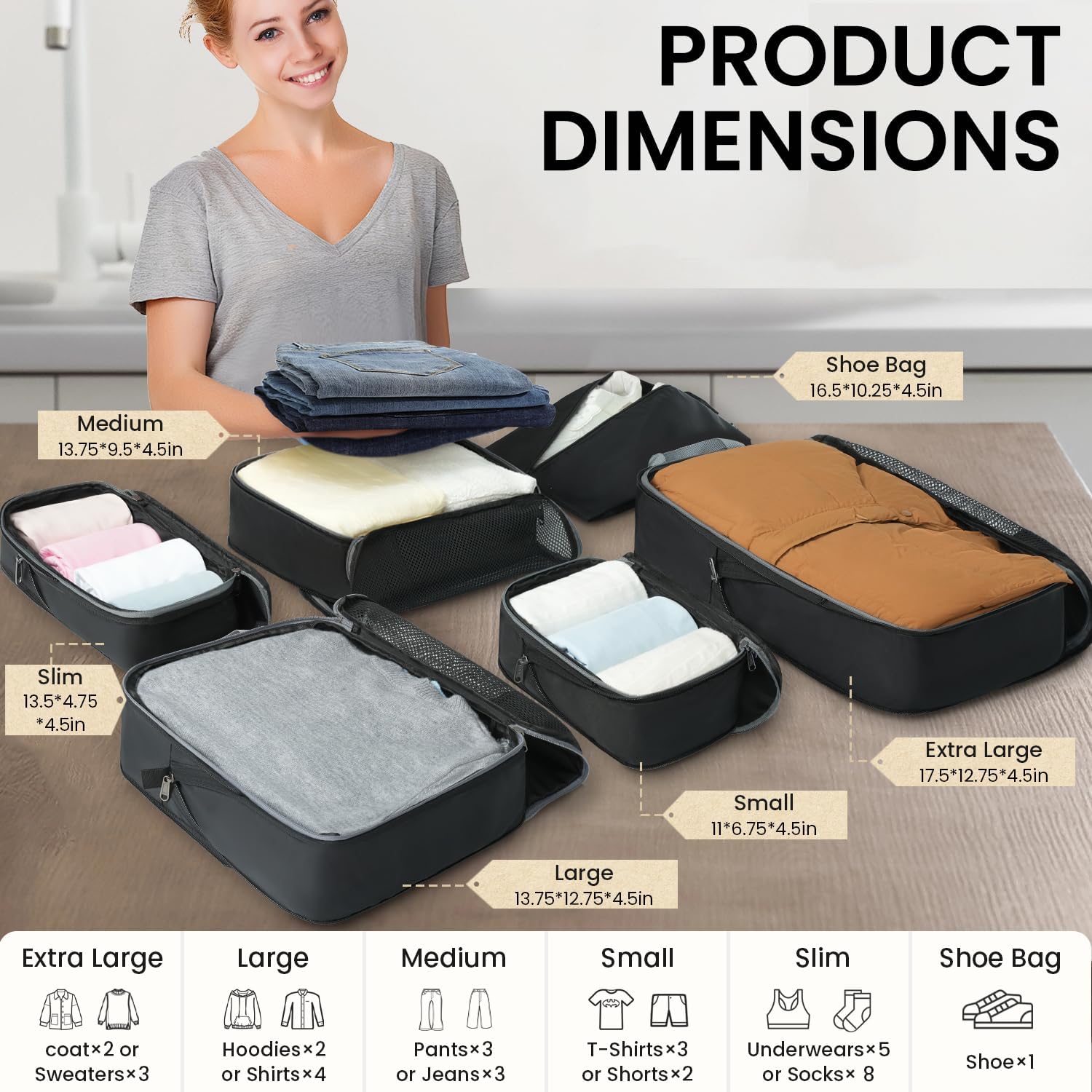
Packing cubes — rectangular fabric pouches that organize your clothes inside a bag — have become standard gear for carry-on travelers. The idea is simple: instead of a chaotic pile of shirts and socks, you pack categories into labeled compartments that slide in and out of your luggage cleanly. Regular packing cubes do exactly that. Compression packing cubes add a second zipper on one face of the cube; closing it squeezes air out of the contents and flattens the cube by roughly 30–40% of its original height. That’s the whole mechanical difference — but it has real downstream consequences for what you can carry, in what bag, and at what cost. This article lays out the tradeoff honestly, helps you avoid the most common purchasing mistakes, and ends with a clear “if X, then Y” decision rule.
| EDITOR'S PICKCompression Packing Cubes for T… | Mid-tierBAGSMART 6 Set /4 Set/2 Set Com… | Budget pickBAGAIL 4 Set/6 Set/8 Set Compre… | |
|---|---|---|---|
| Mesh panel | — | — | Half mesh |
| Color | Grey and orange | Black | Black |
| Set options | 6-piece | 6 / 4 / 2 set | 4 / 6 / 8 set |
| Brand | TRIPPED Travel Gear | BAGSMART | BAGAIL |
| Price | $49.95 | $30.99 | $19.99 |
| See on Amazon → | See on Amazon → | See on Amazon → |
What Actually Happens When You Compress a Cube
The compression mechanism is straightforward: the outer shell of the cube is made from a slightly stretchy or structured fabric, and a second zipper panel — sometimes called the “compression layer” — cinches the contents down against the main body. You pack clothes into the expansion side first, then zip the compression layer closed over the top.
Across aggregated buyer reviews, the consistent pattern is a 20–40% reduction in packed height for soft items like T-shirts, underwear, and lightweight fleece. That is meaningful. It is not miraculous. The result is best described as “reliable but not transformative.” You are not getting vacuum-sealed compression. You are getting something closer to what happens when you fold neatly and press a firm book on top of your stack overnight — useful, real, and worth understanding before you spend money on it.
What compression cubes do not do: they do not meaningfully compress structured items such as denim, shoes, or toiletry kits, and they do not replace a deliberate folding strategy. Smarter Travel, in their article “Packing Cubes vs. Compression Cubes: What’s the Difference?”, makes this point clearly — compression works best on soft, compressible fabrics and struggles with anything that has rigid memory.
By the numbers:
- Regular cube packed height (medium, typical): 3–4 inches
- Compression cube after closing compression layer: 2–2.5 inches (roughly 35% reduction)
- Vacuum compression bag: up to 80% volume reduction — a fundamentally different product category
- Compression cube weight premium over a comparable regular cube: approximately 20–60g depending on brand
The Three Mistakes Buyers Make Before They Click “Add to Cart”
Understanding the tradeoffs means nothing if you are buying the wrong product to begin with. Three purchasing errors come up repeatedly in buyer feedback, and all three are avoidable.
Mistake 1: Conflating Compression Packing Cubes with Vacuum Compression Bags
These are not the same product. A vacuum compression bag uses a one-way valve and either a hand pump or a vacuum cleaner to remove nearly all air from a sealed bag. Volume reduction can reach 70–80%. They are useful for storing bulky winter gear before or after a trip and occasionally for checked luggage, but they are impractical for daily use on the road — once you open the bag to access your sweater on day three, you cannot re-compress it without the pump.
A compression packing cube is a resealable, re-compressible daily-use organizer. You can open it in a hotel room, pull out a shirt, repack, and re-compress in under 30 seconds. The compression is less dramatic but repeatable. REI Co-op Learn’s article “How to Use Packing Cubes” identifies this reusability as the defining practical advantage of the cube format over vacuum bags for active travel — a distinction worth internalizing before purchase.
If a review you are reading describes “compression” in terms that sound implausible for a cube — 70% or more volume reduction, the need to use a pump — the reviewer is likely describing a vacuum bag, not a compression cube.
Mistake 2: Buying the Wrong Set Configuration
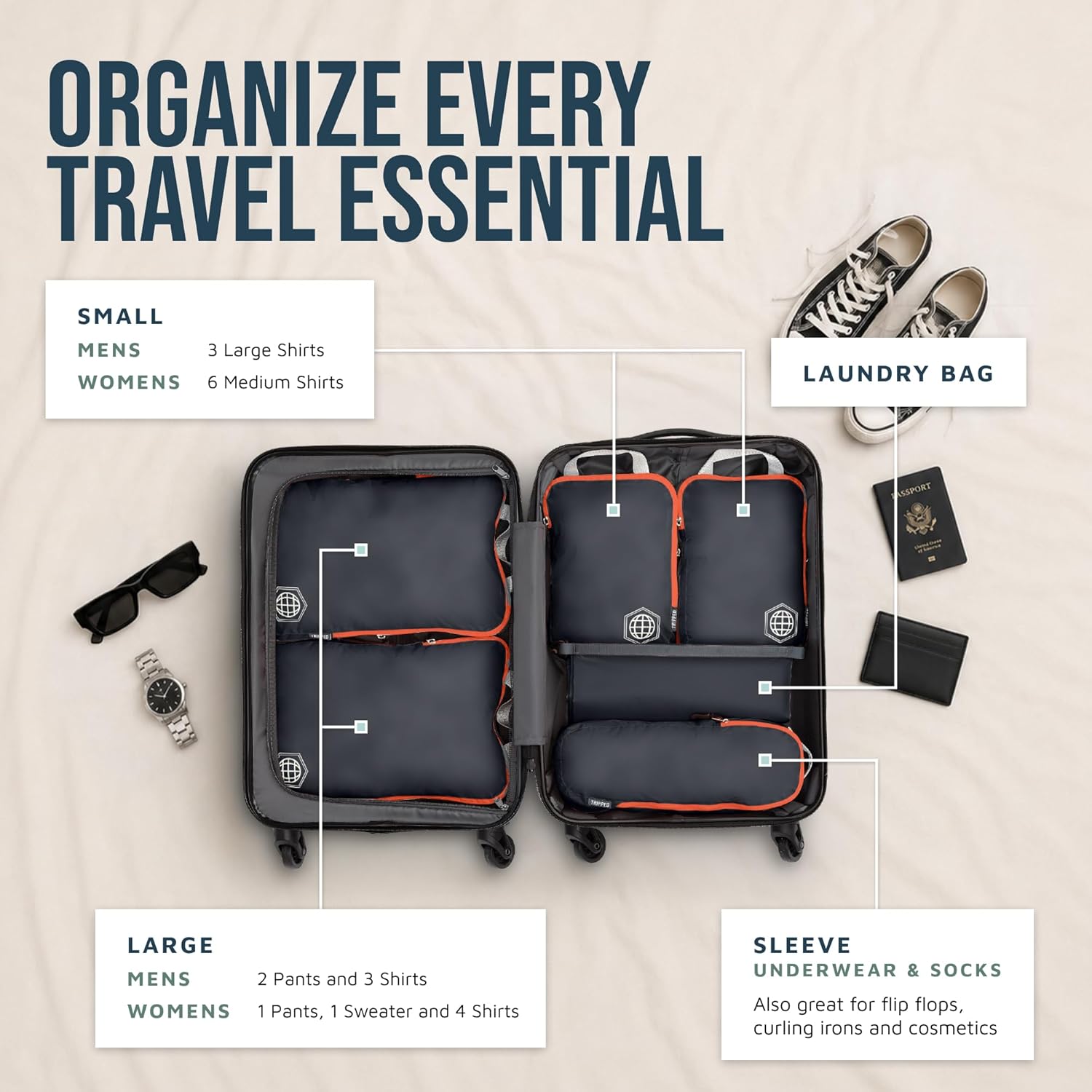
This is a concrete, avoidable error. Before you purchase any multi-piece set, look at the configuration — how many cubes and what sizes — not just the piece count. A six-piece set that includes one large cube, two medium, two small, and one extra-small may or may not match your actual packing workflow. If your system is clothing by category (tops, bottoms, underlayers, accessories), you likely want two or three medium cubes more than you want one large one.
Wirecutter (New York Times), in “The Best Packing Cubes,” flags configuration mismatch as one of the more frustrating post-purchase discoveries — buyers assume a higher piece count means more of what they want, when in practice it often means one large cube that disrupts a medium-cube-based system. Decide your configuration before you decide your brand.
Mistake 3: Underestimating Perceived-vs.-Actual Dimensions
Published dimensions feel abstract until you hold a cube next to a pile of clothes. A “medium” cube across brands is not standardized. One brand’s medium at approximately 13 × 26 × 6 cm is meaningfully smaller than another brand’s medium at 14 × 28 × 9 cm.
Wirecutter (New York Times), in “The Best Packing Cubes,” flags this sizing inconsistency across brands as one of the most common sources of buyer disappointment. The fix is simple: before buying, look up the actual centimeter dimensions, not the size label, and compare them to how you fold your clothing. A folded T-shirt is roughly 25–28 cm wide and 15–18 cm tall — use that as your calibration point.
Budget vs. Mid-Tier vs. Premium: Which Compression Cube Tier Pays Off?
The honest answer depends on use intensity and how much you care about zipper longevity under sustained stress. Here is how the tiers actually differ.
Budget Tier: Value Sets for Occasional Travelers
Budget compression cubes — BAGAIL being the most-reviewed entry point in this category — consistently earn strong ratings across aggregated buyer feedback. Owners report that the compression function works as described, that color-coding across multiple sets adds real organizational value, and that the price point makes buying multiple sets practical. The legitimate criticism is that zipper smoothness degrades faster than premium alternatives under frequent use, and the fabric is less abrasion-resistant over time.
AFAR, in “How to Pack a Carry-On Like a Pro,” notes that for most travelers doing fewer than 20 travel days per year, the budget tier performs well enough that a premium price cannot be justified on pure function alone — it becomes a question of material preference and expected durability horizon. For first-time cube users or infrequent travelers, starting here is the rational move.
Best for: Travelers doing under 20 days per year, first-time packing cube adopters, anyone who wants to test compression cubes before committing to a premium system.
BAGAIL
$19.99
In stock on Amazon
Check price on AmazonMid-Tier: Refined Performance for Regular Travelers
The mid-tier — represented by Osprey Ultralight compression cubes and similar offerings — sits between budget and premium in both price and performance. Osprey’s cubes are lighter than premium alternatives, more refined in construction than budget options, and designed with a weight-conscious traveler in mind. The tradeoff is capacity: Osprey’s sizing tends to run compact, which rewards fastpacking and ultralight carry-on builds but can frustrate travelers who want maximum compression volume.
Condé Nast Traveler, in “Best Packing Cubes of 2025,” places Osprey in the upper-performance tier, noting that the ultralight construction suits travelers who are actively managing total bag weight rather than simply organizing clothes. If your carry-on is already optimized for weight and you want cubes that do not add unnecessary grams, the mid-tier is where that calculation resolves.
Best for: Frequent travelers doing 20–40 days per year, ultralight carry-on builders, travelers who prioritize weight savings alongside compression performance.
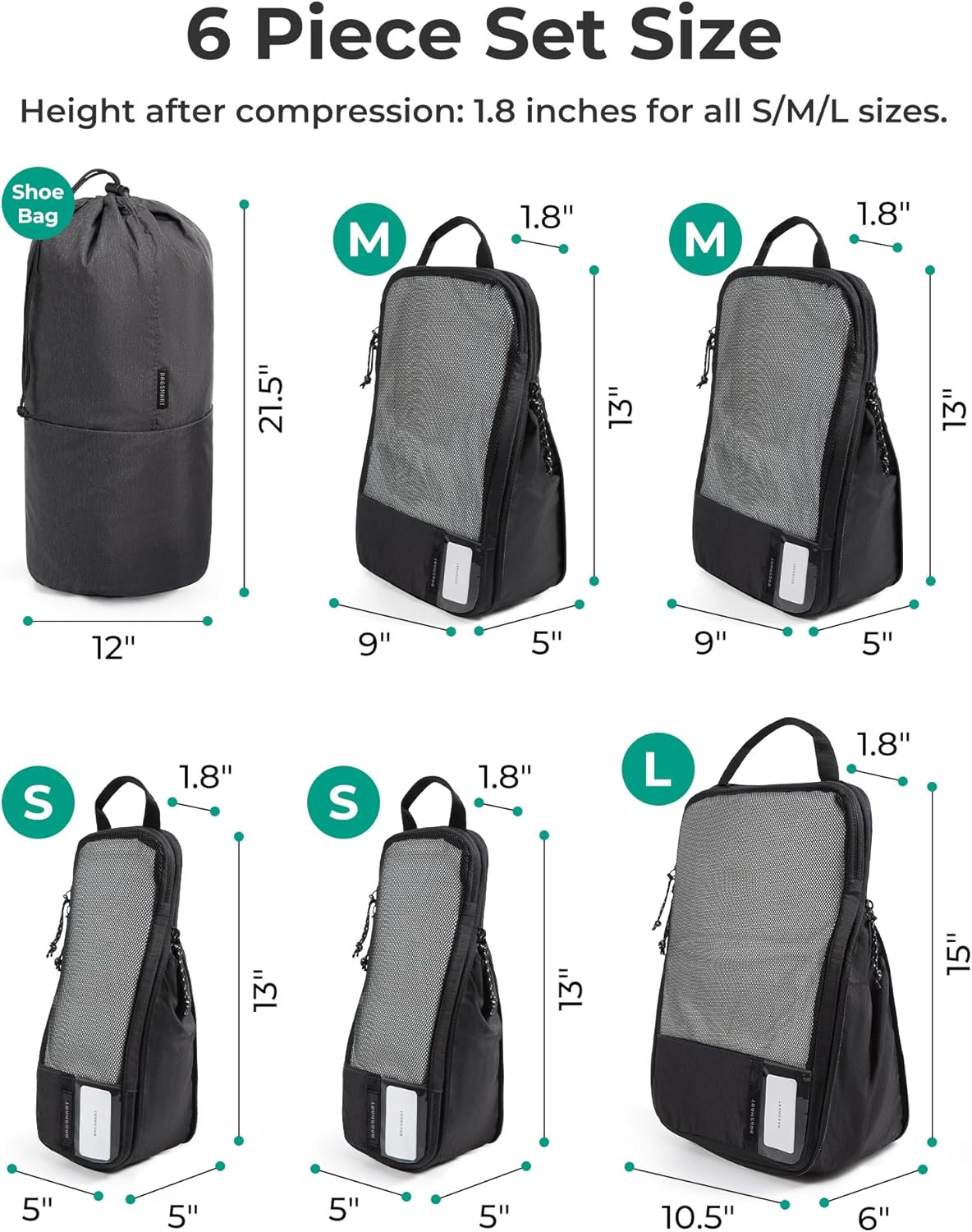
BAGSMART
$30.99
In stock on Amazon
Check price on AmazonPremium Tier: Durability-First for Heavy Users
Premium compression cubes — particularly Thule — justify their price around three factors that experienced long-haul travelers consistently name: material quality, construction quality, and zipper confidence under stress. Buyers who have overstuffed their cubes across three-week trips report no zipper failure, which is the data point that matters most for travelers doing 50+ days per year.
Condé Nast Traveler, in “Best Packing Cubes of 2025,” and Wirecutter (New York Times), in “The Best Packing Cubes,” both place Thule in the durability tier, with the implicit editorial position that the premium is earned specifically by sustained heavy use — not by any single-trip performance advantage. If you travel 30 or more days per year and pack carry-on only, the zipper durability gap between budget and premium becomes the primary purchase justification.
Best for: Heavy-use travelers doing 30+ days per year, long-haul carry-on packers, travelers who want cubes that outlast several seasons without zipper degradation.
Compression
$49.95
In stock on Amazon
Check price on AmazonColor-Coding as a Real System, Not Just Marketing
Multiple experienced buyers specifically describe purchasing two or three sets in different colors — one set in blue for tops, one in green for bottoms, one in red for underlayers and accessories — as a meaningful organizational improvement over a single same-color set. This is not incidental; it is a workflow pattern worth adopting deliberately.
The practical benefit: when you open your bag in a dark hotel room at 6 a.m. or dig through an overhead bin, you reach for the right cube by color without unzipping each one. It is a trivially small advantage per interaction that compounds across a week-long trip into something genuinely useful. Smarter Travel, in “Packing Cubes vs. Compression Cubes: What’s the Difference?”, identifies color-coding as one of the underutilized features of multi-set purchases — travelers who buy one set miss the system entirely.
If you are buying compression cubes and you have a clear packing-by-category habit, buy multiple sets in contrasting colors rather than a single large-format set.
Frequently Asked Questions
How much smaller does a compression packing cube actually make a pile of clothes compared to a regular cube? Expect roughly 20–40% reduction in packed height for soft items like T-shirts, underwear, and fleece. That is real space savings but not a dramatic transformation — closer to “neatly pressed” than “vacuum sealed.”
Can compression packing cubes damage my clothes by over-compressing them? For everyday travel fabrics — cotton, synthetic, merino — buyers across multiple brands do not report damage from standard compression. Structured or delicate items such as blazers, dress shirts, or embroidered pieces may develop more creases than they would in a regular cube. Compression cubes are not well-suited for items you need to arrive wrinkle-free without steaming.
What’s the difference between a compression packing cube and a vacuum compression bag? A vacuum bag uses a pump to remove nearly all air — up to 80% volume reduction — but cannot be re-compressed on the road without the pump. A compression packing cube uses a second zipper to manually press air out, offering 20–40% compression you can repeat daily without any tools. They solve different problems, as REI Co-op Learn’s “How to Use Packing Cubes” makes clear.
How many compression cubes do I need for a week-long carry-on trip? Most carry-on travelers manage a week of clothing in three medium compression cubes: one for tops, one for bottoms, one for underlayers and accessories. A fourth small cube for socks and underwear is a common addition. Check actual centimeter dimensions before buying — “medium” is not standardized across brands.
Are the double zippers on compression cubes likely to break with heavy use? At the budget tier, zipper degradation over 12–18 months of heavy use is a known failure point per aggregated buyer reviews. At the premium tier — Thule in particular — buyers report surviving overstuffed multi-week trips without failure. If you travel 30 or more days per year, zipper durability is the primary argument for moving up a tier.
Do premium options like Thule or Osprey actually outperform budget options like BAGAIL? For occasional travelers under 20 travel days per year, budget buyers consistently report satisfactory performance at a fraction of the price. For frequent or long-haul travelers, premium sets earn their price through material quality and zipper durability under sustained use — a distinction supported by Condé Nast Traveler’s “Best Packing Cubes of 2025” and Wirecutter (New York Times) in “The Best Packing Cubes.”
The Decision Rule
Here is the clean version:
-
If you travel fewer than 20 days per year and want to test whether compression cubes fit your packing style, start with a budget set in two or three colors. The compression works, the price is low enough that buying multiple color-coded sets makes sense, and you are not over-investing in a system you have not yet validated.
-
If you travel 20–40 days per year and weight matters to you, the mid-tier — Osprey Ultralight and comparable options — balances construction quality with a lighter footprint. Check the actual dimensions before buying; mid-tier sizing often runs compact.
-
If you travel 30 or more days per year, pack carry-on only, and your bag is at or near airline weight limits, premium compression cubes pay off in durability and zipper confidence. The overstuffed-without-failure data point from Thule owners is the right mental model for that use case.
-
If you want dramatic volume reduction — storing a down jacket, compressing bulky winter layers before a trip — you want a vacuum compression bag, not a compression packing cube. They are different products solving different problems, and conflating them is the single most common reason buyers are disappointed.
The rest is configuration: buy for medium cubes first, check actual centimeter dimensions before purchasing, and build a color-coded system from the start rather than retrofitting one later.