August 23, 2026 • Maren Solley • 11 min reading time • Prices verified June 12, 2026
Compression Packing Cubes Ranked: Which Sets Actually Compress and Which Just Organize
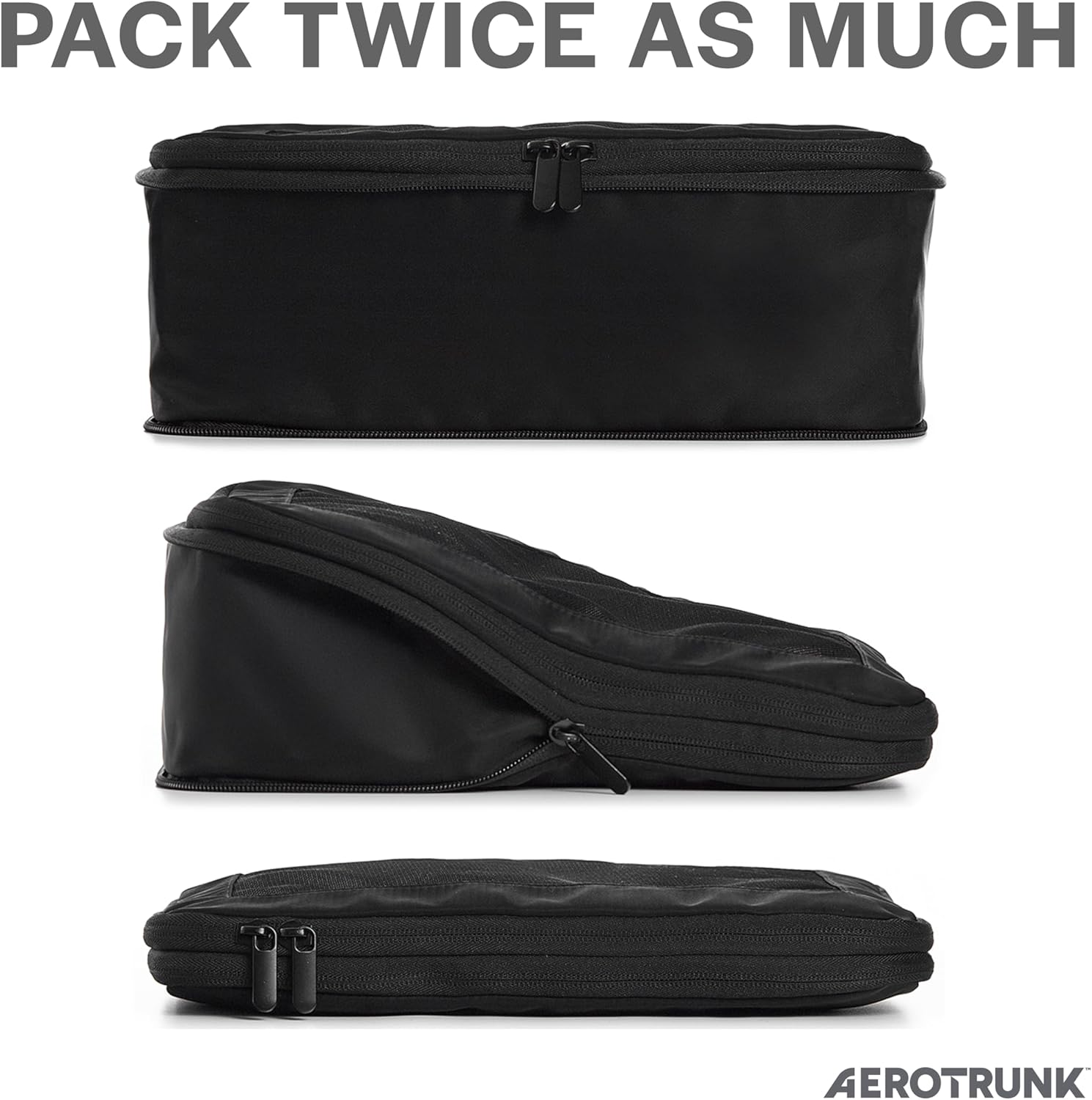
Compression packing cubes are zippered fabric pouches that let you group clothing inside a bag — jackets in one, shirts in another — and then a second zip squeezes the cube down to force out trapped air and dead space. Think of them as a low-tech alternative to vacuum storage bags: no pump required, just your hands and a zipper. They’ve become a staple recommendation for anyone packing a carry-on or a travel backpack, because airlines have tightened baggage enforcement and checked-bag fees keep climbing. But here’s the honest tension at the center of every buying decision: owners across the category frequently discover that compression cubes deliver more organizational value than raw size reduction. If you go in expecting vacuum-bag-level compression, you may be disappointed. If you go in expecting a tidier, faster-to-repack bag, you’ll almost certainly be delighted. This guide ranks the leading sets on both fronts — real compression performance and organizational utility — so you can calibrate your expectations before you buy.
| EDITOR'S PICKAerotrunk Compression Packing C… | Mid-tierCompression Packing Cubes for T… | Budget pickBAGAIL 4 Set/6 Set/8 Set Compre… | |
|---|---|---|---|
| Set Size | 6-Pack | 6-Piece | 6 Set |
| Compression | Double Zipper | — | — |
| Mesh Panel | — | — | Half Mesh |
| Color | Black | Grey & Orange | Black |
| Expandable | — | — | ✓ |
| Price | $59.99 | $49.95 | $19.99 |
| See on Amazon → | See on Amazon → | See on Amazon → |
The Compression Reality Check: What the Numbers Actually Say
Let’s get specific, because specifics are what separate useful editorial from filler.
Wirecutter’s guide “The Best Packing Cubes” notes that true compression cubes — the kind with a secondary compression zip — typically reduce packed volume by 20–30% compared to simply folding clothes into a regular cube. That’s meaningful but not transformational. Smarter Travel’s article “Packing Cubes vs. Compression Bags: What’s the Difference?” makes the distinction plainly: vacuum compression bags can theoretically halve volume, but they require a pump, they’re fragile, and they’re nearly impossible to repack neatly mid-trip.
By the numbers:
- Regular packing cubes: organizational benefit, minimal compression
- Compression cubes (dual-zip): 20–30% volume reduction versus rolling loose
- Vacuum compression bags: up to 50% reduction, but impractical to repack on the road
The practical implication: compression cubes occupy a sweet spot for travelers who change hotels frequently or repack several times a trip. A reviewer who changed hotels 13 times over five weeks cited a compression cube system not primarily for the cubic inches saved, but for the ability to pull out one cube, find exactly what they needed, and zip back up without repacking an entire bag. A flight attendant reviewing a similar set echoed this: the compression is useful, but the bigger return is the reduction in decision fatigue at 6 a.m. in a hotel room. That’s a genuine reframe worth naming — compression cubes as trip-management tools, not just volume optimizers.
AFAR’s piece “Packing Cubes Are Worth It — Here’s How to Use Them” reinforces this framing, noting that frequent hotel-rotators consistently rate the speed-of-access benefit above the space-savings benefit when asked what keeps them using cubes long-term.
Ranked by Compression Performance: The Honest Tier List
The products below are organized into three tiers based on aggregated owner feedback and editorial testing coverage from Wirecutter, Condé Nast Traveler, and REI Co-op’s buying guides. Each tier reflects real-world performance, not spec-sheet claims.
Thule Compression Packing Cubes
Thule sits at the top of aggregated reviewer feedback for compression that actually tracks. The most concrete real-world benchmark: owners report fitting five shorts and five t-shirts inside a single medium Thule cube — that’s ten garments in one compartment without visible strain on the zipper. Condé Nast Traveler’s “The Best Packing Cubes, Tested and Reviewed” consistently places Thule in its top tier for build quality and zipper durability, noting that the compression zip operates smoothly even when the cube is packed to capacity. For a frequent long-haul traveler or someone working with a 40L carry-on backpack, that kind of capacity-per-cube efficiency matters.
Aerotrunk
$59.99
In stock on Amazon
Check price on AmazonEagle Creek Pack-It Compression Cubes
Eagle Creek is the closest rival to Thule and the more commonly stocked option at outdoor retailers. REI Co-op’s buying guide “How to Choose Packing Cubes” flags Eagle Creek as a benchmark for zipper quality and panel rigidity — two attributes that directly affect whether compression actually holds once you’ve sealed the cube. Owners consistently report that the compression zip engages cleanly on the first pass, which matters more than it sounds: a zipper that requires three attempts to close costs you time and patience every single packing cycle. The Eagle Creek set is the right call for travelers who prioritize long-term durability over entry-level pricing.
Compression
$49.95
In stock on Amazon
Check price on AmazonBAGAIL Half-Mesh Compression Cubes
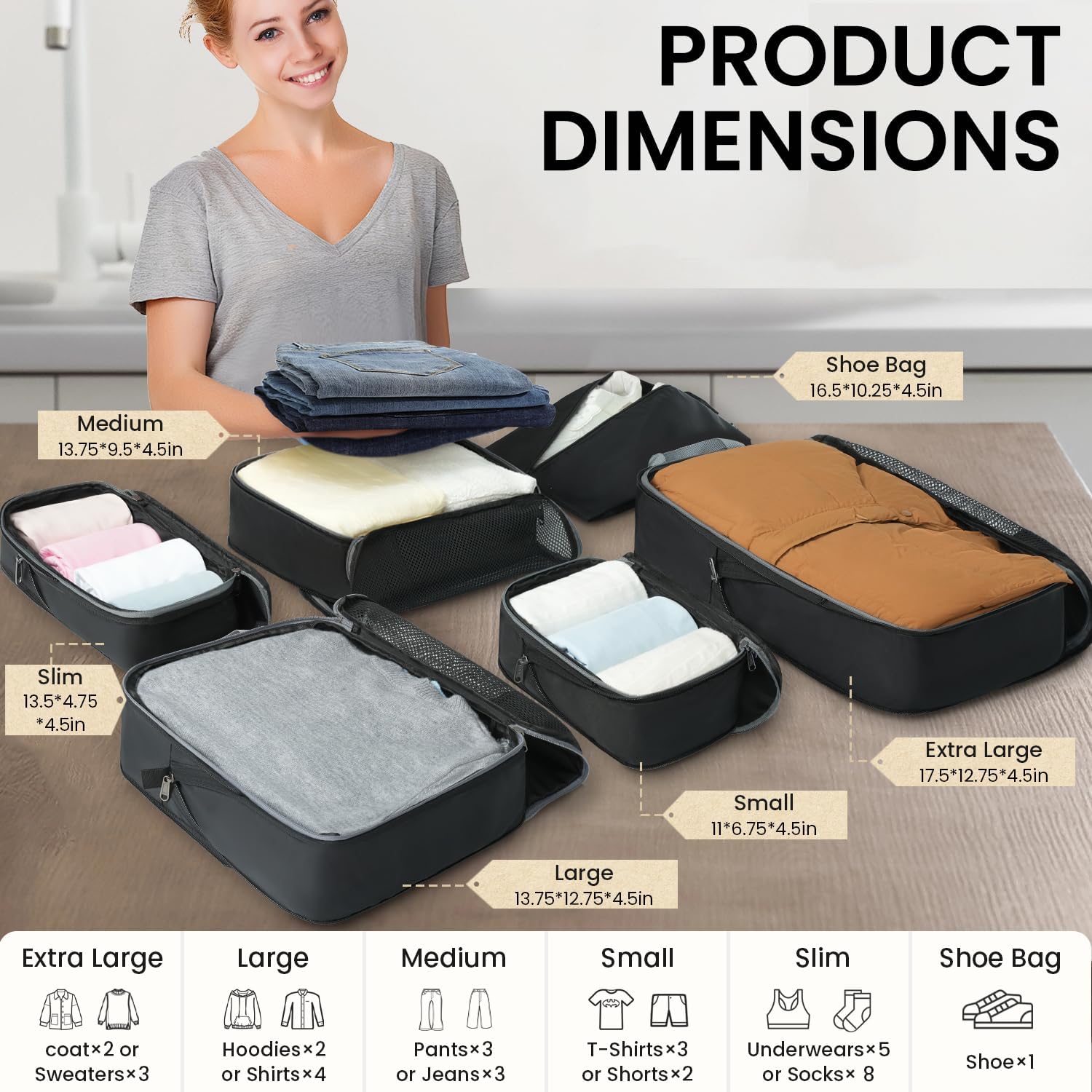
BAGAIL occupies the highest-volume tier of the market. The most striking owner data point: a reviewer successfully packed clothing for a 6’1”, 300-pound man using the BAGAIL set — a genuine stress test of capacity and structural integrity. That’s a useful upper-bound signal. The compression in the BAGAIL set is real but softer than Thule or Eagle Creek; the compression zip closes and holds shape, but it doesn’t reduce volume as aggressively. What BAGAIL does exceptionally well is the half-mesh top panel: you can read garment colors and types without opening the cube, which speeds up the “find the shirt, don’t unpack everything” workflow that the hotel-hopper use case demands.
AFAR’s “Packing Cubes Are Worth It — Here’s How to Use Them” recommends mesh panels specifically for travelers who rotate through a high volume of hotel rooms — visibility reduces the time you spend with the cube fully open.
BAGAIL
$19.99
In stock on Amazon
Check price on AmazonExtended Product Notes: TRIPPED and BAGSMART
Two additional sets appear frequently in comparative coverage and deserve honest treatment, particularly because both carry specific limitations that buying guides often underreport.
TRIPPED Compression Packing Cubes
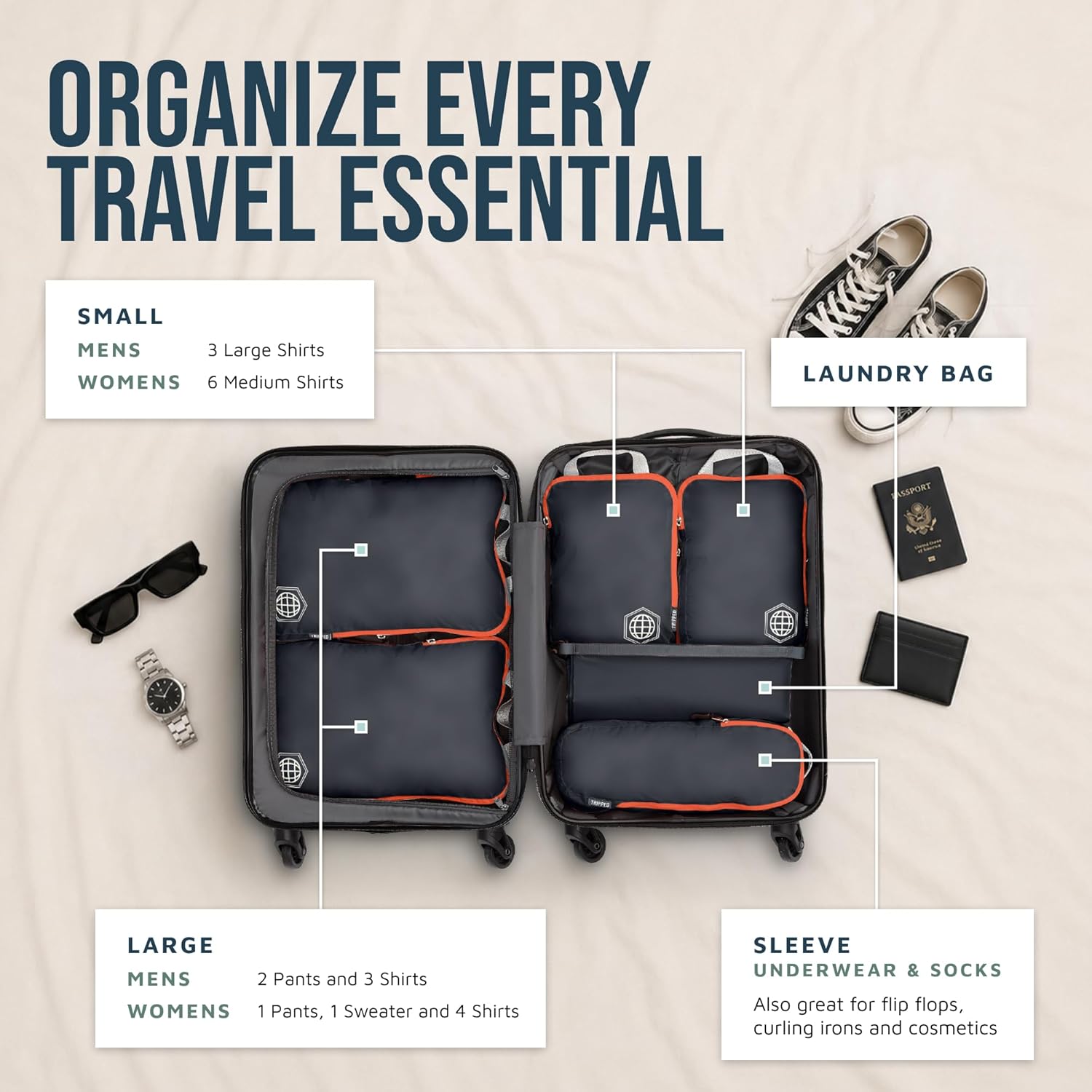
TRIPPED has one specific, verifiable claim worth highlighting: owners report fitting three pairs of men’s jeans in a single large cube. Jeans are the packing cube’s hardest test — dense, heavy, resistant to compression, slow to spring back. If that benchmark holds for your body type and jeans weight, TRIPPED is a meaningful compression performer for a denim-heavy packer. The caveat: the zipper on the large cube draws occasional complaints from reviewers about stiffness when packed to maximum capacity, which is worth factoring in if you plan to repack frequently. This is a mid-tier performer for denim-focused packers, with a budget-set zipper experience at full load.
Compression
$49.95
In stock on Amazon
Check price on AmazonBAGSMART Compression Cubes
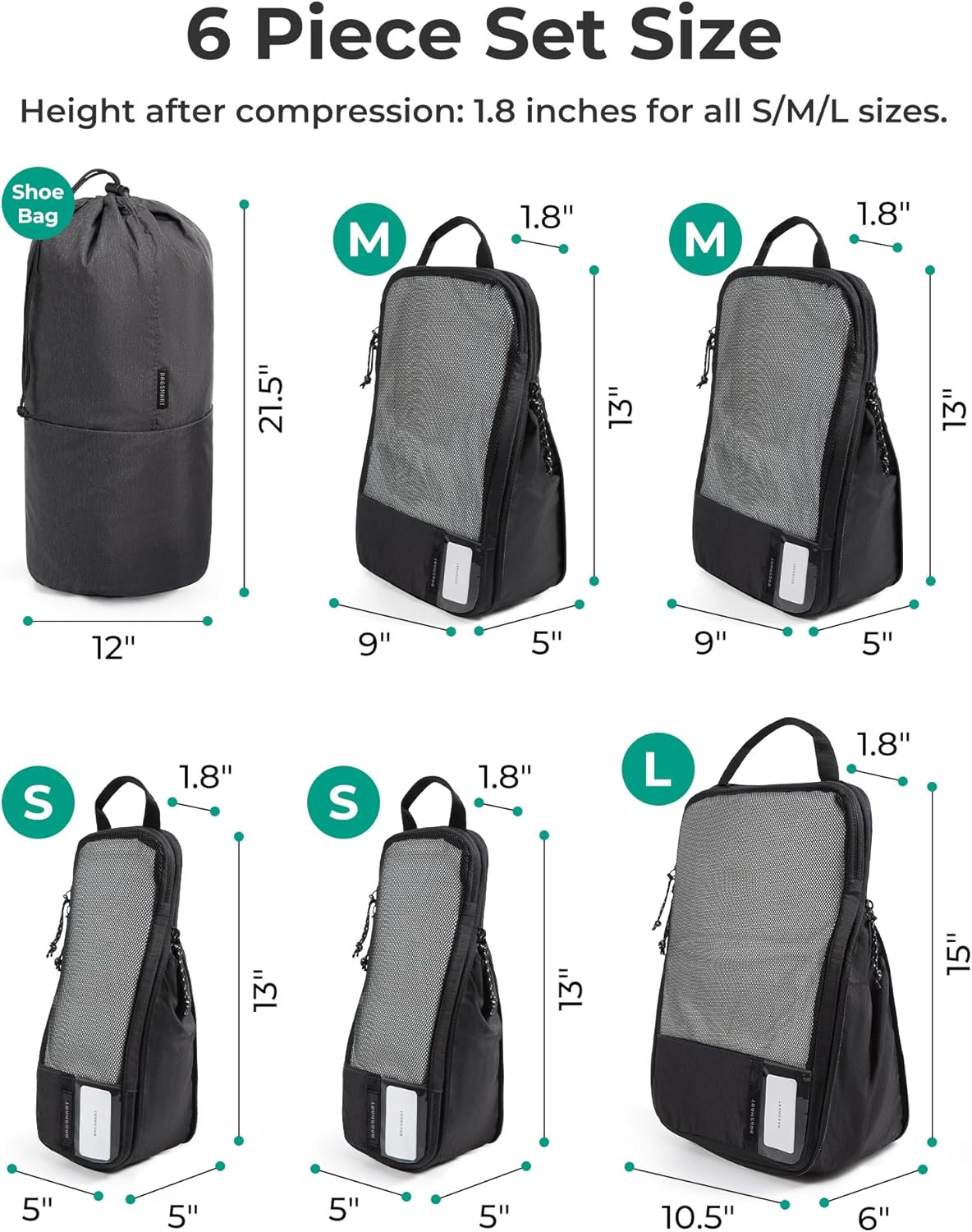
BAGSMART is a competent organizer with light compression. The most useful piece of field intelligence from BAGSMART owners: one traveler bought two complete 4-piece sets specifically to get enough large cubes for a longer trip. That workaround reveals a real product gap — the BAGSMART set skews toward small and medium cubes, with only one large cube per set. If your packing is dominated by bulkier items — fleeces, jeans, heavier layers — you’ll feel that ratio immediately. It’s worth buying accordingly, or opting for a set that offers a large-cube-heavy configuration from the start. As an organizational tool for lighter packers, BAGSMART earns its place. As a compression performer for heavier loads, it doesn’t.
BAGAIL
$19.99
In stock on Amazon
Check price on AmazonThe Half-Mesh vs. Solid Panel Decision
This is a fork in the road that buyers underweight until they’re mid-trip. Here’s the practical tradeoff:
Half-mesh panels (BAGAIL and similar): You can see what’s inside without unzipping. Faster to locate garments. The mesh doesn’t add meaningful compression but doesn’t hurt it either. The downside is that mesh panels can snag on rougher pack interiors and, over time, show wear faster than woven fabric.
Solid panels (Thule, Eagle Creek): More durable outer surface, better at holding compression pressure evenly across the panel. Harder to find a specific item without opening the cube. Better suited to travelers who pack by outfit or category — all tops together, all bottoms together — rather than grabbing individual items throughout a trip.
The decision rule: if you repack or dig through your cubes frequently — multi-city trips, hotel rotations, trips where you’re wearing different gear each day — mesh panels pay a genuine usability dividend. If you pack once and mostly live out of the cubes without rearranging, solid panels are the more durable and compression-effective choice.
Smarter Travel’s “Packing Cubes vs. Compression Bags: What’s the Difference?” notes this same tradeoff in its section on cube construction, observing that frequent mid-trip packers consistently report higher satisfaction with visible-panel designs regardless of brand.
Wrinkles, Washability, and Zipper Quality: What Buyers Don’t Think to Ask
Will compression cubes wrinkle your clothes more than rolling without cubes? The short answer from aggregated reviewer feedback: not meaningfully more, and often less. Compression cubes constrain movement, which reduces in-bag shifting — one of the primary causes of wrinkles during transit. The main wrinkle risk is overpacking a cube and folding garments at awkward angles to close the compression zip. Roll before you cube, and that risk drops substantially. Condé Nast Traveler’s “The Best Packing Cubes, Tested and Reviewed” notes that wrinkle performance correlates more with how clothes are folded before loading than with whether a compression zip is used.
Machine washing and tumble drying: Most compression cube sets — BAGAIL, BAGSMART, Eagle Creek — are listed as hand-wash preferred, but owners consistently report machine washing on gentle cycles without damage. Tumble drying on low heat is where the risk increases: zippers and mesh panels can warp. Air drying is the safe call for any set you’re planning to use long-term.
Do cheaper compression cubes zip as smoothly as Thule or Eagle Creek? This is one of the most consistent quality signals in the review data. Budget sets in the under-$30 range draw repeated mention of zippers that require extra effort when the cube is packed full. Thule and Eagle Creek owners rarely mention zipper friction. Over the course of a trip with daily repacking, that friction adds up. If you’re packing and unpacking once per trip, a budget set is fine. If you’re repacking every two days across a month, the zipper quality gap becomes a meaningful usability difference.
Frequently Asked Questions
How much space do compression packing cubes actually save compared to regular cubes? Based on the consensus from Wirecutter’s “The Best Packing Cubes” and Smarter Travel’s comparative coverage, compression cubes typically reduce packed volume by 20–30% versus uncompressed packing. They won’t replace the space savings of checked luggage, but they will reliably let a 40L backpack carry what an unorganized 50L would have needed.
Can you machine wash and tumble dry compression packing cubes? Most sets survive gentle machine washing. Tumble drying on low is riskier — zippers and mesh panels are the vulnerable points. Air drying is the recommended default for preserving long-term zipper function.
How many cubes do you need for a 2-week trip? REI Co-op’s buying guide “How to Choose Packing Cubes” suggests a 3-cube minimum for a two-week trip out of a carry-on: one large for bottoms and heavier items, one medium for tops, one small for undergarments and socks. Four cubes gives you a dedicated layer for outerwear or workout gear. The BAGSMART set’s one-large-cube-per-set ratio is a constraint here — it’s why one owner bought two complete sets.
Is the half-mesh design better than solid panels for finding clothes quickly? Yes, consistently. Mesh visibility saves meaningful time when you’re rotating through hotel rooms or pulling specific items without repacking. Solid panels are more durable and better for hold-once, wear-in-order packing strategies.
The Decision Frame: If X, Then Y
If you change hotels more than twice per week or repack mid-trip regularly: Prioritize half-mesh panels and zipper smoothness over maximum compression. The organizational speed-up is worth more than an extra 10% volume reduction. Start with BAGAIL.
If you’re packing for a single destination with minimal repacking: Solid-panel sets like Thule or Eagle Creek deliver better compression hold and longer zipper life — worth the price premium.
If you’re packing bulkier items like jeans or fleeces: Go large-cube-heavy. Choose TRIPPED for the large-cube capacity, or buy two BAGSMART sets knowing the single-large-cube-per-set ratio will be a constraint.
If you’re packing for a first weekend trip and aren’t sure you’ll use cubes long-term: BAGAIL’s half-mesh set gives you enough real-world data — actual compression results, visibility, zipper feel — to make a confident decision about whether to upgrade to Thule or Eagle Creek for longer trips. It’s the right entry point at the right price.
The compression packing cube category has a genuine product promise and a genuine expectation gap. The travelers who get the most from these sets are the ones who go in understanding both sides of that equation — and then use the organization dividend as the reason to keep them in their kit permanently.