August 28, 2026 • Maren Solley • 10 min reading time • Prices verified June 12, 2026
How to Build a Complete Packing Cube System From One or Multiple Sets
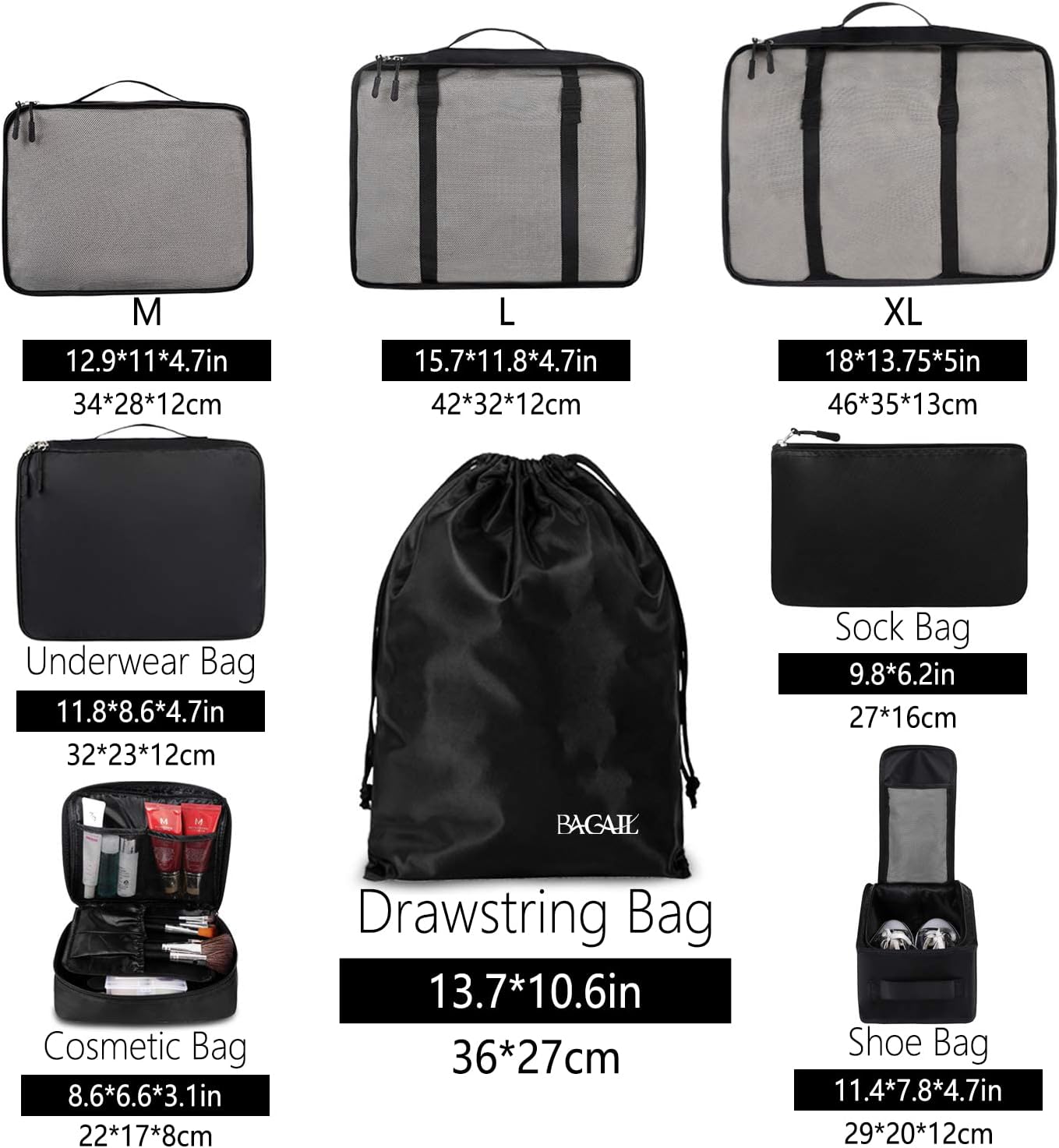
Packing cubes are exactly what they sound like: zippered fabric compartments — usually rectangular, in several sizes — that you use to organize clothing and gear inside a suitcase or backpack. Instead of loose clothes tumbling around a bag, you slot cubes in like drawers in a dresser. They don’t automatically help you pack less, but they do make it dramatically easier to find things, repack on the road, and keep some sense of order across a two-week trip. If you’ve used one set and felt like something was still slightly off — too many large cubes, not enough small ones, or everything just a bit too jammed — you’re not imagining it. That friction is almost always a size-distribution problem, and it’s exactly what this guide will help you solve.
The key insight that doesn’t get enough attention: most pre-packaged sets are built for a generic traveler who doesn’t exist. You need to diagnose your own packing patterns first, then build (or supplement) accordingly.
| EDITOR'S PICKShacke 5 Set Packing Cubes for… | Mid-tierBAGAIL 8 Set Packing Cubes Lugg… | Budget pickAmazon Essentials 4-Piece Packi… | |
|---|---|---|---|
| Piece count | 5 | 8 | 4 |
| Laundry bag | ✓ | — | — |
| Mesh top | — | — | ✓ |
| Double zipper | — | — | ✓ |
| Color | Pure Black | Jet Black | Gray |
| Set size | 5 Set | 8 Set | Large |
| Price | $26.99 | $19.99 | $18.89 |
| See on Amazon → | See on Amazon → | See on Amazon → |
Start With the Diagnosis, Not the Set
Before you buy anything, answer three questions honestly:
1. What type of bag are you packing into? A 40L carry-on backpack has different internal geometry than a hardshell spinner. Cubes sized for a suitcase often stand too tall for a backpack’s main compartment, wasting vertical space. REI’s guide on packing cubes notes that slim, rectangular cubes generally compress best into packs with a frame sheet, while suitcases tolerate wider, boxier cubes more gracefully.
2. What’s your actual clothing breakdown? Pull out everything you’d pack for a representative trip and lay it on the bed. Count items by category: tops, bottoms, underlayers, socks and underwear, heavier items (a fleece, a rain shell). Most travelers dramatically overestimate how many large cubes they need and underestimate small ones. One Amazon Essentials buyer described a pattern that will feel familiar to many couples who pack together: her husband kept pulling every medium cube from the set while the large ones sat underused — a useful real-world reminder, as she noted in her review, that size preference is genuinely personal, not universal.
3. How do you move between stops? Hotel-hopping across five cities in ten days is a completely different use case than a single-destination two-week stay. Owners of Aerotrunk compression cubes consistently describe their compression feature as most valuable during multi-stop trips, when you’re repacking from a suitcase to a day bag, or when airlines enforce strict overhead bin dimensions and every centimeter counts. For a single-destination trip, compression matters much less — standard cubes with good organization are usually sufficient.
Write down your answers before moving to the next section. Seriously. The travelers who end up buying a second set to “fix” the first one almost always skipped this step.
Understanding the Size Landscape (and Why One Set Falls Short)
Most sets come in a combination of small (roughly 10×7 inches), medium (13×9 inches), and large (17×12 inches), with some brands adding an extra-large or a slim “shoe bag” variant. The math sounds generous until you realize the standard set often includes one of each size, or one large and two mediums — and that almost never maps to how real clothes distribute.
By the numbers:
| Cube size | Fits comfortably | Most underrepresented in sets |
|---|---|---|
| Small (≈10×7”) | Socks, underwear, cables, toiletries overflow | Yes — buyers routinely report needing 2–3 smalls |
| Medium (≈13×9”) | T-shirts, workout clothes, thin layers | Varies by traveler; couples often fight over mediums |
| Large (≈17×12”) | Jeans, heavier tops, bundled outfits | Often included in excess; one is usually enough |
Wirecutter’s testing notes across multiple packing cube reviews consistently flag that the travelers most satisfied with their systems own cubes from more than one purchase — often combining a standard set with a targeted second buy of small and medium cubes to fill the gap the first set left.
BAGSMART buyers are a clear example of this pattern: a meaningful segment of reviewers return to purchase a second set specifically because they ran out of small cubes before they ran out of packing to do. If that sounds like a design flaw, it partly is — but it’s also a mismatch between a product built around average use and a traveler with specific habits.
The fix: treat your first set as version 1.0. After one or two trips, you’ll know exactly which sizes you reached for and which sat empty. Buy your second round deliberately.
Compression vs. Standard: When Each Actually Earns Its Keep
Compression cubes add a second zip that squeezes air out and reduces the cube’s footprint. They cost more and add a small amount of weight. Whether they’re worth it depends entirely on your use case — and a lot of the marketing around them overstates the benefit for typical travelers.
When compression cubes are genuinely useful:
- Hotel-hopping trips with frequent repacking (Aerotrunk owners are explicit about this)
- Bulky items like fleeces, down layers, or thick sweatshirts that resist standard folding
- Tight carry-on restrictions where you need to reclaim a few centimeters of depth
When standard cubes are the better call:
- Single-destination trips where the bag opens once and closes once
- Travelers who roll their clothes rather than fold them (more on this below)
- Light packers whose bag isn’t approaching its volume limit anyway
One technique worth calling out, credited to a TravelWise reviewer who described the approach in detail: rolling clothes tightly inside standard (non-compression) cubes before zipping them up. The reviewer found this combination produced meaningful space savings — comparable in practice to what a compression cube delivers — without the added cost or the stiffer compression zipper to fight with on the road. It’s worth trying before you invest in a full compression system.
The smart hybrid approach: carry one compression cube for your bulkiest layer (usually a fleece or packable jacket) and use standard cubes for everything else. This gives you the payoff of compression where it actually matters without paying a compression premium across your whole system.
Building the System: By Trip Length and Packing Style
Rather than prescribing a single “best” configuration, here’s a framework for three common traveler profiles. Start here, then adjust after your first real-world trip.
The Weekend and Short-Haul Traveler (2–4 nights)
You’re working with a personal item or a 20–25L daypack. You don’t need a set — you need two or three cubes, chosen deliberately.
- One small cube: socks, underwear, phone cable, portable charger
- One medium cube: three or four tops, or a mix of tops and a thin layer
- Skip the large cube entirely — your bottoms and shoes likely ride loose or in external pockets
AFAR’s roundup of frequent-traveler recommendations consistently surfaces the insight that over-cubing a small bag creates its own problem: rigid cubes don’t conform to irregular bag shapes the way loose clothing does, so aggressively cubing a 20L pack can actually reduce usable volume.
The One-Week Independent Traveler (5–8 nights, carry-on only)
This is the most common configuration and the one where a properly sized system pays the biggest dividend.
A workable starting point:
- Two small cubes: one for underwear/socks, one for electronics and cables
- Two medium cubes: tops and lighter layers
- One large cube: bottoms, or alternatively, bundle-wrapped around bulkier items
- One compression cube (optional): for a fleece or packable jacket
If the set you buy doesn’t include two smalls, buy one additional small separately. This is almost always the gap.
On jeans specifically: a common buyer question is whether a large cube holds a week’s worth of men’s jeans. It doesn’t — not comfortably. Two pairs of jeans fill a large cube on their own. The standard travel answer holds here: pack one pair of jeans and complement with lighter bottoms. If you must bring two pairs, roll one and lay it flat against the cube wall to reclaim space.
The Multi-Week or Multi-Country Traveler (10+ nights, mixed luggage)
At this level, Smarter Travel and several long-haul traveler accounts converge on the same principle: you’re not building one system, you’re building two nested ones — a full set in your main bag, and a partial set in your daypack or personal item for daily access.
The owner of a Shacke Pak set who logs more than 100,000 miles annually described a tiered approach: one color-coded set for clean clothes, a second set (different color) for worn clothes, and a small cube dedicated to in-transit essentials that never gets fully unpacked. It’s a simple framework, but the color-coding detail is the one that makes it functional at 2am in an airport — you don’t have to think.
Should you match brands? Matching sets stack more cleanly in rectangular suitcases, and the zipper pulls and fabrics behave consistently. But mixing brands is entirely workable, especially if you’re supplementing an existing set. The traveler who needs two more smalls shouldn’t feel obligated to buy another full set from the same brand just for visual symmetry.
Frequently Asked Questions
How many packing cubes do I actually need for a one-week trip? Most travelers find four to six cubes covers a week’s worth of clothing in a standard carry-on. The exact count matters less than getting the size distribution right — three cubes in the wrong sizes will frustrate you more than five in the right ones.
Should I pack by outfit or by clothing category? Category packing (all tops together, all bottoms together) is generally more efficient for finding things quickly and repacking on the road. Outfit packing works better if your schedule is structured and you rarely deviate — it removes the daily decision, but it’s harder to adjust when plans change.
Can I mix compression and standard cubes in the same suitcase? Yes, and this is often the best approach. Compression cubes are stiffer when compressed, so they work well as a structural base layer in a suitcase. Standard cubes can flex to fill odd gaps. The two types coexist without any meaningful problems.
Is it worth buying a matching set or can I mix brands? Matching sets offer cleaner stacking and visual organization. But there’s no performance reason to stay with one brand — buy the sizes you need, wherever they’re best executed. Color-coding across brands (all smalls in one color regardless of brand) solves most of the organizational benefit a matching set provides.
What size packing cube fits a week’s worth of men’s jeans? No standard cube holds a full week of jeans, and that’s the honest answer. Two pairs fills a large cube. The practical solution is limiting yourself to one pair of jeans — supplemented by lighter bottoms — which is a packing discipline question as much as a cube question.
Does using packing cubes actually help me pack lighter or just pack more? Mostly the latter, if you’re not careful. Cubes make it easier to organize what you bring, not harder to overpack. The compression argument aside, the real discipline for packing lighter is a list, not a container. That said, a well-sized system does make you more deliberate — when a medium cube is full, the visual cue helps you stop.
The clearest decision rule for where to start: if you’ve never owned cubes, buy one mid-range set and take one trip before buying anything else. The sizes that felt wrong after that trip are your actual shopping list. If you already own a set and something’s not working, it’s almost certainly a size-distribution problem — look at which cubes came home half-empty, and buy specifically to correct that gap. Build the system your packing actually needs, not the system a box said you’d need.