August 7, 2026 • Maren Solley • 11 min reading time • Prices verified June 12, 2026
Budget Hardside vs. Budget Softside Carry-On: Which Type Actually Survives Real Travel?
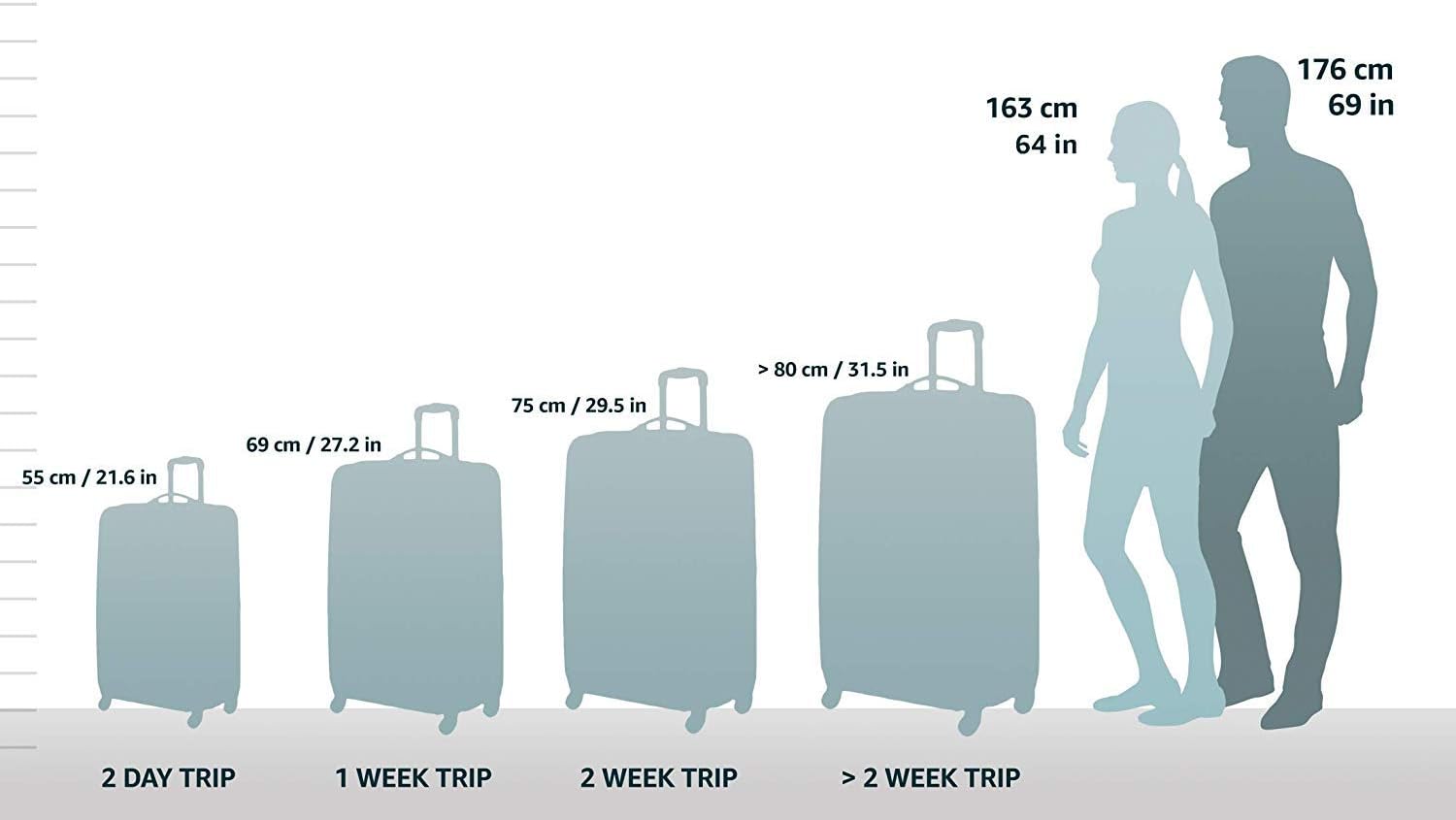
If you’ve ever stood in a luggage aisle — or scrolled through a wall of nearly identical sub-$100 suitcases online — you already know how confusing the choice gets, fast. The two big categories are hardside carry-ons (rigid polycarbonate or ABS shells, like a clamshell lunchbox) and softside carry-ons (fabric-bodied bags, often nylon or polyester, that flex under pressure). Both formats come in the same nominal sizes, both roll on spinner wheels, and both make the same promises on the box. The question is which one holds up once an airline baggage handler, a cobblestone street in Lisbon, or a crowded overhead bin gets involved — and which one is worth your money when you’re spending under $100. This article digs into real-owner patterns across several budget models, maps the genuine tradeoffs, and gives you a clear decision frame so you can stop second-guessing.
The Core Tradeoff: Shell Rigidity vs. Fabric Flexibility
The hardside vs. softside divide isn’t just aesthetic. Each format has a structural logic that produces predictable strengths and predictable failure modes — and at budget price points (broadly, under $100 in the 2026 market), those failure modes are magnified.
Hardside bags win on protection and cleanliness. The polycarbonate or ABS shell acts as a buffer between your gear and whatever the bag is dropped onto. If you’re moving luggage through tight spaces or want contents protected from compression, that shell matters. The tradeoff is that hardside bags crack rather than dent — a sharp impact that a soft bag might absorb can leave a hairline fracture on a budget shell. Owners of the Rockland Melbourne consistently describe a bag that looks sturdy out of the box but shows stress cracking near the corner reinforcements after moderate use. That’s the budget-hardside failure pattern: corners and hinges, not the flat shell faces.
Softside bags win on forgiveness — both structural and logistical. They compress slightly into tight overhead bins, they absorb impacts without cracking, and they often include exterior pockets that hardside bags simply can’t offer. The tradeoff is that softside fabric wears differently: zipper stress, fabric abrasion, and frame warping over repeated trips. At budget price points, the zippers are often the first thing to go, especially under overloading.
Smarter Travel’s article “Hardside vs. Softside Luggage: Which Should You Choose?” frames it clearly: hardside makes sense when protection of contents is the priority; softside makes sense when flexibility of packing and fitting into irregular spaces matters most. Both considerations apply at the carry-on scale, but the weight shifts depending on how you actually travel.
What Real Owners Are Saying About These Budget Models
This is where the spec sheet stops being useful and actual purchase patterns start mattering. Here’s what aggregated owner feedback reveals across four commonly purchased budget carry-ons.
Rockland Melbourne Hardside — The Smell Warning You Need Before You Buy
The Rockland Melbourne is one of the most-sold budget hardsides on the market, and its reviews contain a recurring complaint that deserves a direct pre-purchase warning: multiple owners describe a strong chemical or mothball-like odor coming from the bag fresh out of the box. Not a faint new-product smell — a pervasive chemical smell that several reviewers describe as requiring weeks of airing out, repeated baking soda treatments, and in some cases activated charcoal bags before the suitcase was comfortable to travel with. If you have a trip in two weeks and order this bag today, you may be racing the clock on odor remediation.
Beyond the smell, the Melbourne’s structural feedback is mixed: the shell holds up reasonably well for the price point, but the corner clips and hinge mechanism attract the most complaints over multiple trips. For occasional travelers who have time to prep the bag before departure, the value-per-dollar is there. For frequent travelers or anyone with a trip imminent, this is a meaningful pre-purchase risk.
Best for: Occasional travelers with 2+ weeks of lead time before departure who want a low-cost hardside introduction.
Rockland
$46.99
In stock on Amazon
Check price on AmazonAmazon Basics Hardside Carry-On — Durability That Surprises People
Owners of the Amazon Basics hardside carry-on consistently express surprise at real-world durability that outperforms their expectations. One frequently cited owner report involves a 25-day trip through Central America across varied surfaces — cobblestones, gravel paths, airport tile, rough pavement — with the bag reportedly looking brand new at the end of the trip. That specific pattern shows up repeatedly: buyers expecting budget-level performance getting something noticeably better. The spinner wheels on this model attract particular praise for rolling smoothly without wobble.
Wirecutter (New York Times), in their guide “The Best Cheap Luggage,” notes that Amazon Basics luggage punches above its price point on structural durability, with the caveat that long-term multi-year performance data is thinner than on established brands. For a bag you’re buying to prove the concept before a bigger investment, or for a specific trip rather than a long-term fleet piece, owner feedback is consistently positive.
Best for: First-time budget carry-on buyers who want above-average structural performance without committing to a premium brand.
Rockland
$46.99
In stock on Amazon
Check price on AmazonCoolife Hardside Carry-On — The Mid-Tier Feel at a Budget Price
Coolife has built a notable reputation in the budget hardside space, and one pattern in owner reviews is striking: buyers who previously owned mid-range luggage regularly describe the Coolife as equal in day-to-day durability at a fraction of the price. What owners are likely comparing is the feel of the shell, the smoothness of the spinner wheels, and the quality of the zipper — the three things you interact with constantly. Coolife’s polycarbonate shell spec is competitive, the zipper hardware appears well-sourced, and the 360-degree spinner wheels get consistent praise.
The caveat, as Condé Nast Traveler notes in “The Best Carry-On Luggage of 2025,” is that established luggage brands come with robust warranty support and retail return infrastructure that newer brands cannot always match. Coolife’s value case is strong for single-trip or short-lifecycle use; for a bag you’re expecting to run for five or more years, the warranty comparison matters.
Best for: Budget travelers who want a premium-feeling hardside shell and plan to upgrade before long-term wear becomes a factor.
Rockland
$46.99
In stock on Amazon
Check price on AmazonSWISSGEAR Sion Softside — Heavy Load Spinner Performance Over Time
The SWISSGEAR Sion is the softside entry that most consistently surprises owners in one specific way: spinner performance under heavy loads on city surfaces. Multiple owner reports specifically mention rolling this bag through city streets, often loaded near maximum weight, without the wheel wobble or drag that budget spinners typically develop. One international traveler reports using the same Sion across trips spanning multiple years with continued strong performance — a multi-year lifespan from a sub-$80 bag is notable at this price tier.
The Sion’s softside construction also delivers the exterior pocket advantage: accessible storage for documents, power banks, and items you need during transit without opening the main compartment. For city travelers and frequent fliers who prioritize in-transit accessibility, that’s a meaningful structural advantage over any hardside.
Best for: Frequent travelers and urban itinerary travelers who need reliable wheel performance and exterior pocket access across extended use.
Rockland
$46.99
In stock on Amazon
Check price on AmazonThe Size and Packing Math You Need to Know
Understanding what you actually get inside these bags — regardless of what the label says — is essential before you buy.
| Feature | Budget Hardside (20”) | Budget Softside (20”) |
|---|---|---|
| Typical Interior Volume | 33–36L | 35–40L |
| Expansion Adds | 15–20% (risks size limits) | 10–15% (fabric adds more) |
| Exterior Pockets | Rare / none | Common (1–2 pockets) |
| Overhead Bin Flex | None — fixed shell | Minor compression possible |
Rockland
$46.99
In stock on Amazon
Check price on Amazon| Durability Pattern | Budget Hardside (20”) | Budget Softside (20”) |
|---|---|---|
| Primary Failure Mode | Corner/hinge cracking | Zipper stress, fabric abrasion |
| Impact Absorption | Low — shell cracks under sharp hits | High — fabric absorbs and flexes |
| Content Protection | High — shell buffers contents | Moderate — no rigid barrier |
| Long-Term Warning Signs | Sudden crack or fracture | Progressive zipper and seam wear |
Rockland
$46.99
In stock on Amazon
Check price on Amazon| Travel Use Case | Better Format | Key Reason |
|---|---|---|
| Occasional travel, 1–4 trips/year | Hardside | Shell protection, lower cost per trip |
| Frequent urban travel, 10+ trips/year | Softside | Wheel longevity, exterior pocket access |
| Size-strict airlines (Ryanair, AirAsia) | Either — size down | Fixed dimensions easier to verify on hardside |
| Gate-check or rough baggage handling | Hardside | Rigid shell protects contents under compression |
| Multi-week trips with varied terrain | Softside | Flexible packing, absorbs cobblestone vibration |
Rockland
$46.99
In stock on Amazon
Check price on AmazonA consistent owner note on several budget softsides in this category: bags positioned as compact or airline-compliant can run genuinely small — which is actually the right instinct for size-strict carriers. Choosing a bag with conservative dimensions gives you a safety margin on carriers like China Airlines, AirAsia, and Ryanair that enforce carry-on size limits more aggressively than U.S. legacy carriers.
The Points Guy’s guide “Airline Carry-On Size Rules: What You Need to Know” notes that the standard IATA recommended carry-on size is 56 x 45 x 25 cm (22 x 17.7 x 9.8 inches) including wheels and handles. Budget bags frequently list dimensions without wheels and handles, making the nominal “20-inch” label a poor guide to actual compliance. Smarter Travel’s luggage coverage reinforces the same point: always measure your bag fully assembled — wheels down, handle extended — before your first flight, and never assume the box dimensions reflect real-world compliance measurements.
The Decision Frame: If X, Then Y
You’ve read the tradeoffs. Here’s how to close the loop:
If you’re taking 1–4 trips per year and want maximum bang for the dollar: The Amazon Basics hardside or Coolife hardside both over-deliver relative to their price point based on owner feedback. Buy either, and don’t overthink it.
If you travel 10+ times per year and are using this as a placeholder before a premium upgrade: The SWISSGEAR Sion softside’s wheel durability record and multi-year lifespan reports make it the smarter fleet piece. Softside failures at budget price points tend to be progressive — zipper wear, fabric abrasion — rather than catastrophic, which means you get warning signs before total failure.
If you’re flying a size-strict airline (Ryanair, AirAsia, China Airlines): Size down. Look for bags where the spec sheet lists dimensions including wheels and handles, and stay at the conservative end of the envelope. A bag that fits cleanly is always worth more than a bag that might fit.
If you have a trip in less than three weeks: Do not order the Rockland Melbourne without budgeting time and materials for odor remediation. Order something else or give yourself the runway.
If you’re gate-checking the bag and mainly need shell protection: Any of the hardsides above will outperform any softside for protecting contents under baggage handling. That’s the one scenario where hardside wins unambiguously.
Frequently Asked Questions
How do I get rid of the chemical smell in a new budget hardside suitcase before my trip? Open the bag fully and leave it in a well-ventilated space — ideally outdoors in indirect sunlight — for 48 to 72 hours minimum. Pack it loosely with baking soda in an open container or use activated charcoal odor-absorbing bags inside the closed suitcase for several days. Some owners report needing two full weeks of treatment for severe cases. If your trip is within 10 days of receiving the bag, this is a real timing risk.
Does expanding the zipper on a budget carry-on push it over airline size limits? Yes, frequently. Most budget carry-ons with expansion zippers gain 15–20% interior volume when expanded, which typically adds 2–4 cm to the bag’s external dimensions. On carriers that enforce strict size limits, an expanded bag can fail the sizer box test. Fly expanded only on airlines with loose enforcement, and always collapse the expansion before any strict-compliance carrier.
Do budget spinner wheels last more than a handful of trips, or is this where cheap bags fail first? It depends on the bag. Spinner wheels are the highest-stress component on a rolling bag, and at budget price points, wheel quality varies enormously. The SWISSGEAR Sion and Amazon Basics carry-on both generate consistent positive owner feedback on wheel longevity. The Rockland Melbourne’s wheels are functional but attract more mixed reports. If you’re deliberating between two budget bags and one has better wheel feedback, weight that heavily — wheel failure is the most common reason budget bags are retired early.
Is a softside carry-on actually more durable than hardside under rough airline baggage handling? Under baggage handling specifically, no. Hardside shells protect contents better against impacts and compression. Where softside wins is on long-term structural resilience: fabric bags absorb rather than crack. A budget hardside dropped hard on a corner can fracture; a budget softside absorbs the same impact. For checked baggage, hardside still wins on content protection. For carry-on use where the bag stays with you, the difference narrows considerably.
What is the real interior packing difference between a 20-inch hardside and a 20-inch softside carry-on? A 20-inch hardside typically offers 33–36 liters of interior space in a fixed clamshell format — two equal halves divided by a central zipper. A 20-inch softside often offers 35–40 liters with a more flexible layout, potentially including a front-loading panel or exterior pockets. The softside also allows minor compression of soft goods to fit around the bag’s geometry. For the same nominal size, softside bags generally offer slightly more usable packing volume. The hardside advantage is that both halves stay organized and separated, which works well for packing cube systems.